Design of decision support system “reverse supply chain management” based on Android
I. Dharmayanti & W. Kartika
APP Polytechnic, Jakarta, Indonesia
E. H. Yossy
Bina Nusantara University, Jakarta, Indonesia
ABSTRACT: Reverse supply chain is the backward movement of product in supply chain.
This paper proposes a reverse logistics decision support system which can ease product information tracking for customers, company (decision-maker), and service center regarding products returned. The model in this paper is inspired by various papers published in the literature and real-life examples of repairing smartphones at the authorized service center. The proposed model considers important elements of reverse supply chain which are initial screening process of reverse (gatekeeping), collection, sorting, and recovery (treatment). Activity diagram of each element reverse supply chain is described. Implementation of a decision support system based on android is also presented. The proposed model will help the parties involved in reverse activities and also help academics in developing better decision reverse supply chain model, especially for electronic products that have shorter life cycle.1 INTRODUCTION
Reverse supply chains (RSC) include collection and reprocessing activities of used manufactured products in order to recover their remaining market value (Filip & Duta 2015). Due to environmental concerns, RSC now is becoming an important strategy to increase customer satisfaction and also how the material is recovered, and who will execute and manage the various reverse operations are important issues (Liao 2018). Many companies do not manage the flow of goods and materials well, as some assume that reverse is a burden to the company, which cannot be predicted with certainty unless with additional data and related information. However, reversing this SCM (Supply Chain Manager) can provide benefits to the company economically, socially, and environmentally.
RSC management needs to be done in order to increase the company’s competitive advantage in providing services to its customers (Blumberg 2005).In every RS system, it is essential to make decisions concerning the returns management, efficient communication between the different parties involved, product identification, handling, and treatment (Turki & Mounir 2014). Based on related literature, the researches seem to focus on the whole process of reverse flow and there is few who have mentioned the Decision Support Systems (DSS). Lambert et al. (2011) proposed decision conceptual framework RSC process in general. There is no single reference model to make their RSC more efficient; each company must find the best solution to specific situation. Turki & Mounir (2014) who proposed a DSS for reverse logistics uses a web-based application by adding three more elements to complete the reverse flow management. These elements are (1) the coordinating system, (2) the gatekeeping, (3) the collection, (4) the sorting, (5) the information system, (6) the disposal system. This paper proposes a DSS concept on RSC process of smartphone product based on android operation system. The use of android-based information technology will make the application more attractive and easier to use, and can be used by the company that includes some for partnership such as parts production, warehouse, sender, and other stakeholders such as distributors, service centers, and consumers as the user, without fixating on the availability of computer hardware, because this application is designed with android operating system that can be accessed by using a smartphone. It is expected that by the creation of this application, both companies and the public can obtain the ease and benefits of reverse process materials or products from consumers to electronics manufacturing companies, and thereby achieve the effectiveness and efficiency of reverse services.
2 LITERATURE REVIEW
2.1 Closed-loop supply chain management
Closed-loop supply chain (CLSCM) can be defined as a system of design, control, and operation to maximize creation of the value throughout the product life cycle by recovering the value of the product dynamically, because the type and volume of the returned product are not the same at different time (Guide et al.
2003). This activity is a combination of forward and RSC activities.According to Blumberg (2005), CLSCM activity is a sustainable approach to the engineering activity design in product development or system operation.
2.1.1 Forward logistics and direct supply chain management
Management of activities and overall forward logistics control from material, part, and finished product streams to the main warehouse, distributed, and up to the end user.
2.1.2 Reverselogistics
Coordination activity and control of taking materials, parts, and products that have been used from consumers, sent to the recycling process, and then back to the consumer if it can be reused.
2.1.3 Depot repair, processing, diagnostic, and disposal
The activity of receiving returned product through reverse logistics process, inspection, recondition, and redistribution process through main line, secondary market, and disposed as waste. In general, RSC activities may include reuse, repair, remanufacturing, recycling, and disposal. Reverse logistics is the most important part of the CLSC, because without a reverse flow, there is no loop in the supply chain.
Furthermore, for high-technology products such as smartphones, Blumberg (2005) spelled out a reverse model, from the four CLSC models he presented. The models are shown in Figure 1.
In high-tech products, original equipment manufacturer (OEM) sells its products to consumers and is directly responsible for the RL (Reverse Logistics) process. Such products as sub-assembly, part, and returned component will be recovered by the OEM through a designated dealer as an OEM representative
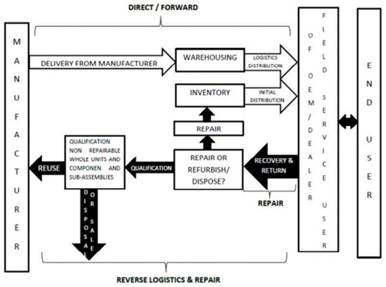
Figure 1. Closed-Loop Supply Chain for high-tech products (Blumberg, 2005).
or an OEM service center itself. In this model, direct supply chain and RL are controlled by OEM. However, the reverse process also can be done directly independently without going through an OEM.
2.2 Reverse supply chain
According to Guide et al. (2003), reverse supply chain is a series of activities to take back products that are not used by consumers and those that can be reused or become waste later. There are five main RSC processes: product acquisition; reverse logistics (the activity of transferring/shipping of the acquired product to the handling); inspection and disposition (disassembly), inspection, testing, sorting of returned products to identify quality, choosing appropriate treatment and appropriate recovery strategies); reconditioning (repair, re-furbished, or remanufactured); redistribution and sales (sales of products that have been reconditioned and re-usable).
The first step to designing an RSC is to choose the proper take-back path process from the return product, to return to manufacturing. The process of taking its products is made directly to the consumer; through the intermediary retailers; as well as through third-party services. For the latter, there are two collection models namely Centralized and Decentralized RSC.
2.3 Utilization of information technology in reverse supply chain management
The information technology development provides various positive impacts to increasing productivity of many sectors, including logistics and supply chain management. Bhandari (2016) argues that the latest technologies being used in logistics and supply chain management are segregated into:
- Automatic Identification Technology: Bar coding, Radio Frequency Identification (RFID), Radio Frequency Tags (RFTs)
- Communication Technology: Electronic Data Interchange (EDI), Very Small Aperture Terminal (VSAT), Geographical Positioning System (GPS), Geographical Information System (GIS), WebBased Tracking, Automated Guided Vehicle System (AGVS) and
- Information Technology (IT): The IT tools used in logistic and SCM are Enterprise Resource Planning (ERP), Distribution Requirement Planning (DRP), and Automated Inventory Tracking System (AITS).
The more complex a business gets, the more complicated the decision-making is. Some factors such as the need to respond quickly to the markets; a rapidly changing environment and the uncertainty of its impact; need for quick and real-time monitoring and information; as well as the need to coordinating the decision-makers who are not in the same location, made manual decision-making more difficult. It makes computer-based information system necessary in analyzing and exploring various alternative decisions.
The instrument in this decision-making is said to be DSS. Turban (2007) suggests that the DSS component consists of Data Management, Model Management, and User Interfaces.
Filip & Duta (2015), who studied the DSC on Reverse SCM in several European countries, exposed the important issues and the attributes of DSS that can be used on Reverse SCM. However, this paper is a literature review and case studies are not explained.
RSC research has previously focused on reverse processes as a whole, but few have combined with DSS. There is research on Reverse Logistic DSS, but it still focuses merely on one phase, like recovery process or delivery.
Turki & Mounir (2014) drafted the DSS model in the RL process by taking issues related to product recovery activities, vehicle routing, and end-of-life product handling issues. The proposed DSS integration on RL activities is used to facilitate tracking product information, shipping, storing, referencing, and reporting for managers as decision-makers. The Turki and Mounir research adds four main activities: gatekeeping, collection, sorting, and disposal, with three additional activities of coordination, treatment, and information systems, as shown in Figure 2. Research conducted by Turki & Mounir (2014) creates customer value by providing accurate information to customer and provider through web portal.
The current study will propose a DSS concept on RSC process of smartphone product based on android operation system.
The steps of the research include: (1) identifying the SCM flow, (2) identifying possible reverse activities as indicator of each activity, (3) designing RSC model, (4) conceptualizing model validation, (5) designing logic models of the DSS features, (6) validating logic model, (7) designing the simulation model (interface), (8) modeling validation and verification, (9) having trials, and (10) implementing the results.In this paper, the discussion is limited to DSS conceptual on RSC element and design the simulation model (interface).
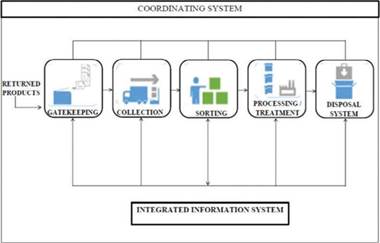
Figure 2. Seven RL activities (Turki & Mounir 2014).
3 PROPOSED MODEL
The proposed model is based on literature review and interviews with smartphone service centers. From the literature, Lambert et al. (2011) stated that RL system considers four steps: gatekeeping, collection, sorting, and treatment or recovery. The disposal is not mentioned because of the nature of a product. The goal of this model is to propose an androidbased RL system DSS for smartphones. Activity diagram for each step is presented in the subsections below.
3.1 Step 1: Gatekeeping
Gatekeeping is a filtering process in which returned products are allowed to enter RL system (Giuntini & Andel 1995). For smartphones, activity diagram of gatekeeping is adopted from Lambert et al. (2011). A preliminary gatekeeping leads to communication between customer and company whether return authorization should be required. If a return authorization is necessary, and verification should be done, customers will then receive a return authorization number to service if verification is accepted by the company. After the company receives the product, the company decides whether recovery is possible or not. Activity diagram DSS for gatekeeping is shown in Figure 3. A customer who is refused through the gatekeeping process may send their product back to the company in accordance with the terms and conditions apply. A decision needs to be made on whether the product should be retuned; if a return authorization is necessary, verification should be done.
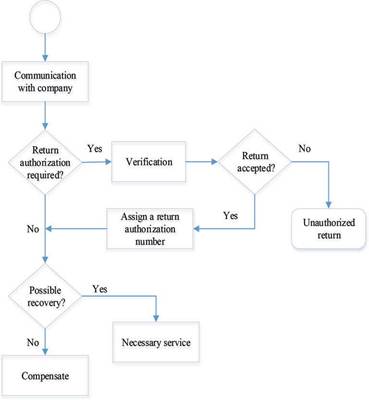
Figure 3. Activity diagram of DSS: Gatekeeping (Lambert etal. 2011).
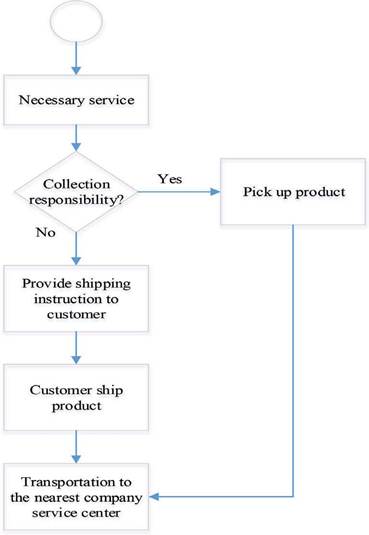
Figure 4. Activity diagram of DSS: Collection.
3.2 Step 2: Collection
Collection is a process of receiving returned products from customers, as illustrated in Figure 4. Ifthe company is required to take responsibility for the collection process, product pick-up should be done; otherwise, customers send the product to the nearest company representative service center based on shipping instruction.
In the electronics industry, the technician visits the customer to repair onsite, if possible. If the company is not responsible for returning the product, the company must give clear instructions on packaging, returning address, etc. Thus, a decision needs to be made and may include whether responsibility for collection should take place which will also determine the nearest company service center.
3.3 Step 3: Sorting
A preliminary sorting takes place after receiving the returned products and authorization process is given to the gatekeeper, as illustrated in Figure 5. The company decides which products are acceptable or not. In this step, company must determine the criteria for accepting to avoid differences in decision-making. These criteria will be inputted into the database in the DSS. According to Rogers & Tibben-Lembke (1999), returned products have different reasons. A decision needs to be made and may include return reason and further handling.
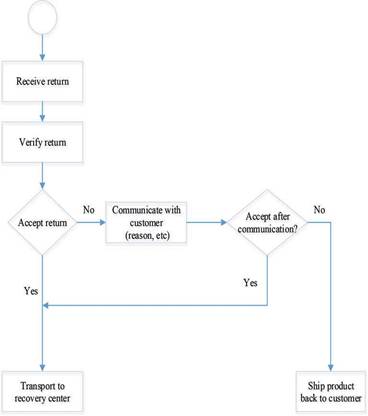
Figure 5. Activity diagram of DSS: Sorting.
3.4 Step 4: Recovery
This step involves activities with recovery options such as repair, upgrade, and cannibalization. They are considered for smartphones because they are proposed RL system until they arrive at a service center. This activity diagram is shown in Figure 6. Determining the initial state of the returned products influences recovery options. According to De Brito et al. (2002), several types of recovery can be distinguished. They are separated by product recovery,
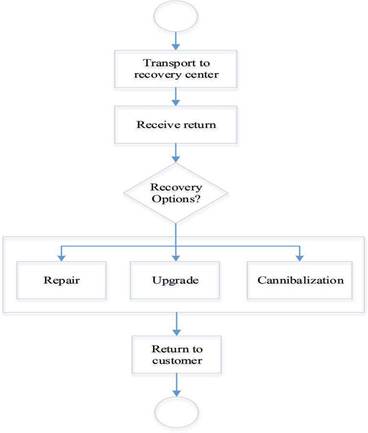
Figure 6. Activity Diagram of DSS: Recovery.
component recovery, material recovery, and energy recovery. In this model, recovery decision is separated by product recovery and component recovery. Product recovery contains repair and upgrade; then component recovery is cannibalization (components are taken off and used to repair another unit of the same product).
3.5 Android-based DSS of RL system
After presenting a conceptual RL system for smartphones, this section presents some screenshots from the proposed DSS model based on android. It shows interface register (Figure 7), return authorization (Figure 8), types of complaint or product return (Figure 9), and recovery suggestion (Figure 10).
Interface register shown in Figure 7 presents initial process in RSC (gatekeeping). Customers should register before they return their product. Information required are username, email, and phone number. Based on customer data, the company decides whether the return is accepted or not.
If customer data are verified, the company will send return authorization number to the customers via email. Then, the customers complete user return
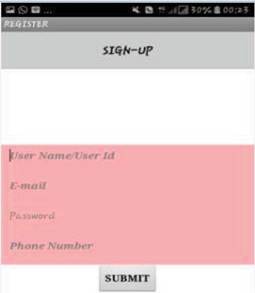
Figure 7. Register from screenshot.
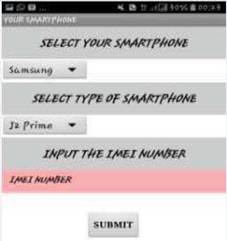
Figure 8. User return authorization from screenshot.
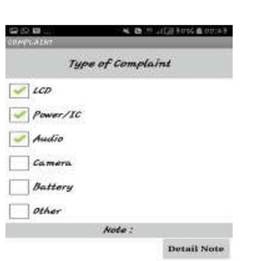
Figure 9. Type of complaint from screenshot.
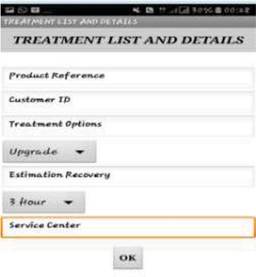
Figure 10. Recovery suggestion from screenshot.
authorization as shown in Figure 8. It is required to know information about product return.
Types of complaint shown in Figure 9 present reasons of return. Reasons of return for smartphones are LCD, power, audio, camera, battery, etc. According to De Brito et al. (2002), a product is returned because the product is not working properly.
Recovery suggestion presents decision from the company after the returned product is examined directly. Customer receives that information through the application which is shown in Figure 10. Based on previous explanation, recovery options are repair, upgrade, and cannibalization.
4 DISCUSSION
In the proposed DSS model, the parties involved are customers, companies (decision makers), and authorization service centers (recovery centers). The main objectives proposed a reverse logistics decision support system which can ease product information tracking to products returned, especially smartphone customer using an android-based application. According to Turki & Mounir (2014), to create a customer value through the return process, we make sure that necessary and the correct information are provided. All customers fill in and send a return request form to the company. A return request form should be available on the application. Only customers who are registered while purchasing the product in the first place can send a return request. By this purchase, data of both the customer and the product are saved into database. Customers who use this application do not have to come to service center.
However, in this model, sorting is the most crucial issue because the company must determine the criteria for accepting a return. Each type is concerned with specific criteria, which are different from the others (Lambert et al. 2011).
4 CONCLUSION
The conclusion of this paper is that an android-based DSS model can be developed to improve the efficiency and effectiveness of RSC management.
This model is designed to ease product returned information tracking to customers in the reverse process. As consumers can know the possibility of damage experienced, they also know where they should send the product, provide an alternative way to collecting process by looking for delivery without having to come to the service center, and get estimated treatment time, and the estimated cost if they must pay. Thus, the consumers can decide whether to proceed to immediate recovery or not.
This model does not include the disposal stage. Also, the DSS model in smartphone Reverse SCM designed has not yet reached the manufacturing level. The model is designed to determine the type of recovery/treatment type in service center. Considering those facts, further research is expected to develop a DSS model that covers all reverse SCM activities on smartphone products.
REFERENCES
Bhandari, R. 2014. Impact of technology on logistics and supply chain management. IOSR Journal of Business and Management p.19-24
Blumberg, D.F. 2005. Introduction to management of reverse logistics and closed loop supply chain processes. Boca Raton, FL, USA: CRC Press.
Rogers, D.S. & Tibben-Lembke, R.S. 1999. Going backwards: reverse logistics trends and practices (Vol. 2). Pittsburgh, PA: Reverse Logistics Executive Council.
Brito, M.D., Flapper, S.D. & Dekker, R. 2002. Reverse logistics. Rotterdam: Econometric Institute Research Papers.
Filip, F.G. & Duta, L. 2015. Decision support systems in reverse supply chain management. Procedia Economics and Finance 22, 154-159.
Giuntini, R. & Andel, T. 1995. Master the six R's of reverse logistics - Part 2. Transportation and Distribution 36(2): 73-77.
Guide, V.D.R. & Wassenhove, L.N. 2003. Business aspects of closed-loop supply chains (Vol. 12, pp. 86-93). Pittsburgh, PA: Carnegie Mellon University Press.
Lambert, S., Riopel, D., Kader, W.A. 2011. A reverse logistics decision conceptual framework. Computers & IndustrialEngineering 61(3): 561-581.
Liao, T.Y. 2018. Reverse logistics network design for product recovery and remanufacturing. Applied Mathemat- icalModelling 60: 145-163.
Turban, E. 2007. Information technology for management: Transforming organizations in the digital economy. Hoboken, New Jersey: John Wiley & Sons, Inc.
Turki, W. & Mounir, B. 2014. A proposition of a decision support system for reverse logistics. In Advanced Logistics and Transport (ICALT), 2014 International Conference on (pp. 120-125). IEEE.