Developing green manufacturing framework through reverse logistics using system dynamics simulation
E. Fatma & D. Jayawati
Politeknik APP Jakarta, Jakarta, Indonesia
C. P. Wulandari
National Taiwan University of Science and Technology, Taipei, Taiwan
ABSTRACT: This paper proposes to create a system simulation model to simulate e-waste management to support the development of green manufacturing framework by considering economic and environmental concerns.
This paper uses system dynamics simulation based on literature studies and related previous research. The initial stage of this research was carried out by identifying the barrier of e-waste management and factors that influence e-waste management. Then, a conceptual model of e-waste process management through a reverse logistics system was developed. The conceptual model was developed into a simulation which consists of several related sub-models including manufacturer, distributor, government, recycle provider and environment sub-model. From the proposed causal and stock and flow model, it is found that government regulation and incentives play an important role in developing green manufacturing framework.1 INTRODUCTION
The rapid technological developments and market changes have triggered electronics manufacturers to compete in producing new products frequently. However, this development led to a shorter life cycle of electronics products. Shortened electronic life cycles may cause the product to be no longer used or depleted faster which will lead to the increase of electronic waste (e-waste). Balde et al. (2014) reported that e-waste produced globally between 2010 and 2015 has reached 48 million tons. E-waste management becomes important since various components consisted in e-waste are classified as toxic and can be harmful to the health and the environment. Meanwhile, e-waste recycling processing business is profitable (Krishnadas & Radhakrishna 2014).
Unfortunately, e-waste treatments are scattered and hard to control; and only a small percentage of total e-waste has been appropriately managed.Fernando & Rupasinghe (2016) reveal that there is an increasing awareness about e-waste and its impact on environmental sustainability. Increasing environmental concern has led manufacturers to manage their e-waste and develop green manufacturing (Lu et al. 2015). On the other hand, e-waste management is a complicated process due to the contents of the hazardous material composition which will affect environments (Robinson 2009). E-waste operational factors which need to be considered include cost-benefit analysis, transportation, warehousing, recycling, etc. (Rahman & Subramanian 2012).
Consequently, e-waste management requires a multi-stakeholder including consumers, manufacturers, government, and environmentalists. Some references suggest that reverse logistics is one of e-waste management solutions. In e-waste management, reverse logistics is defined as a system for returning defective, time-consuming, or outdated electronic products to producers or suppliers for further processing (Janse et al. 2010). Activities in e-waste reverse logistics may include remanufacturing, refurbishment or final disposal. This paper attempts to develop e-waste reverse logistics system simulation to develop sustainable manufacturing. System simulation will be built by considering manufacturing, regulatory, consumption, distribution and environmental aspect in developing e-waste management.
2 LITERATURE REVIEW
Reverse logistics is a process of planning, executing and controlling the flow of materials, and information from the point of consumption back to its beginning points for reprocessing or appropriate disposal (Rogers & Tibben-Lembke, 2001). Reverse logistics in electronics industry aims to return the value of reusable electronic components back to its producer or supplier, as the form of corporate environmental responsibility to the product that has been produced (Tonanont et al.
2008).Some EU countries have implemented Waste of Electronic and Electricity Equipment (WEEE) policy since 2012. This policy requires each
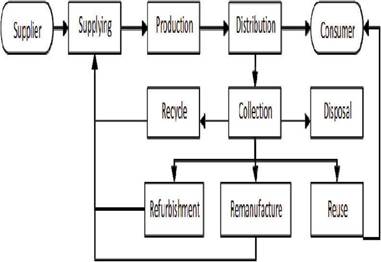
Figure 1. Closed loop supply chain in the electronics industry.
producer to reprocess waste generated from their used products using environmentally friendly methods. This policy strives to increase the involvement of environmental performance of all parties involved in the life cycle of electronics products (Ongondo et al. 2011). The process should be managed efficiently to minimize the cost of the required process (Hanafi et al. 2008). The complexity of ewaste management can be considered as a dynamic process (Georgiadis & Besiou 2008).
Dynamic simulation system approach has been used to analyze the mechanisms, patterns, and trends of e-waste management, as the sequence of future events depends on the current policy (Stock 1998). System Dynamics is used to observe the structure of underlying complex situations and identify the patterns with the behavioral patterns generated by the system over time (Forrester 1994).
Figure 1 represents the general closed-loop supply chain system, at the beginning materials flow from supplier to consumer; which is known as forward logistics. When the product is no longer used, it expectantly flows backward to the suppliers or manufacturers. Reverse logistics facilitates the flow of returns products which include following activities: collecting, recycling, processing, or disposing the material into the landfills. Various research studies have been conducted in the field of e-waste reverse logistics which covers various topics including the design of logistics networks, location-allocation problem, optimal allocation problem, optimal transportation route, manufacturing design and other related topics. Previous research on e-waste reverse logistics is summarized in Table 1.
3 RESEARCH FRAMEWORK
This research uses system dynamics simulation to create a framework for developing green manufacturing policy through reverse logistics.
This research identifies the barrier and trigger of e-waste reverse logistics management. In the first stage, theTable 1. Previous research related to e-waste management.
| Authors (Year) | Factors observed | Method |
| Georgiadis | raw materials, service- | System dynamics |
| & Besiou (2008) | able inventory, distributor’s inventory, recyclable products | simulation |
| Janse et al. | awareness, partner- | TOPSIS and Fuzzy |
| (2010) | ships, performance visibility, strategic focus in avoiding returns, reclaiming value from returns | analytic network process |
| Chiou | economic, environ- | Fuzzy analytic |
| et al. (2012) | mental, and social needs, recycled volumes, recycling costs, sales volume | hierarchy process |
| Banar et al. | the site of the recyc- | Multi-Criteria |
| (2014) | ling of electrical and electronic equipment wastes plants location | Decision Making (MCDM) |
| Agrawal | reverse logistics, | Review and |
| et al. (2015) | reverse logistics network, disposition forecasting product returns, outsourcing | literature analysis |
| Fiksel J. | challenges encoun- | Comparative assess- |
| (2003) | tered in sustainable and resilient system design in manufacturing | ment and simultaneous simulation |
formulation of the whole system will be discussed.
The next step is to analyze the factors that influence the re-verse logistics as e-waste problem solutions. Based on literature review and system analysis, a conceptual model of e-waste management through reverse logistics was developed. The conceptual model was developed into a simulation model which consist of several related sub-models. Reverse logistics causal model framework can be simulated to predict system response in e-waste management. This paper proposes to create a system simulation model to simulate e-waste management development to support the establishment of the green manufacturing.3.1 System definition
The development of a closed loop supply chain in ewaste management requires involvement and cooperation from various parties to ensure its effectiveness. The observed system is a combination of various activities, for instance, material procurement, production, distribution, utilization, e-waste collection, which include sorting, recycling and final disposal. In this model, the system was grouped into several sub-models to facilitate system behavior analysis and to see linkages between activities. This system involves several parties, such as suppliers, manufacturers, distributors, retailers, consumers, recyclers and governments.
In supply chains, suppliers act as raw materials source to producers. In e-waste management, suppliers are forced to take the role of using parts of recycled or reused component, extracted from e-waste. Since some parts of electronics devices are extracted from non-renewable natural resources, these recycling and reusing efforts will possibly help to preserve natural resources and the environment. Manufacturers are also having responsibilities for their e-waste processing. Some developed countries have implemented Extended Producer Responsibility regulation that forces manufacturers to have a great responsibility to organize and operate their own ewaste management (Gottberg et al. 2006), so it will not be harm the environment.
Distributors and retailers have a role in delivering finished products from producers to end-consumers. As a point that is directly connected to consumers, retailers can act as an e-waste collection center by offering a promotion to some products that may appeal to end-consumers. It will make some amount of e-waste are entering back the e-waste management system (Tonanont et al. 2008).
The end-consumer is also considered as a central point of e-waste management. Consumer behavior can be measured subjectively through the consumer awareness regarding preserving the environment. Consumers with high awareness will consciously recycle or reduce their e-waste (Chen & Chai 2010).
The government, as a regulator, has a role in the making of e-waste management policy and regulation. In some countries, governments play a substantial role, not only in the formulation of legislation but also engaging in the implementation; meanwhile, in other countries, governments only play a small role, and further encourage the voluntary mechanism of the company (Balde et al. 2014). The government can give an incentive to industry to promote and encourage e-waste management or have a firm regulation about pollution.
E-waste recycling actors can be grouped into informal and formal recyclers. Kumar et al. (2011) reveals that most e-waste collections are through informal channels. E-waste is then dismantled and reused in the market, while its non-functional components are disposed of. High-value components are then sold to the processing industries to recover or recycle those materials to supply industrial needs. Recyclers engage in the collection, pre-processing/ recycling of any raw materials. A small proportion of this informal sector may contribute to negative impacts on human health and into the environment due to its unhealthy processing techniques. Problem arise from informal sector is that the volume of processed e-waste is not properly documented any may use unsafe e-waste processing methodology.
Community service or non-governmental organizations play a significant role in raising public awareness of problems caused by e-waste. Organizations may have a good collaboration with others parties. This initiative should come from various stakeholders, especially from governments, suppliers, producers, recyclers, as well as the consumers, to provide a broader e-waste management system. Based on the movement of e-waste and the involvement of each actor within, the closed supply chain of electronic products can be drawn into a causal loop system as illustrated in Figure 2.
3.2 Model development
The causal-loop in Figure 2, was then developed into system dynamics stock-flow diagram. The system dynamics structure contains both level and auxiliary variables. The level is defined as the accumulation of values occurring in the system, while the variable represents the movement of flow in the system (Forrester 1994). The flow is generated from the decision-making process and other conditions that may influence or be influenced by decisions made (Fatma 2015). Figure 3 shows the system dynamics of e-waste activity framework. The arrows in Figure 3 illustrate the relationship between variables and the arrows show the direction of its influence. The (+) or (-) sign at the top of the arrows indicates the effect of each activity. The (+) sign shows that the Variables will change to the same value; if the sign is (-), variable changes to the opposite value. Figure 3
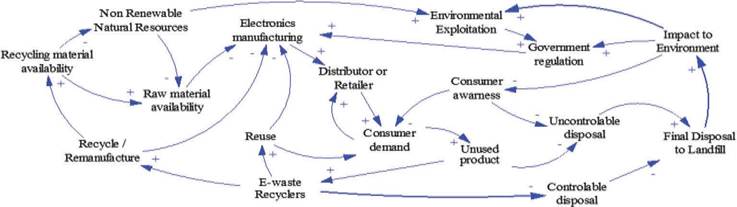
Figure 2. Causality diagram of the green manufacturing development framework.
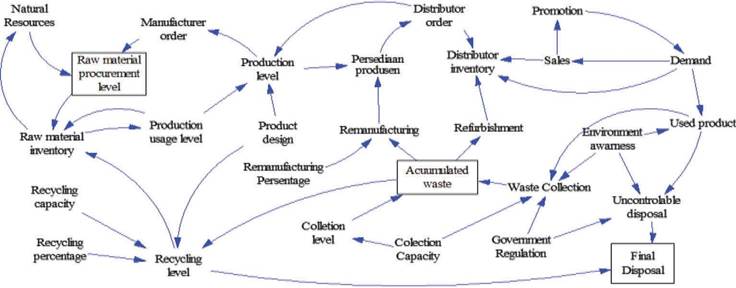
Figure 3. Reverse logistics for electronics industry framework.
shows the relationship between variables in the development of sustainable electronics industry through reverse logistics system of e-waste. Based on the proposed model, it can analyze what factors can be done to develop green manufacturing through reverse logistics of e-waste.
3.3 Manufacturing sub-model
Market demand determines the number of raw materials needed for production. If demand increases, the number of raw materials needed will increase as well. Consequently, the existing source of raw materials for electronics will be exploited, and its availability in nature will decrease. It encourages the manufacturer to utilize recycled raw materials, which come from e-waste. Increased recycling may increase the availability of recycled raw materials. On the other hand, the recovery process requires a processing cost that may impose a manufacturer (Andel 1997). However, if a company can manage their reverse logistics correctly, the company will get economic and environmental profits by performing it (Stock 1998).
3.4 Government sub-model
The Government regulations might encourage producers and suppliers to procure recycled materials as their raw materials. They allow manufacturers to take advantage of e-waste for recycling before reentering the manufacturing process (King et al. 2006). This sub-model affects the environment submodel which triggers manufacturers to utilize recycled raw materials. In the causality model, it was assumed that there is a flow of information that describes the effect of regulation on the actions of the manufacturer, consumers, and distributors. Consistency and firmness in the implementation of the government regulations will enhance the companies, consumers or others compliance of in e-waste treatment. This compliance must be offset by the collection and treatment capacity of the related parties (Kang 2013).
3.5 Distribution and consumption sub-models
Consumers play an essential role in a closed supply chain system of e-waste. It is revealed that consumers tend to dispose of electronics products even though the product is still feasible to use. Consumption has a positive relationship between the consumption of electronics and an increase in the amount of e-waste. This behavior is also driven by the manufacturers that keep on increasing electronics product sales.
Manufacturers can also raise consumer environmental awareness of their users concerning on the dangers of e-waste. Increasing awareness of the users will reduce e-waste in the environment; on the other hand, it will increase the volume of e-waste processed by the processing facility, which needs to be considered and prepared by both producer or government.
3.6 Recycle provider sub-model
E-waste collected form the end-consumer is transported to recycle provider for further processing. After the recovery process, e-waste is transported to its original producers or other producers which use recycled materials (Georgiadis & Vlochos 2004). In e-waste reverse logistics, recycle provider may act as a storage site operator where e-waste is sorted or classified based on its conditions, they will classify e-waste either to recycle or process it into a final treatment and landfill for final disposal (Wang & Yang 2007). Recycling process involves cost and revenue that may encourage recyclers to process e-waste (Das & Dutta, 2013). E-waste processed by recycle provider is constrained by its processing capacity.
3.7 Environmental sub-model
Awareness of environment and sustainability is one of the success drivers of e-waste reverse logistics. Reverse logistics brings a competitive advantage to manufacturers that combine business goals and environmental sustainability. In addition, “green manufacturer” image is an important marketing element which might drive the increase in their sales (Chen et al. 2012). Reverse logistics is performed to ensure that environmental protection from e-waste has been done. Manufacturers will no longer rely on new raw materials, instead, they may use recycled materials. Increasing e-waste volume leads to a positive loop on the use of raw materials and reduces the exploitation of natural resources to acquire new materials which simultaneously leads to a negative loop for the environment (Amankwaa 2013).
4 CONCLUSION
This study has identified some perspectives involved in developing green manufacturing in electronics industries. A conceptual model to develop green manufacturing development through reverse logistics has been constructed. The causal-loop and-flow diagrams were constructed using previous studies and qualitative method of system dynamics. The proposed model represents flows of e-waste and its reverse logistics network to develop green manufacturing policy which involves multiple parties. Reverse logistics process provides reuse, repair, recycling and refurbishes option in controllable e-waste management.
Based on the developed model, it is shown that Government regulation and consumer awareness play an important role to encourage the development of e-waste reverse logistics. In addition, particular emphasis should be performed to the relations among the chain members themselves and commitment from all manufacturers, retailers to work collectively, in terms of e-reverse logistics processing and costs sharing. Further model development is needed by using statistical data to capture real system in e-waste management.
References
Agrawal, S., Singh, R.K. & Murtaza, Q. 2015. A literature review and perspectives in reverse logistics. Resources, Conservation and Recycling 97: 76-92.
Amankwaa, E.F. 2013. Livelihoods in risk: Exploring the health and environmental implications of e-waste recycling as a livelihood strategy in Ghana. The Journal of Modern African Studies 51(4): 551-575.
Andel, T. 1997. Reverse logistics: a second chance to profit. Transportation & Distribution 38(7): 61-66.
Balde, C.P., Wang, F., Kuehr, R. & Huisman, J. 2014. The global e-waste monitor. United Nations University, IAS- SCYCLE, Bonn.
Banar, M., Tulger, G. & Ozkan, A. 2014. Plant Site Selection for Recycling Plants of Waste Electrical and Electronic Equipment in Turkey by Using Multi-Criteria Decision Making Methods. Environmental Engineering & Management Journal (EEMJ) 13(1).
Chen, T.B. & Chai, L.T. 2010. Attitude towards the environment and green products: consumers’ perspective. Management science and engineering 4(2): 27.
Chen, C.C., Shih, H.S., Shyur, H.J. & Wu, K.S. 2012. A business strategy selection of green supply chain management via an analytic network process. Computers & Mathematics with Applications 64(8): 2544-2557.
Chiou, C.Y., Chen, H.C., Yu, C.T. & Yeh, C.Y. 2012. Consideration factors of reverse logistics implementation-A case study of Taiwan’s electronics industry. Procedia- Social and Behavioral Sciences 40: 375-381.
Das, D. & Dutta, P. 2013. A system dynamics framework for integrated reverse supply chain with three-way recovery and product exchange policy. Computers & IndustrialEngineering 66(4): 720-733.
Fatma, E. 2015. Development of sustainable tuna processing industry using system dynamics simulation. Proce- dia Manufacturing 4: 107-114.
Fernando, K.J.S. & Rupasinghe, T.D. 2016. A Conceptual Framework for E-waste Management through Reverse Logistics: A Case Study from Australia. Management 5 (4): 190-211.
Fiksel, J. 2003. Designing resilient, sustainable systems. Environmental science & technology 37(23): 53305339.
Forrester, J.W. 1994. System dynamics, systems thinking, and soft OR. System dynamics review 10(2-3): 245-256.
Georgiadis, P. & Besiou, M. 2008. Sustainability in electrical and electronic equipment closed-loop supply chains: a system dynamics approach. Journal of Cleaner Production 16(15): 1665-1678.
Georgiadis, P. & Vlachos, D. 2004. Decision making in reverse logistics using system dynamics. Yugoslav Journal of Operations Research 14(2): 259-272.
Gottberg, A., Morris, J., Pollard, S., Mark-Herbert, C. & Cook, M. 2006. Producer responsibility, waste minimization and the WEEE Directive: Case studies in ecodesign from the European lighting sector. Science of the total environment 359(1): 38-56.
Hanafi, J., Kara, S. & Kaebernick, H. 2008. Reverse logistics strategies for end-of-life products. The International Journal of Logistics Management 19(3): 367-388.
Janse, B., Schuur, P. & de Brito, M.P. 2010. A reverse logistics diagnostic tool: the case of the consumer electronics industry. The International Journal of Advanced Manufacturing Technology 47(5): 495-513.
Kang, D.H.P., Chen, M. & Ogunseitan, O.A. 2013. Potential environmental and human health impacts of rechargeable lithium batteries in electronic waste. Environmental science & technology 47(10).
King, A.M., Burgess, S.C., Ijomah, W. & McMahon, C.A. 2006. Reducing waste: repair, recondition, remanufacture or recycle?. Sustainable Development 14(4): 257267.
Kumar, V., Garg, R., Rahman, Z. & Kazmi, A.A. 2011. Sustainability and E-waste management scenario in India. In the first International Conference on Interdisciplinary Research and Development (Vol. 31).
Lu, C., Zhang, L., Zhong, Y., Ren, W., Tobias, M., Mu, Z. & Xue, B. 2015. An overview of e-waste management in China. Journal of Material Cycles and Waste Management 17(1): 1-12.
Krishnadas, N. & Radhakrishna, R.P. 2014. Green information technology: Literature review and research domains. Journal of Management Systems 24(1): 5779.
Ongondo, F.O., Williams, I.D. & Cherrett, T.J. 2011. How are WEEE doing? A global review of the management of electrical and electronic wastes. Waste management 31(4): 714-730.
Rahman, S. & Subramanian, N. 2012. Factors for implementing end-of-life computer recycling operations in reverse supply chains. International Journal of Production Economics 140(1): 239-248.
Robinson, B.H. 2009. E-waste: an assessment of global production and environmental impacts. Science of the total environment 408(2): 183-191.
Rogers, D.S. & Tibben-Lembke, R. 2001. An examination of reverse logistics practices. Journal of business logistics 22(2): 129-148.
Stock, J.R. 1998. Development and implementation of reverse logistics programs. In Annual Conference Proceedings, Council of Logistics Management.
Tonanont, A., Yimsiri, S., Jitpitaklert, W. & Rogers, K.J. (2008, January). Performance evaluation in reverse logistics with data envelopment analysis. In IIIE Annual Conference. Proceedings (p. 764). Institute of Industrial and Systems Engineers (IISE).
Wang, I.L. & Yang, W.C. 2007. Fast heuristics for designing integrated e-waste reverse logistics networks. IEEE Transactions on Electronics Packaging Manufacturing 30(2): 147-154.