Greece
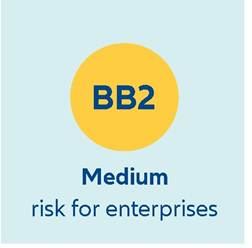
Solid recovery sees challenges from monetary policy tightening
| GDP | USD219.1bn (World ranking 55) |
| Population | 10.6mn (World ranking 86) |
| Form of state | Parliamentary Republic |
| Head of government | Kyriakos Mitsotakis (PM) |
| Next elections | 2027, Legislative |
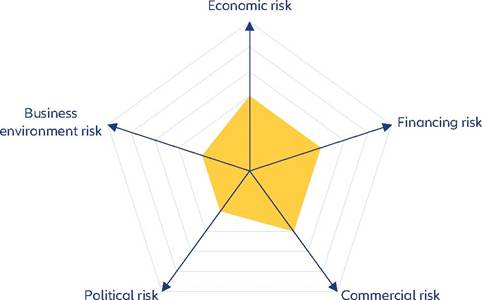
Strengths & weaknesses
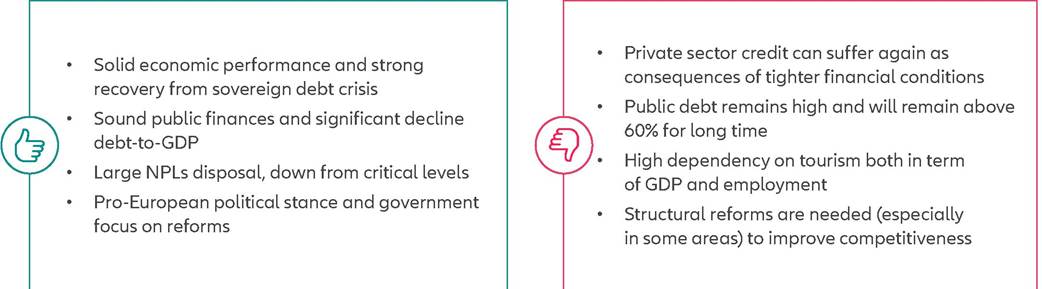
Economic overview
Strong post pandemic recovery faces challenges
In 2023, the Greek economy continued to expand, still at a much faster pace than the Eurozone (+2.1% vs +1.7% in real terms expected), despite having slowed down compared to 2021 and 2022 impressive growth rates.
GDP stands more than 6.0% above pre-pandemic levels. However, Greece's recovery has almost paused in Q3 2023 (almost stagnated over the quarter), given the impact of monetary policy tightening on the economy and long-lasting challenges faced. Consumption contracted both for households and the government (-0.7% and -1.2% q/q respectively) and fixed investment posted the third consecutive quarterly decline - after being a key driver of growth in 2021-22. At the same time, net foreign demand contributed negatively to growth as exports decreased slightly while imports increased. The figures bode well with a weakening growth momentum in 2024, clouded by surging interest rates and weaker external demand. We remain cautious over the outlook; we expect real GDP growth to normalize and reach +1.0% in 2024 after +2.1% in 2023 and then to pick up in 2025 to +1.5%.Private consumption was one of the main drivers of the recovery and expanded by more than 7.0% both in 2021 and 2022 but we see private spending to have clearly slowed down in 2023 due to elevated uncertainty and surging interest rates, despite easing inflation is providing some cushion to households' and corporates' consumption outlook.
Investment performed solidly in 2021-2022 but prolonged uncertainty has weighed on the outlook. Nonetheless, the inflows of Next Generation EU funds will provide some support in the coming years. Indeed, Greece is one of the major beneficiaries of the NGEU facility and is expected to mobilize around EUR36bn over the period 2021-2026. This creates an additional impulse for public and private investment. Finally, intense tourism activity in summer should provide support to net trade in H2 2024.
Public finances have been impacted both by the pandemic and energy crises related support measures. The fiscal deficit decreased further in 2023 to 2.3% and is expected to improve in 2024-2025. Recent actions by rating agencies' actions have recognized the country's fiscal progresses, updating its Autumn 2023, although investors were already pricing Greece as an investment grade country. Moreover, most of the public debt remains in official hands and secured long maturity, so higher interest rates should be cushioned and rollover risks reduced.
The labor market experienced a steady recovery, with the unemployment rate down to 10.8% in Q3 2023, from 11.2% in the previous quarter. The key force leading to the marked improvement has been the decline in the numbers of unemployed, now at 2008 levels. With rising nominal wages and the slowdown in inflation, real compensation of employees is expected to turn positive and support households' purchasing power.
Rising interest rates will weigh on the outlook
Prices pressure is easing markedly, though the reading in November 2023 was above 2.0%. The declining trend is driven by decreasing energy prices while food price growth remained sustained (+9.0% y/y).
At the same time, we see the impact of the ECB tightening on Greek households and firms.The Greek banking sector has strongly reduced its burden of NPLs (non-performing loans), enhancing its capacity to provide credit to the real economy, especially businesses over the last decade. The Greek NPLs ratio decreased from 47.6% in 2017 to 7.9% in Q3 2023, but most of the impaired assets remain in the economy as they moved from the banking sector to the servicers and the level is still well above Eurozone average. Credit risk must be monitored given the inflows of non-performing loans continue, albeit at a limited rate and repayment capacity can deteriorate. Finally, private sector debt decreased markedly to 99% of GDP in 2022 (from 125% in 2020).
NGEU reforms should help improve the business environment
The Greek business environment has improved in recent years but remains regulated and complex. The digitalization of public services, the reduction in corporate taxes, the unification of the social security system and the reform of the labor and product markets helped in this way. Greece also has one of the slowest court systems in Europe. According to the OECD, Greece has one of the more restrictive and heavily regulated business environments while corruption in public administration is perceived to be still relatively high. Many of these challenges are tackled by the NGEU related reforms.
On 31 August 2023, Greece submitted its amended recovery and resilience plan, which includes a REPowerEU chapter. In detail, Greece's plan values EUR35.95bn (of which EUR18.22bn of RRF grants and 17.73bn of loans and includes some national resources). It is structured around 103 investment streams and 75 reforms; 38% of the plan will support climate objectives while 22% of the plan will foster the digital transition.
On the political side, the June 2023 legislative election, under new legislative law, saw New Democracy winning - after not having reached the absolute majority in May. The ruling party New Democracy secured almost 41% of the votes while Syriza lost further ground and obtained 17.8% of the votes. This means policy continuation and a strong focus on economic developments.

More on the topic Greece:
- ANALYTICAL PROBLEMS
- The Idiomorphic Constitution of Cyprus
- Between Legal Pluralism and Discrimination
- Abstract
- Religious Unorthodoxy
- Introduction
- Most crimes eventually became understood as collective problems to be solved by the state acting on society's behalf.
- MACHIAVELLI, CICERO, AND PLUTARCH ON THE LION AND THE FOX
- AppendixA: Data
- The Triumph of the Tyrrhenians, 800 BC–400 BC