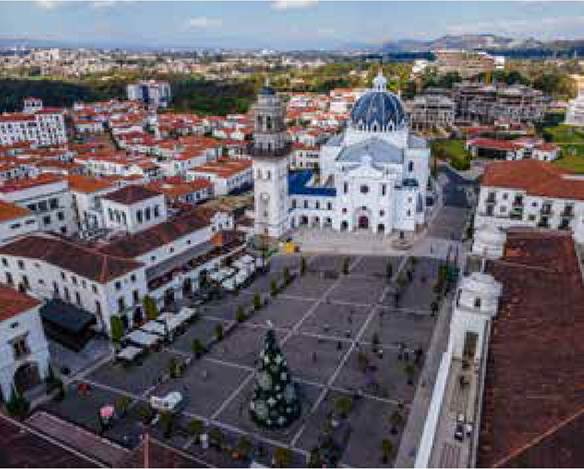
Guatemala
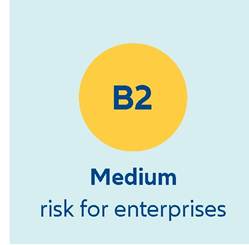
Solid growth, remaining structural challenges
| GDP | USD95.00bn (World ranking 69) |
| Population | 17.4mn (World ranking 70) |
| Form of state | Constitutional Democratic Republic |
| Head of government | Bernardo Arevalo |
| Next elections | 2027, Presidential and legislative |
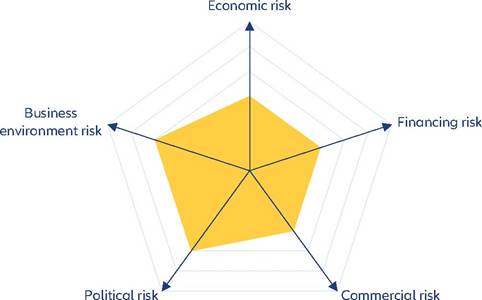
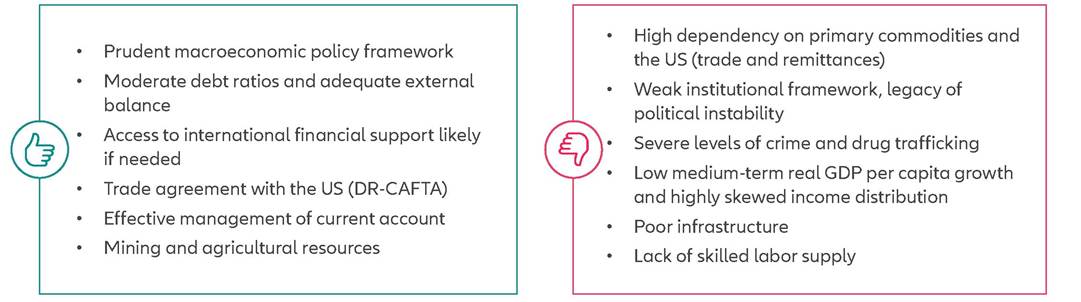
Strengths & weaknesses
Economic overview
Resilient growth, price pressures to remain in the short term
Guatemala has built a strong track record of prudent macroeconomic, fiscal and financial management over the years, with real GDP growth +3.3% on average in the 2000s and +3.54% on average in the 2010s.
The Guatemalan economy was remarkably resilient during the pandemic with GDP slightly contracting by -1.8% in 2020. Underpinned by a favorable external environment and the authorities' swift, comprehensive and coordinated policy response, Guatemala has experienced a robust recovery, posting growth rates of +8.0% in 2021 and +4.1% in 2022. The increase in 2022 was primarily driven by a +3.7% surge in domestic private and public consumption, a result of the sustained macroeconomic stability maintained through disciplined monetary and fiscal policies. Despite this resilience, social indicators are likely to have deteriorated during the pandemic and global inflationary pressures may persist stubbornly. Overall, we expect Guatemala will decelerate to +2.9% in 2023 and forecast a slight uptick to +3.5% in 2024.In 2022, monetary policy decisions were based on the analysis of the inflation risk balance.
Inflationary pressures could persist in the short run due to increases in international prices of commodities, container transportation costs and disruptions in some major global supply chains. Additionally, the formation of the El Nino phenomenon is expected to result in a decrease in rainfall, primarily affecting the eastern departments of the country. This is likely to weigh on the country's agricultural output, leading to inflationary consequences. The combination of these factors resulted in an inflation rate of +6.9% at the end of 2022, surpassing the +3-5% target range set by the Monetary Board. We expect inflation to remain elevated at +6.3% in 2023 before gradually converging to +5.5% in 2024 and staying within the target range in 2025-28. In this context, the Banco de Guatemala (Banguat) kept the policy rate at 5% in 2023. As inflation falls towards the target range, Banguat will continue monetary easing, taking the policy rate to 2.75% by 2025.Guatemala has been traditionally fiscally prudent. Over the past decade, fiscal deficits have consistently stayed below +2% of GDP on average. Moreover, the public debt-to-GDP ratio of Guatemala is low by emerging-market standards, even at 37% of GDP in 2022. This will give the government adequate access to external financing from bond markets on reasonable terms throughout 2024-28. This has been achieved by utilizing the existing normative framework and budget evaluation processes to ensure a low debt- to-GDP ratio, providing appropriate safeguards for debt repayment and meeting financial commitments. In response to the Covid-19 pandemic, the Guatemalan Government implemented a comprehensive set of fiscal policy measures, leading to the country's fiscal balance reaching its historical low at -4.9% of GDP. Due to better-than-expected tax revenues, the fiscal balance rebounded swiftly to -1.2% of GDP in 2021 and -1.7% of GDP in 2022. As the government's intention to increase the tax base to finance key policy areas, we expect the fiscal deficit to stabilize to -1.8% of GDP in 2023 and 2024.
Robust and stable external finances
Guatemala has recorded a current-account surplus since 2016, primarily due to substantial remittance receipts, which have consistently increased for more than two decades. The current account balance declined from +5.0% of GDP in 2020 to +2.2% of GDP in 2021 and +1.4% of GDP in 2022. This decline resulted from the continued strength in remittances being more than offset by a substantial increase in imports, aligning with the economic recovery and weaker terms of trade. Looking ahead, remittances are expected to moderate as the effect of the US stimulus fades out. However, they are likely to remain higher than pre-Covid-19 levels because the implementation of the US infrastructure bill should boost construction, a sector that heavily employs Central American immigrants. Also, after an oil price related surge in fuel imports in 2022, total imports should decline in line with the projected downward correction in oil prices. Therefore, we expect the current account to keep its surplus position with +2.4% of GDP in 2023 and +1.8% of GDP in 2024.
The Guatemalan quetzal (GTQ) is expected to remain stable. Thanks to strong inflows of remittances, Guatemala has accumulated significant foreign reserves, providing import cover for nearly nine months. This cushion has helped maintain a relatively stable GTQ/USD exchange rate and real effective exchange rate. Overall, we expect the quetzal to appreciate slightly in nominal terms in 2024 once US demand rebounds, with little change in 2025-28 as Banguat maintains its managed-float exchange-rate regime as an implicit anchor for inflation.
Moderate political risks but weak business climate
Guatemala's business environment is quite poor in our assessment of 185 economies. The World Bank's annual Worldwide Governance Indicators surveys suggest that both the regulatory quality, legal frameworks and the level of corruption need to improve. Likewise, the Heritage Foundation's 2022 annual Index of Economic Freedom surveys have put Guatemala in the 69th position out of 184 economies, reflecting very strong scores with regard to tax burden, government spending, fiscal health, monetary freedom and trade freedom.
However, Guatemala scores less favorably with regard to the property rights, judicial effectiveness, government integrity, labor freedom and financial freedom. In terms of Environment Sustainability Indicators 2023, Guatemala ranks 104th out of 210 economies, displaying underperformance in climate change vulnerability and recycling rate.The Supreme Electoral Tribunal (TSE) certified the election results, which normally guarantees that the president-elect, Bernardo Arevalo and winners of congressional elections take office. Despite this, the former president's allies spent months trying to invalidate the elected members of Arevalo's party and Arevalo's inauguration. Ultimately, the transfer of power occurred after street protests. While this inauguration brings a feeling of hope and proof that Guatemalan's are willing to fight for democracy, Arevalo's party will hold a minority position in the legislature, keeping governance risks high throughout the 2024-28 forecast period.