Organizational culture as a self-reflective approach to create organizational identity (Case study: A private school in Bandung, Indonesia)
R. Sanjaya
Sekolah Tinggi Ilmu Ekonomi Harapan Bangsa, Bandung, Indonesia
ABSTRACT: High competition among private educational institutions in Bandung triggered schools to pursue achieving competitive advantage.
Forming appropriate organizational culture that is reflected in the identity of the organization is an option. This study was aimed to determine the kind of culture that manifested in organizational identity perceived by its employees. This research used OCAI (Organizational Culture Assessment Instrument) and a qualitative survey in the opening relational aspects of organizational culture within an educational institution. The open-ended questions in this survey were constructed in four sections that cover general practice and comparison, history, relational experiences, and leadership practices. In addition, the context for this research was a classical elementary school. The findings of the qualitative survey revealed the relative nature of the school in terms of the collegiality and reciprocity of care between those parties in leadership and between the teachers and the staffs in general. Furthermore, the majority of employees emphasized their identities as a “big family”.1 INTRODUCTION
The education system in developed countries such as Finland, Japan, and New Zealand often becomes a barometer of the designing of education system in developing countries. Those developed countries have both public and private schools who have an organizational culture that tends to be homogeneous as they emphasize equality for their citizens so that the quality between public and private school is relatively the same. Indonesia is a developing country whose quality of public schools is not evenly distributed. Consequently, many private schools have sprung up to answer this need by offering different uniqueness that can become their competitive advantages.
Rivalry at private educational institutions area in big cities in Indonesia is so intense including in Bandung. This rivalry can be characterized by several indicators such as admission of new students held earlier as even from previous years, and private schools are competing to attain competitive advantage by providing products, facilities, and services as best as they can which in turn results in more expensive school entrance fee. Schools hunt for a good reputation on the eyes of stakeholders. The organizational reputation can be molded through the contribution of the organizational identity. Therefore, to form an organizational identity, top management must be able to create the desired organizational culture in which values and norms are shared by all employees at all levels of management (Hatch & Schultz 2002). Implementation of cultural values needs to be carried out consistently so that they will be manifested in the identity of the organization elements. The implementation needs to be done in short time and through continuous efforts to ensure the cultural values displayed become the identity of the organization and can always be realized in the daily life of the organization as reflected by the attitude of the members of the organization (Huang-Horowitz & Freberg 2016). Organizational culture also exists in schools. Each school needs a clear identity to be accurately recognized by stakeholders. One of the ways to reveal it is assessing and mapping their culture properly. All too often, educational leaders are busy with data associated with the future directions of an educational enterprise. Educational leaders can make assumptions from their interactions with teachers and staff in the business of leadership and management doing everyday jobs. The open-ended survey has the potential to provide thematic information that relates to specific narratives within an organization through perceptions of what the organization was valuing in practice. A study by Giles & Yates (2012) has found that the success of the experience, findings, and learning on the part of the educational leader has led to the trailing of this organizational tool in the context of an elementary primary school.One of those schools attempting to shape their identity is Sekolah Klasikal Terang Nusantara (SETARA). Based on in-depth interviews with the headmistress of SETARA, the school was founded based on wishes of some leaders of a local church in Bandung which were eager to serve and be a blessing. They are burdened with an affordable education for those who cannot afford a good education because of limited fund. Good education is identical to the high cost. The headmistress stated: “Good education is expensive. But we believe that we are able to provide education on low budget without sacrificing the quality of education itself and decreasing the proper education standards. That’s why SETARA is trying to answer the need for good education at an affordable cost. I am personally called to dedicate myself in education area, especially to facilitate the underprivileged to get a good quality education”.
SETARA has vision to prepare the students to build the nation through a Christian perspective that loves and serves others. Its mission is to deliver an educational environment that focuses on Christ, which inspires children to love learning and to equip them with a biblical worldview that they can practice it through thinking wisely and acting with a purpose of advancing their nation, for the glory of God. The motto of the school is “Life-long learning” and its philosophy is a classical Christian school with advantages in active, global, and thorough learning. The core values of SETARA are as follows: excellence, integrity, compassion, whole-heartedness, courage, divine, serve (SETARA 2018). In order to manifest these values in the behavior of their academic community, SETARA equipped them with strong Christianity value, clearly making the principle of focusing on biblical perspective the most important thing within the teachers.
On the one hand, the biggest challenge is maintaining harmony among human resources because they are the backbone of the organization. On the other hand, there is a policy to develop the human resources by taking part in ACSI (Association of Christian School International) seminars and providing scholarships for post-secondary schools.According to data from the Ministry of Education and Culture (Kemdikbud 2018), in 2017, there are 467 primary schools (274 public and 193 private) in Bandung. Particularly in sub-districts where SETARA is located there are 18 kindergartens (1 public and 17 privates) and 10 primary schools (5 publics and 5 privates). Therefore, as a relatively new school, in order to have competitive advantage, SETARA needs to know first where the organization’s position is nowadays in the context of its identity in the eyes of its employees. Because of that reason, the importance of mapping organizational culture is very crucial for SETARA. Where SETARA is today and how deep its values are embedded nowadays among employees are very essential questions to be answered. The answers could bring benefits such as giving insights and valuable facts to provide basic foundation for becoming adaptive successfully and realizing a competitive advantage. This study was aimed to explore the cultural values of SETARA that are manifested in its identity which is perceived by the employees.
1.1 Organizational culture and identity
Robbins (2013) see the organizational culture (OC) as a system of shared meaning held by members that distinguishes one organization from other organizations. OC is believed to last for a long time but it is never static. This enables the organization to periodically evaluate the values, actions, and norms of the organization because of rapidly changing environment so the organization could succeed in becoming adaptive by establishing a new organizational culture that supports operational processes. OC involves all organizational members, initiates and matures at all hierarchical levels, and is founded on a broad-based history that is realized in the artifacts of the organization (e.g.
its names, products, buildings, logos and other symbols, including its top managers). Conducive OC has been identified as an indispensable organizational stabilizer and growth driver. OC represents the assumptions, beliefs, and norms of an organization shared by members of the organization. Organizational scholars conceived that OC can be expressed in a number of ways described as manifestations. One of the notifying artifacts is identity (Hatch & Schultz 1997). Understanding OC is fundamental to understand what underpins an organization’s operation. OC is also considered as the glue holding individual and organization together. Cultural profile thus provides a comparative benchmark for an organization that directs how people in an organization behave, what assumptions govern their behavior, and what organizational systems impact the change process. Organizational identification can be distinguished from the manifestations of basic organizational assumptions because organizational assumptions underline values and individuals infer their assumptions of the known values. In this connection, OC gives the identity of an organization and the sense of belonging that may result from organizational culture and organizational identification (Cheung et al. 2011).Cameron & Quinn (2011) declare that the Competing Values Framework is a framework formed based on interactions between two main dimensions that determine the effectiveness of the organization that together form 4 quadrants of Organization Culture Profile (OCP). This cultural dimension is often regarded as a competing value or as a determinant of indicators that affect organizational effectiveness. There are at least two main dimensions whose indicators are grouped into 4 types of cultures:
- The first dimension distinguishes organizational effectiveness indicators that emphasize flexibility, discretion, and dynamic with indicators of effectiveness that emphasize organizational stability, order, and control.
The axis of this dimension is Flexibility and Discretion (also called people) and Stability and Control (also called process).- The second one distinguishes effectiveness indicators that emphasize internal orientation, integration, and unity with indicators of effectiveness that emphasize external orientation, differentiation, and competition. The axis of this dimension is Internal Focus and Integration (also called Operational) and External Focus and Differentiation (also called strategic).
Flexibility and Discretion
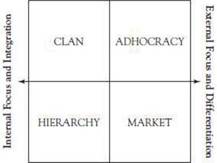
Stability and Control
Figure 1. Organization culture profile.
The effectiveness indicators in these 2 dimensions illustrate the values that the company members adopt about organizational performance. The things identified are what they consider to be true in their view. Each quadrant forms a basic assumption, orientation, and values that define the type of organizational culture as listed in Figure 1. Four Organizational Culture Profiles (OCP) are formed from the interaction between the 2 previous dimensions:
- The Hierarchy Culture has the characteristics of a clear line of authority in decision-making, has regulatory standards or procedures within the organization that control all members of the organization, the implementation of control, and accountability as the criterions of success, and there is also a clear working structure. The role of leadership in this culture is vital because as the coordinator and the organizer are within the organization, the leader has to ensure that organization can perform activities smoothly or without experiencing any problems.
- The Market Culture aims to produce strategies for organization facing competitive challenges. This culture is focused on the external environment rather than the internal one. The focus of the problem is on external issues that include suppliers, customers, government, the environment around the organization, and so on. Meanwhile, the main focus is competition and productivity by emphasizing the external position of the organization and control. Market culture assumes that clear goals supported by aggressive strategies will result in productivity and profit. The criterion for success is determined in terms of market share and penetration.
- The Clan Culture emphasizes the shared values and goals in the organization, unity, personality, participatory attitudes, and sense of community. The term “Clan” of this culture is because of the type of organization that adheres very similar to a large family. Teamwork, employee engagement, and employer’s commitment to employees characterize clan culture. In a clan culture environment, organization places emphasis on teamwork (not individual), employee development, and considers customers as partners within the organization.
- The Adhocracy Culture. Ad hoc means something that is dynamic. The main purpose of adhocracy is to develop adaptability, flexibility, and creativity within the organization. An important challenge for adhocracy organization is to always be innovative in delivering products and services, and adapt quickly to opportunities and change.
Generally, a company will not have one type of culture. However, the culture of an organization can be seen from the most dominant side. The identification of the organization’s cultural relationships is determined by three factors: strength, harmony, or congruence. OC will support the organization’s effectiveness (See in Figure 1). The advantage of competing values framework is the ability to provide an overview of the cultural type of an organization. In addition, this framework can provide the cultural projections expected by the members of the organization because the basic concept of the framework is to map out the cultures embraced in the present and the culture expected in the future. Cameron & Quinn (2011) stated that to identify harmony or suitability of organizational culture adopted must be based on 6 dimensions as follows:
- Dominant Organizational Characteristics determine the most prominent characteristics perceived by members of the organization.
- Organizational Leadership: the role and function of leadership in the organization.
- Management of Employees: the organization’s ability to train, develop, and empower employees.
- Organizational Glue: things that unite employees in terms of relations and socialization.
- Strategic Emphasis: long-term planning of the organization for all employees.
- Criteria of Success: determines the success standards of an organization.
Organizational identity (OI) has been defined as the enduring characteristics of an organization that contribute to the distinctiveness and uniqueness of an organization. OI is based on a self-reflective approach and it captures the main enduring and distinctive organizational features (Albert & Whetten 1985). Then OI is also established through two main criteria: unique identity and unique organization (Whetten & Mackey 2002).
Based on Figure 2, intellectual capital models and reports of companies identify and define OI and Corporate Reputation as strategic intangible assets that are capable of generating sustainable competitive advantages (Bueno et al. 2015). From an interpretative perspective, OI is the result of a social process of self-description and it reflects employees’ general agreement on “who they are as an organization”. OI is developed by the internal stakeholders through interaction and it is the result of a social process of self-description (Gioia 1998). The same processes that form identity at the individual level occur in organizations, though with far greater complexity due to the number and variety of people involved in the identity conversation (see Figure 2). Like individuals, organizations receive feedback from their environment.
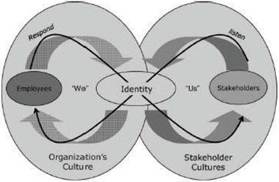
Figure 2. The organizational identity dynamics model.
To preserve a healthy identity, they must learn to balance what they hear about themselves (that which produces the organizational “me” or “us”) against what they know themselves to be (the organizational “I” or “we”) (Hatch & Schultz 2009).
2 METHODS
SETARA is a school that was established on September 1, 2014 and was built initially to meet the educational needs of some children with single parents, starting from the earliest stage of Kindergarten and Play Group. SETARA continues to grow rapidly in number of students enrolling in the span of 4 years. Since 2014, the number of students has been increased from 11 children to 182 children in 2017 for kindergarten, play group, and primary stages. The number of employees also increased from 2 people (1 teacher and 1 staff) to 36 people (25 teachers and 11 staffs) right now. This research used census sampling method and the survey was given to all 29 SETARA’s members, both teachers and staffs. For the first time, the investigation was conducted in the form of combination of an OCAI questionnaire and open questions consisting of 11 questions in 4 categories (Giles & Yates 2012) as shown in Table 1.
The data were analyzed for emergent themes across the participants for each group of questions that straightforwardly related to characteristics or experiences of being in the organization. Emergent themes within each question were first sought. Nevertheless, later analysis focused on participant’s
Table 1. Open-ended questions.
| General practice | (1) What do you perceive to be |
| and comparison | some of the strengths of the relationships within your organization? (2) What do you perceive to be some of the challenges of the relationships within your organization? (3) How do your relational experiences compare to other organizations you have worked in? |
| History | (4) What aspects of the organization’s history appear to be sustained at present? (5) From your experiences and observations, what do you see the organization valuing in practice? (6) What keeps you in this organization? |
| Relational | (7) Can you describe a relational |
| experiences | experience from your time in this organization that exceeded your expectations? (8) Can you describe a relational experience from your time in the organization that pleasantly surprised you? (9) How is leadership practiced within the organization? |
| Leadership | (10) Can you describe an organiza- |
| practices | tion initiative that appears to have strengthened individuals’ practice? (11) How does the leadership at this organization enable your practice? |
responses to each group of questions. The emergent themes are trends across the participants.
3 RESULTS
Twenty-nine participants filled the entire OCAI questionnaire, and the results can be seen in Table 2.
Table 2. OCAI survey.
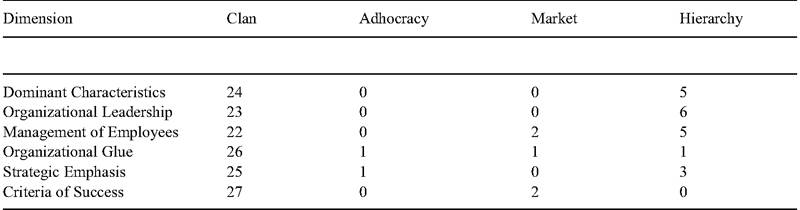
Table 2 shows that 24 respondents describe SETARA as Clan in dominant characteristics dimension and only 5 respondents describe it as Hierarchy. Then, 23 and 22 members, respectively, define SETARA as Clan in organizational leadership and management of employees’ dimensions; meanwhile, 6 and 5 members, respectively, define SETARA as Hierarchy. Dominantly, in the other three dimensions, more than 86% of contributors outline SETARA as Clan as well. It is concluded that the most dominant organizational culture at SETARA in 2017 is clan culture. The organization is considered a big family, where every team formed within the school is always emphasized to continue to have good relations, communication, and teamwork. The most notable characteristics are the school’s commitment to employees, teamwork, and employee engagement. The findings also have been drawn from participant responses from all teachers and staffs. A summary of direct quotes from the participants for each question is described in Table 3 as follows.
2 DISCUSSION
The recurring themes for general practice and comparison category of questions relate to the communication, relationships, and valuing within the school. The kinship atmosphere is dominant; no one considers a person superior to the others. For instance, staffs said that they “feel welcomed warmly since the first day” and they also welcome others’ ideas and views; that rephrased, another respondent stated, “in order to use of any facilities, employees always consider who needs more first”. However, clear boundaries must remain in order not to interfere fellow member’s personal affairs as a member specified, “There are those who have not been able to distinguish the work affairs with personal issue. Although prioritizing kinship, employees should strive for becoming professionals and do not interfere other’s personal affairs”. These challenges can impact the “family atmosphere that the school has been famous for”, so these issues must be addressed wisely.
The significant repeated theme across the responses to history category of questions was the “compassionate environment” that has been continued within the school over time. One member captured the views of many, writing that, “A compassionate heart towards students and fellow coworkers, as well as humbleness”. As another respondent also stated, “As a single parent, I’m impressed of the educational environment in SETARA which is very supportive and focus on helping underprivileged parents financially”. Restated by another as well who stated that “Student’s character is much appreciated, not just his/her intelligence”. Employees described initiatives that
Table 3. Summary of open-ended survey.
(1) What do you perceive to be some of the strengths of the relationships within your organization?
The headmistress’s leadership style supports kinship and togetherness, as well as “no favoritism” atmosphere.
(2) What do you perceive to be some of the challenges of the relationships within your organization?
How to understand each other’s character in order to strengthen the relationship between co-workers so that miscommunication could be minimized.
(3) How do your relational experiences compare to other organizations you have worked in?
It is easier to solve problem or friction with fellow employees at SETARA than in other organizations.
(4) What aspects of the organization’s history appear to be sustained at present?
Greet students before entering and exiting school gate, teach students to keep behaving politely, classical methods, and Christian values.
(5) From your experiences and observations, what do you see the organization valuing in practice?
Life-long learning. SETARA greatly equips teachers and staffs with trainings to develop professionalism and facilitates prayer, devotion, and even counseling for them. Christianity principles are applied directly in all activities.
(6) What keeps you in this organization?
Given the opportunity to develop both hard skills and soft skills. As well as a fact that SETARA is different from others in emphasizing process and goal-oriented very essential, not just merely results.
(7) Can you describe a relational experience from your time in this organization that exceeded your expectations?
Getting something more than just an organization, that is kinship. Relationship with headmistress is like maternal relationship.
(8) Can you describe a relational experience from your time in the organization that pleasantly surprised you?
Experiencing mutual pray, respect each other, and character building.
(9) How is leadership practiced within the organization?
Leadership that explains why I should do and should not do, over and above, does not judge my faults but leads me to do the right thing.
(10) Can you describe an organization initiative that appears to have strengthened individuals’ practice?
The existence of internal trainings and external seminars (including ACSI training and scholarships to continue studying) is very helpful for self-development, but more important is SETARA also keep supporting employee’s spirituality.
(11) How does the leadership at this organization enable your practice?
The headmistress always underlines that make differences and encourage others to work confidently as teachers and as educators in general are very critical. It motivates us to strive to recognize individual’s strengths and needs in practices. relate to “essence of educating is to build noble character” and “school-wide mentoring support” as evidence of a valuing and recognition of individual’s strengths and experiences.
The focus of the employee’s experience points to the overwhelming “care”. The care surpasses expectation and surprises many. In moments where the generosity of employee is seen, or the pleasure of a collegial spirit is felt, individuals sense “care”. It is as if care finds employee in unexpected ways. Students really care their teachers. “The headmistress even noticed about my wedding plan. Some colleagues helped me until overtime”. “Initially I just worked for getting money but when I see and know more about SETARA, I feel there is something in my heart that makes me still have to be here”. The primary aim of education is to produce people who will engage successfully in caring relations. The educational endeavor then is a caring profession with a concern for relationships (Noddings 2010). The experience of care extends to personal challenges, as one participant said: “I am very touched when the headmistress asked about food I like and invited me to eat it for several times. She always pays attention to employee’s health as well”. Then the experiences of care extend to the authenticity and sincerity such as “Birthday party” surprise and “hang out together”.
Finally, the frequent themes for leadership practices category of questions relate to valuing and recognizing individual’s strengths and experiences. Two of the most frequently used expressions for the staff should be “freedom” and “explording new ideas and innovative ways” which enable them to be encouraged and grow professionally, as one respondent said: “I was asked to make an annual album design for all classes. It was the first experience for me because I usually design it for personal use”. The headmistress is said to “lead by example” in a “very supportive way”. She leads with good heart who value people, especially who makes the best out of followers.
3 CONCLUSION
All six dimensions of The Competing Values Framework at SETARA are dominated by Clan. Top management within the organization has done exemplary mentoring to employees, facilitating the physical and psychological needs of employees in the workplace, and has given trust to them to be more responsible and committed to organization. Thus, the most dominant organizational culture profile at SETARA today is Clan Culture, a culture that considers organizations very similar to a large family whose characteristics are teamwork, employee engagement, and organization’s commitment to employees. SETARA emphasizes teamwork (not individual) and employee development, meaning that the current Competing Values Framework is Flexibility and Discretion as well Internal Focus and Integration. Flexibility and discretion are called people. Consequently, the identity of SETARA is a Christian Classical School that focuses on developing character of its employees by generating an atmosphere of kinship based on Christian values, and at the end of the day, it’s all about people. The open-ended survey gave the idea to be a tool that addresses the pressing concern for educational leaders to stay attuned to the nature of their organizational culture as this represents the organization’s storyline (Giles & Yates 2012). In addition to the tool, OCAI survey can be used by schools as confirmation to organizational identity as a “label” which is valuable to leverage its competitive advantage relating to the rivalry by constantly living up this Clan Culture and demonstrating the values of care, humble, and compassion towards its stakeholders, especially teachers, staff, students, and parents.
References
Albert, S. & Whetten, D.A. 1985. Organizational Identity. Research in Organizational Behavior 7: 263-295.
Bueno, E., Longo-Somoza, M., Garcia-Revilla, R. & Leon, R.D. 2015. Relationships Between Organizational Identity and Corporate Reputation: Management Challenges. In European Conference on Intellectual Capital (p. 34). London: Academic Conferences International Limited.
Cameron, K.S. & Quinn, R.E. 2011. Diagnosing and changing organizational culture: Based on the competing values framework. New Jersey: John Wiley & Sons.
Cheung, S.O., Pang, H.Y., Tam, S.Y. & Chan, H.Y. 2011. Identity as a manifestation of organisational culture. International Journal of Disaster Resilience in the Built Environment 1(1): 748-761.
Giles, D. & Yates, R. 2012. Enabling educational leaders: qualitatively surveying an organization’s culture. International Journal of Organizational Analysis 22(1): 94-106.
Gioia, D.A. 1998. From Individual to Organizational Identity. In D.A. Whetten & P.C. Godfrey (ed.) Identity in Organizations: Building Theory Trough Conversations (pp. 17-31). Thousand Oaks: Sage Publication.
Hatch, M.J. & Schultz, M. 1997. Relations between organizational culture, identity and image. European Journal Marketing 31(5/6): 356-365.
Hatch, M.J. & Schultz, M. 2002. The Dynamics of Organizational Identity. Human Relations 55(8): 989-1018.
Huang-Horowitz, N.C. & Freberg, K. 2016. Bridging organizational identity and reputation messages online: a conceptual model. Corporate Communications: An International Journal 21(2): 195-212.
Kemdikbud. 2018. Data referensi pendidikan. [Online]. Accessed on July 10. Retrieved from http://referensi. data.kemdikbud.go.id/index21.php?level=3&kode=0260 03&id=1
Noddings, N. 2010. Complexity in caring and empathy. Abstrata 6(2): 6-12.
Robbins, S.P. 2013. Organizational Behavior 15th Edition. New Jersey: Prentice-Hall, Inc.
SETARA. 2018). Visi dan misi. [Online]. Accessed on July 1. Retrieved from http://setara.gb3.org/index.php/aca demics/visi-dan-misi
Whetten, D.A. & Mackey, A. 2002. A Social Actor Conception of Organizational Identity and Its Implications for the Study of Organizational Reputation. Business and Society 41(4): 393-414.