Service-performance chain: A triangle conceptual model
N. Septina & M. Widyarini
Parahyangan Catholic University, Bandung, Indonesia
ABSTRACT: The service-profit chain demonstrates links between profitability, customer loyalty, and employee satisfaction, loyalty, and productivity.
This chain involves employee, customer and company perspective as one framework. The conceptual model of this research was modified from the Heskett et al. service-profit chain framework as data for some variables in the service-profit chain were not accessible by adjusting profitability and revenue growth to daily business performance. Based on literature study combined with qualitative approach, this research aims to propose the service-performance chain model (Indonesian context).1 INTRODUCTION
Globalization leads to the changing of business environment and increases the business competition as well. In this competitive world, every manager of every enterprise must learn how to handle changes. In modern market sector, preliminary research found that there was a significant customer shifting from supermarket and hypermarket to mini market as a priority channel on daily spending.
Service-profit chain suggested a framework connecting an enterprise’s profitability not only to service operations, but also employee and customer assessments (Heskett et al. 1994). It is known as the serviceprofit chain, redefined by incorporating employee capability. This framework consists of four elements, namely internal elements (internal service quality, employee satisfaction, and employee loyalty), service elements (the value and delivery of the service), external elements (customer satisfaction and customer loyalty) and the financial elements (profitability and other financial performance measures).
The service-profit chain demonstrates links between profitability, customer loyalty, and employee satisfaction, loyalty, and productivity.
The links along this chain are as follows: the first link explains that profit and growth are stimulated primarily by customer loyalty, the second link explains that loyalty is a direct result of customer satisfaction, the third link explains that customer satisfaction is largely influenced by the value of services provided, the fourth link explains that value is created by satisfied, loyal and productive employees, and the last link explains that employee satisfaction, in turn, results primarily from high-quality support services and policies that enable employees to deliver the result to customers. This framework provides an integrative approach for an enterprise to understand better how service and human resource input affect customer evaluations, customer behavior, and financial metrics (Kamakura et al. 2002).The previous empirical research considers the service-profit chain scattered among various sector (Silvestro & Cross 2000, Xu & Goedegebuure 2005, Yee et al. 2011) explored different elements within the chain. The research mostly tries to answer some links within the framework; for example, research in Islamic banking in Indonesia conducted to explain all links within this framework (Lubis et al. 2015). However, little explanation has been provided about this framework, especially in the context of Indonesian smallscale enterprises (SMEs). This research aims to propose the service-performance chain model to be applied in Indonesian SMEs in the modern retailer sector.
2 LITERATURE REVIEW
There are two kinds of customers, internal and external customer (Hauser et al. 1996, Piercy 1995). Internal customers must have their needs met before they can provide service to external customer satisfaction (Berry 1981). A previous study suggested that employee job satisfaction is positively related to employee perception of internal service quality (Schlesinger & Zornitsky 1991). Other studies found that external customer satisfaction is the reflection of the internal customer satisfaction (Reynoso 1994), and there are positive associations among customer retention, employee satisfaction, and internal service quality (Conduit & Mavondo 2001).
Meanwhile, it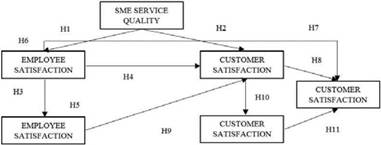
Figure 1. The Conceptual Proposed Model of Research.
was reported that the quality of internal processes, available resources, and recognition support the employee serving ability (Newman et al. 2001).
Previous studies suggested the link between employee loyalty and employee satisfaction (Grif- feth et al. 2000, Wangenheim 2007). Some studies found a relationship between employee job satisfaction and customer satisfaction (Koys 2001, Brown & Lam 2008). Other studies found that a friendly service worker produces more customer satisfaction than an unfriendly service worker (Hennig-Thurau et al. 2006, Soderlund & Rosengren 2008).
While some studies established a strong relationship between customer satisfaction and customer loyalty (e.g., McDougall & Levesque 2000), others previous studies reported positive correlations between customer satisfaction and retention, loyalty, and word of mouth (Mittal & Kamakura 2001, Parasuraman et al. 1988). Other studies suggested that enterprises that stressed the weight of internal service quality tended to have better achievements such as growth rates and financial performance (Lau & May 1998, Lau 2000). Another study indicates it is necessary for an enterprise not only to integrate complementary paths in this framework, but also to maximize employee satisfaction and external service quality to optimize business performance (Hogreve 2017).
3 METHODOLOGY
The research process began with studying previous studies. Focus group discussions and in-depth interviews were conducted to confirm measurable indicators in Indonesian context. The focus group discussions involved customers and employees of the SME was held in different sessions. The in-depth interviews with managers who involved in associations of Indonesian SME were conducted in several sessions. All participants were related to the small sized modern retail sectors such as Alfamart, Indomaret and Yomart, in the Province of West Java, Indonesia.
4 PROPOSED MODEL
Based on those studies, a conceptual model of this research as seen on Figure 1 and proposition are proposed as follows. Theoretical propositions are derived to explain the links within the model proposed.
Data about profitability and growth were not accessible in most of Indonesian SMEs. This is not only in regards to the ‘non-trust business society environment’ and tight competition, but also most Indonesian SMEs have no accountable financial report yet. These are the reasons why in this research the profitability and revenue growth variables, as part of a service-profit chain, could not be measured by financial performance data as having been previously done in other study (Xu & van der Heijden 2005, Keiningham 2006).
In-depth interviews with several associations of Indonesian SMEs on preliminary research have discussed a possible measurement on SME performance, as a proxy of profitability and growth in the original chain.
The link in the proposed model explained by these propositions.
H1: SME Service Quality positively correlated with Employee Satisfaction.
H2: SME Service Quality positively correlated with Customer Satisfaction.
H3: Employee Satisfaction positively correlated with Employee Loyalty.
H4: Employee Satisfaction positively correlated with Customer Satisfaction.
H5: Employee Loyalty mediates the positive relationship between Employee Satisfaction with Customer Satisfaction.
H6: Employee Satisfaction positively correlated with SME Performance.
H7: Customer Satisfaction mediates the positive relationship between Employee Satisfaction with SME Performance.
H8: Customer Satisfaction positively correlated with SME Performance.
H9: Customer Loyalty mediates the positive relationship between Customer Satisfaction with SME Performance.
H10: Customer Satisfaction positively correlated with Customer Loyalty.
H11: Customer Loyalty positively correlated with SME Performance.
5 CONCLUSION
The research framework for investigating the chain from the service to business performance is required.
This research adopted the service-profit chain as a research framework. It helped explain the role of service performance to business performance in the context of SMEs in Indonesia (Figure1). The propositions developed from an interpretation of preliminary findings and contextual theory were formulated into a two stages research framework using the case research method. The first stage will be applied to one sector which is small sized of modern retail sector which will be followed with multiple case study to grasp a comprehensive understanding.References
Berry, L.L. 1981. The Employee as Customer. Journal of Retail Banking 3(1): 33-40.
Brown, S.P. & Lam, S.K. 2008. A Meta Analysis of Relationships Linking Employee Satisfaction to Customer Responses. Journal of Retailing 84(3): 243-255.
Conduit, J. & Mavondo, F.T. 2001. How Critical is Internal Customer Orientation to Market Orientation?. Journal of Business Research 51(1): 11-24.
Griffeth, R., Hom, P. & Gaertner, S. 2000. A Meta Analysis of Antecedents and Correlates of Employee Turnover: Update, Moderator Tests, and Research Implications for the Next Millennium. Journal of Management 18(3): 463-488.
Hauser, J., Simester, D., & Wernerfelt, B. 1996. Internal Customer and Internal Suppliers. Journal of Marketing Resourse 33(3): 268-280.
Hennig-Thurau, T, Groth, M., Paul, M. & Gremler, D.D. 2006. Are All Smiles Created Equal? How Emotional Contagion and Emotional Labour Effect Service Relationships. Journal of Marketing 70: 58-73.
Heskett, J.L., Jones, T.O, Loveman, G.W., Sasser, W.E. Jr., Schlesinger, L.A. 1994. Putting the Service Profit Chain to Work. Harvard Business Review 72(2): 164-174.
Hogreve, J., Iseke, A., Derfuss, K., & Eller, T. 2017. The Service-Profit Chain: A Meta-Analytic Test of a Comprehensive Theoretical Framework. Journal of Marketing 81(3): 41-61.
Kamakura, W.A., Mittal, V., de Rosa, F., Mazzon, J.A. 2002. Assessing the Service-Profit Chain.
Marketing Science 21(3): 294-317.Keiningham, T.L., Aksoy, L., Cooil, B., Peterson, K., Vavra, T.G. 2006. A Longitudinal Examination of the Asymmetric Impact of Employee and Customer Satisfaction on Retail Sales. Managing Service Quality 16(5): 442-459.
Koys, D.J. 2001. The Effects of Employee Satisfaction, Organizational Citizenship Behavior, and Turnover on Organizational Effectivennes: A Unit-Level, Longitudinal Study. Personnel Psychology 54(1): 101-114.
Lau, R.S.M., May, B.E. 1998. A Win-Win Paradigm for Quality of Work Life and Business Performance. Human Resource Development Quarterly 9(3): 211-226.
Lau, R.S.M. 2000. Quality of Work Life and Performance - An Investigation of Two Key Elements in the Service Profit Chain Model. International Journal of Service Industry Management 11(5): 422-437.
Lubis, P.H., Sucherly, A.R., & Kaltum, U. 2015. Implementing Service Profit Chain at Islamic Banking, International Journal of Economics, Commerce and Management 3(6): 1271-1292.
McDougall, G.H. & Levesque, T. 2000. Customer satisfaction with Service: Putting Perceived Value Into the Equation. Journal of Services Marketing 14(5): 392-410.
Mittal, V. & Kamakura, A. 2001. Satisfaction, Repurchase Intent, and Repurchase Behavior: Investigating the Moderating Effect of Customer Characteristics. Journal of Marketing Research 38: 131-142.
Newman, K., Maylor, U. & Chansarkar, B. 2001. The Nurse Retention, Quality of Care and Patient Satisfaction Chain. International Journal of Health Care Quality Assurance 14(2): 57-68.
Parasuraman, A., Zeithaml, V.A. & Berry, L.L. 1988. SERVQUAL: A Multiple-item Scale for Measuring Consumer Perceptions of Service Quality. Journal of Retailing 64(1): 12-40.
Piercy, N.F. 1995. Customer Satisfaction and the Internal Market - Marketing Our Customers to Our Employees. Journal of Marketing Practice: Applied Marketing Science 1(1): 22-44.
Reynoso, J. 1994. Development of a Multiple-item Scale for Measuring Internal Service Quality in Hospitals. In the 3rd International Seminar on Service Management & Marketing, Aix-en Provence, 24-27 May.
Schlesinger, L.A. & Zornitsky, J. 1991. Job Satisfaction, Service Capability, and Customer Satisfaction: An Examination of Linkages and Management Implications. Human Resource Planning 14: 141-149.
Silvestro, R. & Cross, S. 2000. Applying the Service Profit Chain in a Retail Environment: Chalenging the Satisfaction Mirror. International Journal of Service Industry Management 11(3): 244-268.
Soderlund, M. & Rosengren, S. 2008. Revisiting the Smiling Service Worker and Customer Satisfaction. International Journal of Service Industry Management 19(5): 552-574.
Wangenheim, F.V., Evanschitzky, H. & Wunderlich, M. 2007. The Employee-customer Satisfaction Link: Does it Hold for All Employee Groups?. Journal of Business Research 60(7): 690-697.
Xu, Y. & van der Heijden, B. 2005. The Employee Factor in the Service-Profit Chain Framework. Journal of International Consumer Marketing 18(1): 137-155.
Xu, Y. & Goedegebuure, R. 2005. Employee Satisfaction and Customer Satisfaction: Testing the Service-Profit Chain in a Chinese Securities Firm. Innovative Marketing 1(2): 49-59.
Yee, R.W.Y., Yeung, A.C.L. & Cheng, T.C.E. 2011. The Service-profit Chain: An Empirical Analysis in High- contact Service Industries. International Journal Production Economics 130: 236-245.