Sweden
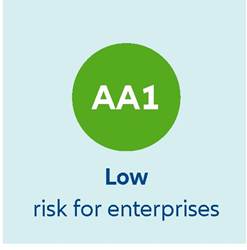
Tough times for Sweden's economy
| GDP | USD585.9bn (World ranking 23) |
| Population | 10.5mn (World ranking 88) |
| Form of state | Constitutional Monarchy |
| Head of government | Ulf Kristersson (PM) |
| Next elections | 2026, Legislative |
Strengths & weaknesses
Economic overview
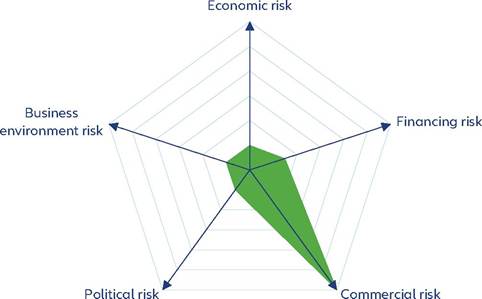
Economic strain will persist until 2025
The Swedish economy quickly bounced back after the pandemic.
Already by the end of 2021, GDP surpassed precrisis levels by nearly 5%. However, the output gap has not closed. In 2022, domestic demand - consumer spending, in particular due to strong residual savings and wealth effects from the unprecedented increase in house prices - and private investment were strong drivers of growth. But already during the last quarter of 2022, growth came to a halt as some parts of the economy began to slow. In 2023, production and the labor market proved resilient and order books were still full but throughout the year the situation worsened leading Sweden into a recession. And the outlook is also gloomy: consumption plunged due to pressures from higher mortgage costs and price levels and trade followed suit. In addition, the Swedish real estate market contracted as a correction to the new interest environment. It will continue to weigh on construction activity and, together with broader uncertainty and price increases, is set to put overall investments down. Over our forecast horizon, the Swedish economy is expected to grow again by +0.6% in 2024 and +2.1% in 2025.Like in many industrialized economies, business insolvencies slightly increase compared to 2022 but return to average pre-crisis levels.Sweden's unemployment rate dropped from 8.7% in 2021 to 7.5% in 2022 thanks to sustained employment growth. Due to adverse economic developments in construction and real estate, the increase is marginal in 2023, but we expect further increases to 8.5% in both 2024 and 2025, keeping the labor market relatively tight. Demographic challenges are likely to make the normalization of labor markets slow. Wage growth remained strong contributing to persistent inflation until the end of 2023. Sweden currently struggles with a weak crown and still high but falling inflation and concerns about financial stability. This complicates the situation for the Riksbank which has joined other central banks around the globe in steep rate hikes to tame inflation and reached a peak policy rate of 4.0% in November 2023. Rate cuts are to be expected mid 2024 the earliest.
Financial stability risks and housing market uncertainty
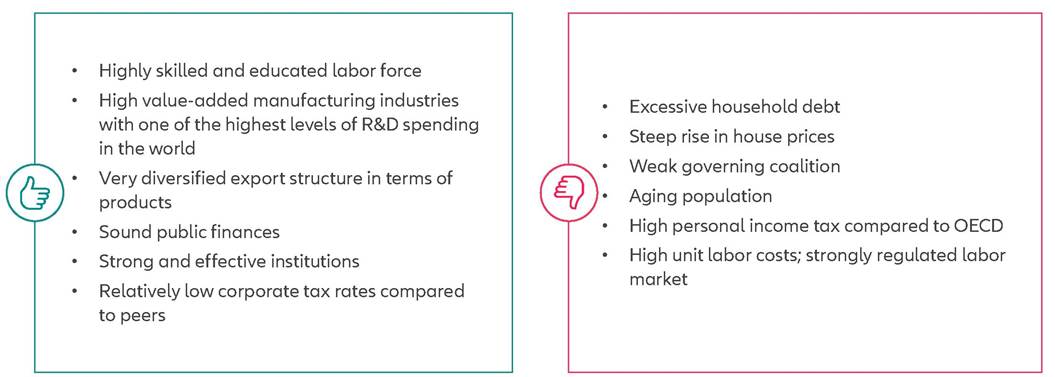
Overall Sweden's public finances are in good shape compared to the Eurozone average. The general government balance showed a small deficit in 2023, following a surplus of 0.7% of GDP in 2022. A marginal expansion in the government balance is expected for 2024 and 2025, reaching -0.7%. The deficit is mainly due to falling revenues relative to nominal GDP on the back of a wilting economy, increasing social transfers (such as the electricity subsidy) and higher government consumption due to heightened inflation as well as the build-up of defense spending. This should support a decline in public debt close to 30% of GDP in 2023. The Swedish economy continues to enjoy one of the lowest debt levels in advanced economies.
Vulnerabilities in the medium run, notably in terms of financial stability, might come from excessive household debt, which is more than 240% of gross disposable income in 2022. Property makes up 80% of household debt and the sharp fall in house prices, high debt levels, rising interest rates and a weakened economy reflect soaring mortgage costs.
Excellent business environment paired with security matters
Sweden's business environment is one of the best in the world. Sweden performs particularly well-ranked in registering properties, getting electricity, resolving insolvency and trading across borders. In recent years, the government has implemented a series of reforms to make it easier to transfer property by increasing administrative efficiency, as well as to start a business by requiring the registry of companies to register a company within five days. The quality of the business environment comes from a high-quality workforce, infrastructure and attractiveness for foreign investment.
Since September 2022, Sweden has been governed by a coalition between the Moderate Party, Christian Democrats and Liberals, with external support from the far-right Sweden Democrats. Ulf Kristersson became prime minster. Currently, Sweden faces a massive shift in security and defense matters. The government has set a focus on strengthening security through Sweden's application to the NATO and agreements with Finland and Turkiye as well as an increase of the defense spending to 2% of GNP by 2026.