Synergy of green industry with industrial revolution 4.0 in Indonesia
D. Prasaja & M.W. Rini
Polytechnic APP Jakarta, Ministry of Industry, Indonesia
B. D. Yoga
Kumamoto University, Kumamoto, Japan
R. Wikansari
Polytechnic APP Jakarta, Ministry of Industry, Indonesia
ABSTRACT: This study aims to identify and analyze the synergy of the Green Industry with the Industrial Revolution 4.0 which is both programs from the Ministry of Industry and the Government of Indonesia.
This study uses a comparative research method with a descriptive analysis approach. The method of data collection is done by studying the literature and reviewing regulations regarding related information, while the data is analyzed through the process of reduction, presentation, and conclusion. The results showed that the green industry synergy with the industrial revolution 4.0 was 77.1% and there were at least 27 characteristics that could be matched with each other out of a total of 35characteristics.
1 INTRODUCTION
Industrial development is increasing rapidly, both globally and in Indonesia. In its journey, the current industrial revolution has reached the 4th generation, called Industry 4.0, which is characterized by various characteristics, especially increasingly high technology and increasingly unlimited information technology. Since the first industrial revolution recorded in history began in England in the mid-18th century, the other side of industrial development has the effect of decreasing the quality of the environment which is the habitat of humans and other living things.
The Green Industry Movement is increasing because of the growth of industrial technology that has an impact on the environment. The development of the green industry movement in the world cannot be separated from the development of a UN institution called UN-IDO (United Nations Industrial Development Organization) which was established on 17 November 1966.
The Green Industry (According to UNIDO 2008) basically means the economy is struggling for the growth path more sustainable by making green public investments and implementing public policy initiatives that encourage private investment that is environmentally responsible. The Indonesian Ministry of Industry then adopted the UNIDO policy as a basis for setting green industry standards. As compensation for the adoption of green industry standards by industries in Indonesia, the Ministry of Industry launched the Green Industry Award program since 2010.Based on above, this study is about the synergy of Green Industry and Industrial Revolution 4.0, which we will restrict to include its implementation by the Government of the Republic of Indonesia through the Ministry of Industry program.
2 INDUSTRIAL REVOLUTION 4.0
2.1 A brief history of industrial revolution
Industry 4.0 is continuing a series of industrial revolutions. European Parliament Research Services in Davies (2015) said that the industrial revolution had taken place four times. The first industrial revolution occurred at the end of the 18th century which was a mechanical production based on water and steam (Bahrin et al. 2016). It began to replace human power for industry. The second industrial revolution occurred at the beginning of the 20th century, starting with the introduction of conveyor belts and mass production. The machines are powered by electricity. The use of computer technology for manufacturing automation occurred in 1970 (Prasetyo & Sutopo 2018). This was marked as the beginning of the third industrial revolution. In the third industrial revolution, electronic systems and information technology (IT) were used by industry. At present, the rapid development of sensor, interconnection and data analysis technology has led to the idea of integrating this technology into various industrial fields. This idea is predicted to become the next industrial revolution. The fourth industrial revolution became public as Industry 4.0 was recognized in 2011 (Bahrin et al.
2016).2.2 Characteristic of industry 4.0
The principles of cyber physical systems (CPS), internet and future technology, and intelligent systems with enhanced para-digma human-machine interaction are applied to industry 4.0 (Sanders et al.
2016). CPS is a technology for combining the real world and the virtual world. This combination can be realized through integration between physical and computational processes (embedded and networked computer technology) in a closed loop (Lee 2008). Industry 4.0 focuses on creating smart products, processes and procedures that can make activities more effective and efficient (Crnjac et al. 2017). Industry 4.0 is related to the Internet of Things, Internet of Services, and Internet of Data. This is the essence of industry 4.0. There are six industry principles 4.0 namely interoperability, virtualization, decentralization, real time, service oriented, and modular (Prase- tyo & Sutopo 2018). Based on research using literature review as a method, there are several characteristic approaches to industry 4.0 such as horizontal integration, vertical integration, Internet of Things, Internet Service, Internet Computing Cloud Data, Cyber-Physical Systems, new business models, flexible production, and cluster concepts (Crnjac et al.
2017). Industrial 4.0 is estimated to have big advantages for industries such as rapid product development, product customization, flexible production, increased productivity, optimality in decision making, and revenue growth (Prasetyo & Sutopo 2018). In conclusion, industry 4.0 is an industrial era in which all entities within it can connect with each other in real time using internet technology and CPS to achieve optimization in every process in the industry.
3 GREEN INDUSTRY BASED ON MINISTRY OF INDUSTRY
Green industry is an industry that in its production process prioritizes efforts to efficiency and effectiveness of sustainable use of resources so that it can harmonize the development of industries with the sustainability of environmental functions and can provide benefits to the community.
It means that green industry is an approach oriented to increasing efficiency through efficient measures in the use of materials, water and energy. It is also oriented to alternative energy use, the use of materials that are safe for humans and the environment, and the use of low-carbon technology with the aim of increasing productivity and minimizing waste which emphasizes a business approach to improve environmental health (Ministry of Industry 2018b). The Ministry of Industry has two main strategies related to the Green Industry. The first strategy is the greening of existing industries and the second strategy is the creation of new green industries.Green industry means implementing 4R in its production process which consists of reduction, reuse, recycling, and recovery. Some of the characteristics of a green industry are the production process using fewer raw materials, supporting materials, energy and water, using alternative energy, using recycled packaging, etc. which produce less waste (Hutahaean 2017).
The implementation of the Green Industry in Indonesia has so far been in the form of government recommendations. The registration of the Green Industry Awards is voluntary by the industry itself. The Green Industry Award is an award given to industries that have made efforts to preserve the use of natural resources. this is done through various stages of selection and verification based on a scoring system to be evaluated regularly (Ministry of Industry 2018b). Green Industry Awards are given to every industry that has succeeded in implementing and running its industry in green industry standards.
4 MAKING INDONESIA 4.0 BASED ON MINISTRY OF INDUSTRY
Industry 4.0 can have a direct and indirect impact on Indonesia. The direct impact is to revive the production sector and regain the position of net exporters. Indirect impacts are increasing the country’s financial strength, increasing government spending, increasing investment, and building a strong economy (Ministry of Industry 2018a).
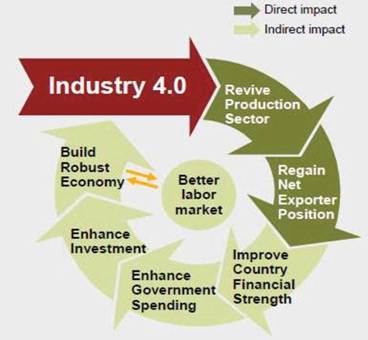
Figure 1. Direct and indirect impact of industry 4.0 (Ministry of Industry 2018a).
In making Indonesia 4.0, there are 5 top priority sectors of the industry such as food, textile and apparel, automotive, electronics and chemical beverages. Indonesia has set 10 National Priorities to Make Indonesia 4.0 such as material material reforms by redesigning industrial zones, embracing sustainability, empowering small micro-enterprises, building national digital infrastructure, attracting foreign investment, increasing human capital, building ecosystem innovations, investing incentive technology, and optimizing regulations and policies.
Indonesia 4.0 can create a large increase in overall GDP growth, job creation, and manufacturing GDP contributions. Making Indonesian policy 4.0 also needs to be well coordinated with several stakeholders and policies. Collaboration from government, industry and education is needed. Making Indonesia 4.0 will trigger immediate action with long-term aspirations based on the focus sector. For food and beverages, the sector’s aspirations focus is establishing the ASEAN food and beverage center. In the field of textiles and apparel, becoming a leading functional clothing manufacturer is the aspiration of the focus sector. Automatically, this is the focus for building export leadership on ICE and EV. In addition, developing leading biochemical producers is the aspiration of the focus sector of the chemical industry. For the electronics industry, the sector aspirations focus on maintaining very capable domestic champions. Immediate actions must be taken by Indonesia such as technology incentives, investor roadshows, vocational schools, and support for small micro businesses.
5 DISCUSSION
The government has set 10 national priority steps in an effort to implement the Making Indonesia 4.0 roadmap. In the third priority, as stated by the Minister of Industry, Mr.
Airlangga, that Industry 4.0 must accommodate sustainability standards. Indonesia views the challenges of sustainability as an opportunity to build national industrial capacity based on clean technology, electricity, biochemistry and renewable energy.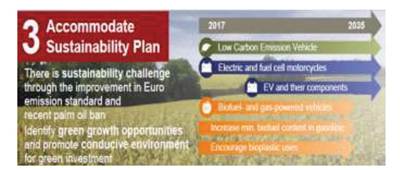
Figure 2. The third key national priority for making Indonesia 4.0 (Ministry of Industry 2018a).
Indonesia will strive to meet the sustainability requirements in the future by identifying the applications of technology and green growth opportunities and to promote a conducive environment.
When the government program Making Indonesia 4.0 runs well, either directly or indirectly, processes in the industry are increasingly leading to green industry. The demand for efficient use of raw materials and energy as well as every process become online and real-time, will have a positive impact on the reduction of waste and contamination by industry.
Table 1. Comparison characteristic between industry 4.0 and green industry (Ministry of Industry 2018b).
| Code | Industry 4.0 characteristics | Code | Green Industry characteristic |
| A | Using cyber-physical | 1 | Reduce the use of |
| system | raw materials | ||
| B | Make activities more | 2 | Replace raw mater- |
| effective and efficient | ials that are more | ||
| C | Real-time data | environmentally | |
| D | Improve productivity | friendly | |
| E | Related to internet of | 3 | Reduce energy use |
| thing, internet of ser- | 4 | Reduce water use | |
| vice, and internet of | 5 | Beneficial to the | |
| data | environment and | ||
| F | Product customization | society | |
| G | Accommodate sustain- | ||
| ability plan |
Table 2. Relationship and influence between industry 4.0 and green industry.
| Matrix | 1 | 2 | 3 | 4 | 5 |
| A | V | X | X | V | V |
| B | V | V | V | V | V |
| C | V | V | X | X | V |
| D | V | V | V | V | V |
| E | X | X | X | X | V |
| F | V | V | V | V | V |
| G | V | V | V | V | V |
Table 1 show the characteristics of the two programs which will then be compared to connect with each other. The relationship between them shows synergy and relationships for each characteristic seen in table 2 below.
Based on Table 2, there are 27 characteristics which can be matched each other from total 35 characteristics.
6 CONCLUSION
The synergy of the Green Industry with Industrial Revolution 4.0 was 77.1% with at least 27 characteristics that could be matched with each other from a total of 35 characteristic items. The Indonesia 4.0 program from the Ministry of Industry is in line with the Green Industry concept. Collaboration from government, industry and education is needed to maintain this synergy.
References
Bahrin, M. A. K., Othman, M. F., Azli, N. H. N., & Talib, M. F. 2016. Industry 4.0: A Review on Industrial Automation and Robotic. Jurnal Teknologi (Science and Engineering) 78(6-13): 136-143.
Crnjac, M., Veza, I. & Banduka, N. 2017. From Concept to the Introduction of Industry 4.0. International Journal of Industrial Engineering and Management 8(1): 21-30.
Davies, R. 2015. Industry 4.0 Digitalisation for productivity and growth. Retrieved: http://www.europarl.europa. eu/RegData/etudes/BRIE/2015/568337/EPRS_BRI (2015)568337_EN.pdf., Online accessed on 26th June 2018.
Hutahaean, L.S. 2017. Kebijakan Pengembangan Industri Hijau di Indonesia. Bekasi: IHLH
Lee, E.A. 2008. Cyber physical systems: Design challenges. In Object Oriented Real-Time Distributed Computing (ISORC). 11th IEEE International Symposium: 363-369.
Ministry of Industry. 2018a. Presentation Material of Indonesia s Fourth Industrial Revolution: Making Indonesia 4.0.
Ministry of Industry. 2018b. Pedoman Penilaian Penghar- gaan Industri Hijau. Jakarta: IHLH.
Prasetyo, H., & Sutopo, W. 2018. Industry 4.0: Telaah Kla- sifikasi Aspek dan Arah Perkembangan Riset. Jurnal Teknik Industri 13(1).
UNIDO. 2018. Global Value Chains And Industrial Development.
Sanders, A., Elangeswaran, C. & Wulfsberg, J. 2016. Industry 4.0 Implies Lean Manufacturing: Research Activities in Industry 4.0 Function as Enablers for Lean Manufacturing. Journal of Industrial Engineering and Management: 811-833.