Biblical and Classical Sources
The largest number of depictions of violence were drawn from Old Testament stories of destructive passion, familial rivalry, fighting armies and various acts of divine anger and punishment.
The murder of Abel by Cain was the archetypal act of murderous envy, David holding aloft the head of the slain giant Goliath an icon of miraculous victory, the suicide of Saul surrounded by his butchered sons an image of disobedience and despair, the destructive fires of Sodom or the ten plagues unleashed on the Egyptians graphic reminders of God's blazing fury when faced with human sin, Judith's beheading of the drunken general Holofernes an example both of civic virtue and the dangers of female seduction. The battle between the good and bad angels, and the ultimate victory of Michael over Lucifer, was a violent Old Testament story that took on special significance for militant Catholic identity in the late sixteenth century.New Testament gospel stories also, such as the violence of Christ's passion and death, or his expelling of the money changers from the temple, provided examples of just and unjust violence. The Massacre of the Innocents, the story of mass infanticide carried out by King Herod in order to eliminate possible threats to his power by the newborn King of the Jews, became an especially popular subject for numerous artists endeavouring to confront and comment on the harsh brutality of the confessional wars in the second half of the sixteenth century (Figure 32.1). The biblical Book of Revelation, on the other hand, provided graphic inspiration for artists illustrating widespread fears that accompanied the dramatic changes and conflicts associated with the Reformation. Depictions of the four horses of the Apocalypse - Famine, War, Conquest and Death - shown brutally trampling representations of humanity underfoot, or the angels opening the seventh seal and releasing all manner of chaos, fire and destruction on the earth, warned viewers of imminent doom and destruction, interpreted current religious and political conflicts and provided hope of ultimate victory for the persecuted. Increasing literacy, the proliferation of print, the Protestant emphasis on the Bible, translations of Bibles into the vernacular and their frequent illustration with prints, all served to make the violence of biblical imagery more widely accessible.
As access to the literature of the classical world also increased, through commentaries, translations and archaeological discoveries, so classical art and literature provided new models for the depiction of violence. Andrea Mantegna's engraving, The Battle of the Sea Gods (1475-88), for instance, was based on ancient classical sculptures and influenced many sixteenth-century artists, such as Albrecht Dürer, Agostino Veneziano and Hans Sebald Beham. Representations of sexual violence and rape, as in The Rape of the Sabine Women or The Rape of Europa, also became common subjects and models for artists; while the violent rape of Lucretia by Tarquin (Georg Pencz, Titian) now complemented the more common earlier depictions of Lucretia's suicide. Classical literature also provided sources for the depiction of violent conflicts between heroes and monsters, as in the various Renaissance Labour of Hercules series; or in narratives of harsh classical punishments, such as The Flaying of
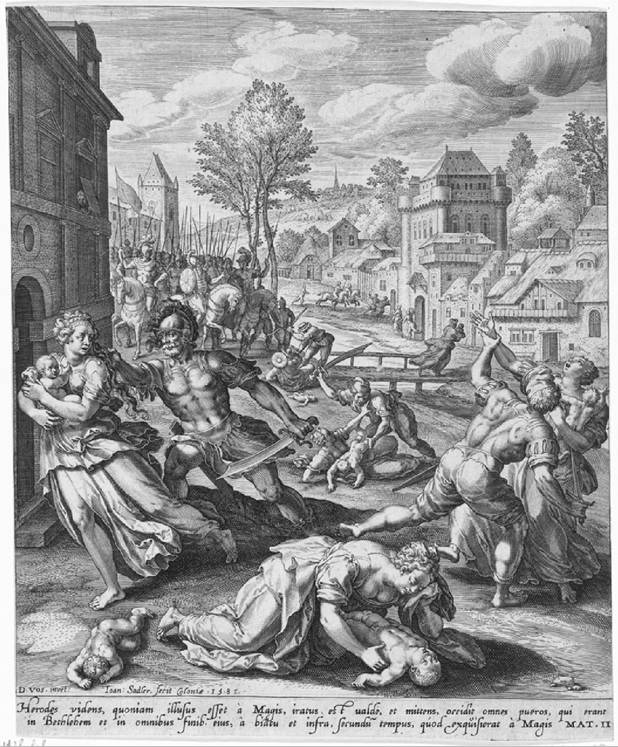
Figure 32.1 Johann Sadeler, after Maerten de Vos, The Massacre of the Innocents, engraving, 1581.
Marsyas, a punishment for Marsyas' hubris in challenging Apollo, a god, to a musical contest.