Conclusion
Adolphson's approach to ‘contextualize religious violence', that is, to ‘consider it not only from an ideological perspective but also from a social and political vantage point', is indispensable for investigating the topic of ‘religion and violence'.[762] He nevertheless doubts whether ‘the distinction between secular and religious violence can be sustained in historical analysis', because both were analogous phenomena in Japanese history.
Moreover, he argues, our modern Western approach presupposes the separation of the ‘political and religious spheres', which does not apply to premodern Japan.71 Whereas it is true that the popular notion of obo-buppo (imperial law - Buddha's law)72 does not indicate a separation, it does contain an obvious distinction as well as a correlation. After all, many lay people expressed their criticism of akuso quite clearly. Hence we may speak of ‘religious violence' in premodernjapan. Our study has shown that religious people were conscious of the contradiction between the Buddhist teaching of non-violence and violent actions in society. Therefore they sought and developed theories that justified the evil behaviour before and after, such as the hongaku homon of Tendai or the ‘afterlife pardon' of Hongan-ji. Religious teachings also provided stimulation and encouragement before and during fights, such as the Soga's prayers to the Shi-tenno or the Hongan-ji's slogan ‘The attackers will be born in the Land of Utmost Bliss; those who retreat will fall into the hell of constant suffering.'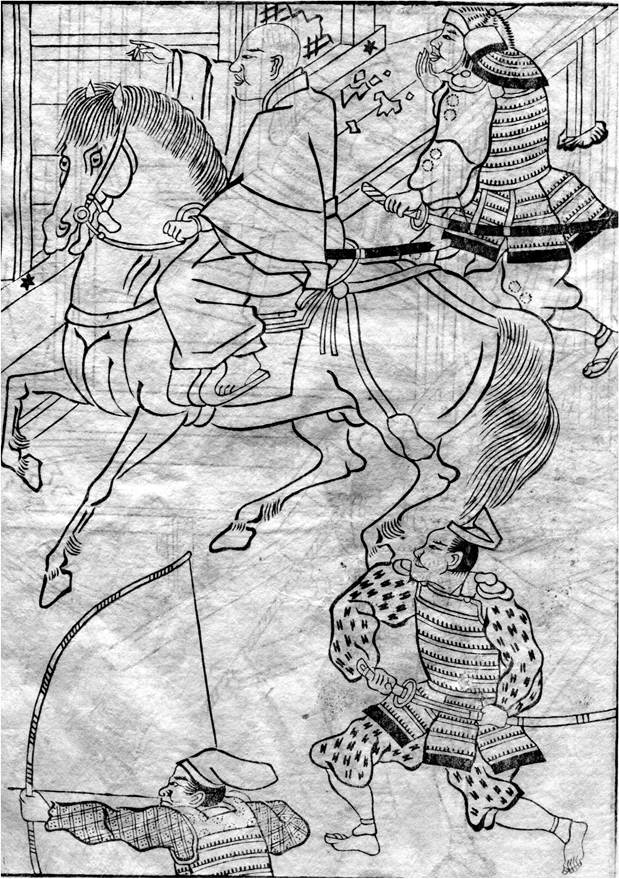
Figure 18.1 Monk on horseback orders samurai to attack a monastery of another sect. Honen Enku Daishi-den.
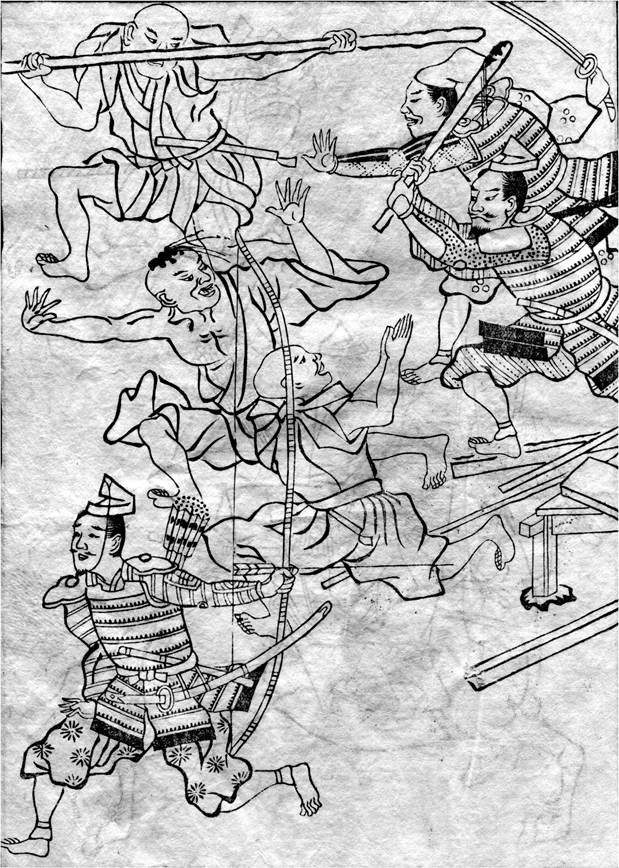
Figure 18.2 Samurai attack monks. Honen Enku Daishi-den
Finally, there were also teachings that helped motivate people to engage in war and uprisings, such as Hongan-ji's religious idea of social equality. Certainly, the main causes for uprisings and wars by religious groups were mundane, such as economic, social or political interests. The efforts of religious organisations to defend, maintain or increase their economic and social basis were accompanied by individual ambitions of religious leaders for power and fame. Religion cannot exist without an institution since teaching and practice must be transmitted on an economic and social basis. In respect of cause, form, contents and goals of violent conflicts, we may conclude that ‘religious violence' played a significant role in premodern Japan.
More on the topic Conclusion:
- Conclusion
- Conclusion and Future Prospects
- Conclusion
- Conclusion
- Conclusion
- Hare C., Neo D. (eds.). Trade Finance: Technology, Innovation and Documentary Credit. Oxford University Press,2021. — 417 p., 2021
- Fligstein Neil. The Banks Did It: An Anatomy of the Financial Crisis. Harvard University Press,2021. — 334 p., 2021
- Contents
- FIVE COMPONENTS OF LEGAL COMPETENCIES
- Contents