Displays of War and Violence and the Roman House
Scenes of war and violence appear in a variety of media, while their subject matter ranges from historic battles to mythical vengeance and even arena games. Visual tokens of wars fought and lands conquered by the Romans appeared on the facades of noble houses.
At first, spoils of war were hung on Roman houses, and eventually battle scenes adorned the reception spaces of the home, especially in the primary reception rooms known as the atrium and tablinum. Describing the immense damage from the Great Fire in Rome (64 ce), Suetonius laments the destruction of ‘the houses of the generals of long ago that were still adorned with enemy spoils’.1 Some of the earliest battle scenes and war imagery that survive from the Roman world are from domestic contexts. The display of battle trophies and war booty had been part of Roman domestic decoration since at least the third century bce, when armour and weapons seized from conquered enemies adorned the facades of the homes of military leaders. Inside these same homes one might also have seen precious metal objects, furniture, artworks and slaves, the spoils of a successful military campaign. Nowhere is the connection between the Roman house and war displays more evident than at Fregellae, a Latin colony located to the south-east of Rome along the Via Latina. The leading citizens of the town appear to have commemorated their role as participants in Roman military campaigns through the decoration of their homes.Terracotta relief fragments found in house 2 at Fregellae depict victories, trophies, a tripod with omphalos and two male figures wearing trousers and pointed shoes, perhaps identifiable as eastern barbarians. A second set of fragments depicting Macedonian shields, horses and at least one elephant was found in building L, another atrium house before its later conversion to industrial use.
Dating the fragments to between 190 and 170 bce, Filippo Coarelli suggests that the reliefs depicted Roman battles against Antiochus III during the First Syrian War, for which the Fregellans supplied troops.[1218] [1219] These reliefs appear to be the oldest surviving Roman historical reliefs. Located in either the atrium or the tablinum, the most public parts of a Roman house, the relief fragments are likely to have come from friezes that were set into the walls at roughly eye level, just above the orthostats or dado course, of the First Style wall decoration common in Italy in the early second century bce. If the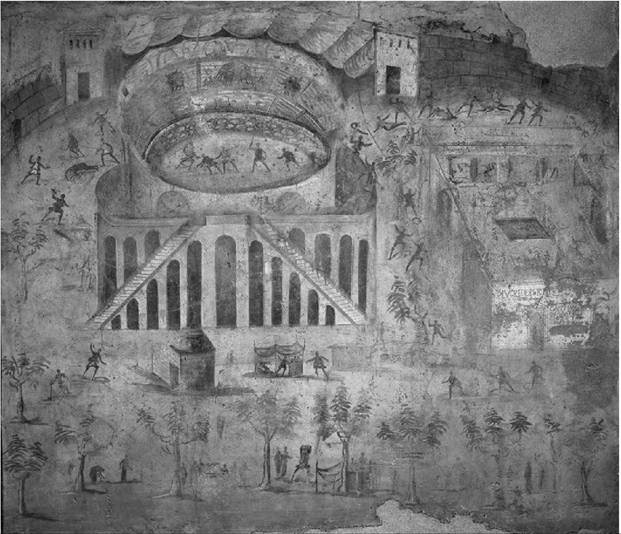
Figure 32.1 Riot in the Amphitheatre, fresco, first century ce, from Pompeii.
Fregellans were following Roman practices, then visitors would have first seen war trophies hanging on the facade before entering the atrium or tablinum adorned with these reliefs. The theme of war and successful conquest would have been carried through the house into the hortus (garden) and triclinium (dining room), where looted artwork, tableware or furniture could have formed part of an eclectic display of war booty.[1220] The terracottas from Fregellae are extraordinary for their early date and their likely role in celebrating the role of the local elites in historical military events.
In Pompeii violent images of different sorts are found. Rather than commemorate Roman military victories, these representations projected the cultural and social aspirations of local citizens. Riot in the Amphitheatre, a painting originally in a small house in region I (Figure 32.1), illustrates a violent brawl that erupted between Pompeiians and Nucerians during a gladiatorial spectacle that occurred in 59 ce at Pompeii. The painting illustrates a fight between rival citizens in and around the amphitheatre and palestra. The historian Tacitus describes how the brawling began with stone throwing, which escalated to weapons and resulted in numerous deaths and injuries.
The Pompeians bested the Nucerians, but the city suffered a ten-year ban on arena spectacles and the disbanding of certain associations, while the man who organised the event, Livineius Regulus, was punished with exile.[1221] Why would an event with such negative outcomes be an appealing household decoration? The most obvious reason is that the homeowner had a significant tie to it. Perhaps he was proud of having participated in the brawl, or maybe he was a member of one of the banned collegia, which may have been ‘fan club' organisations that supported professional gladiators or were followers of the iuvenes, the training organisations for young male citizens at Pompeii who also performed gladiatorial-type shows. The size of the house suggests that its owner was not a member of Pompeii's wealthy elite, and the fact that gladiatorial combat scenes once stood to either side of the riot scene implies that the owner enjoyed viewing arena games. John Clarke has argued that the painting may have represented a perverse pleasure, an upended social order of excessive fandom juxtaposed with the orderly gladiatorial combatants. However, if the owner had indeed participated in the riot, then commemorating it with a visual display in his home, just as an elite citizen might have displayed his war trophies, also mocks the social conventions. In that case, Riot in the Amphitheatre is a non-elite response to the triumphal commemorations of the elites, where a public brawl becomes equated with military achievement, perhaps an attempt to assert a position within a power structure to which the patron had little or no claim.[1222]During Pompeii's last decades, especially from the Augustan era onwards, violent myth scenes became common in wall decoration. Mythological landscapes emerged as the focal point of Roman wall paintings of the late Second Style, becoming especially popular in the Third and Fourth Styles, that is, from around 30 bce to the late first century ce.
The architectural framing of these scenes gives the illusion of viewing them as if through a window or as pictures in a gallery. From a modern perspective, however, it is surprising how often scenes of extreme violence adorn the walls of places we associate with frivolity or calm, such as dining rooms and bedrooms. Subjects include Actaeon's fatal encounter with Diana, Medea as she contemplates killing her sons Phaedra and Hippolytus, Hylas and the nymphs, Apollo and Diana's slaughter of the Niobids, various mythical rape scenes, and violent scenes from the Trojan War saga.How Roman patrons selected the images that decorated the walls of their homes and whether we should interpret the groupings as programmed displays have long been points of debate. Karl Schefold has argued for deeply moral and religious meanings in the choices made by patrons, while Roger Ling sees aesthetic concerns of composition and balance as the primary factors influencing selections.[1223] The eclectic decorative assemblages have led scholars to employ theories from literary criticism, film theory and reception studies in their attempts to explain the use of specific mythological scenes. The repetition of subjects in a highly similar fashion suggests that pattern books played some role in the dissemination of the mythological and other motifs featured in Roman decoration.[1224] Among the several violent scenes on Pompeian walls, the punishment of Dirce appears most frequently, which, like many mythological scenes, combines violence and eroticism.
Dirce's violent punishment appears in five examples at Pompeii: three in dining or entertainment rooms, one in a tablinum and one in the apodyterium of a bath complex.[1225] In the Casa dei Vettii, the depiction of Dirce is one of several violent scenes spread across rooms N and P - the Pentheus and Ixion Rooms, respectively - which are decorated in the Fourth Style. The rooms, likely dining areas, are arranged as pendants.
Starting from the left and moving clockwise around the Ixion Room are Daedalus and Pasiphae, The Punishment of Ixion and Ariadne and Dionysus. In the Pentheus Room, clockwise from the left, are The Infant Hercules Strangling Snakes, The Death of Pentheus (Figure 32.2) and The Punishment of Dirce (Figure 32.3). Continuing across the two rooms, the myth panels form a chiastic arrangement (a-b-c-c'- b'-a'), with each room containing two scenes of transgressive behaviour and one of divine favour. The panel scenes are linked through formal elements of composition as well as narrative themes. The north and east walls of the Ixion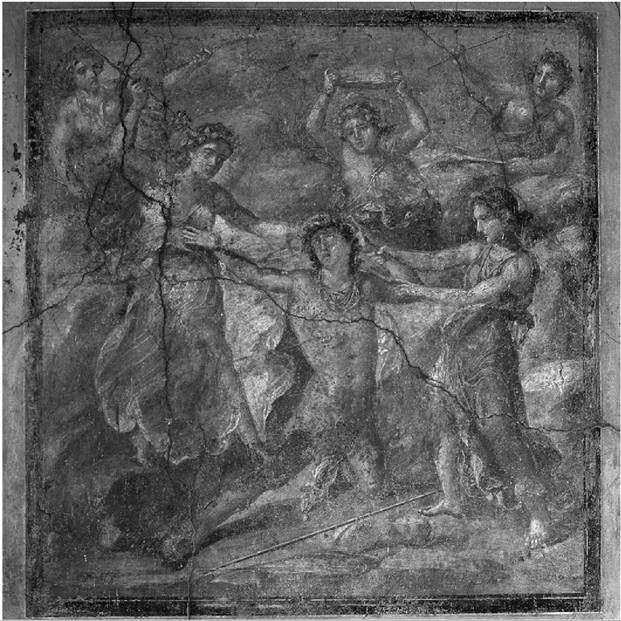
Figure 32.2 The Death ofPentheus, fresco, first century ce, room N, Casa dei Vettii, Pompeii.
Room are compositionally connected by shared gazes of Pasiphae (north) and Hera (east), while both myth narratives revolve around transgressive sexual behaviour resulting in monstrous offspring. The similar poses of Pentheus (east) and Dirce (south) form pendants: each has arms spread wide, a bare torso and falls to one knee while surrounded by tormentors. Both deaths occur in Bacchic settings. In short, the layout and choice of scenes in this house were not random.
Because the Casa dei Vettii is generally thought to have belonged to freedmen, the paintings have been compared with the artistic tastes of Petronius' fictional freedman, Trimalchio, of the Satyricon. Recently, film theory, gender studies and reception studies have contributed new ways of
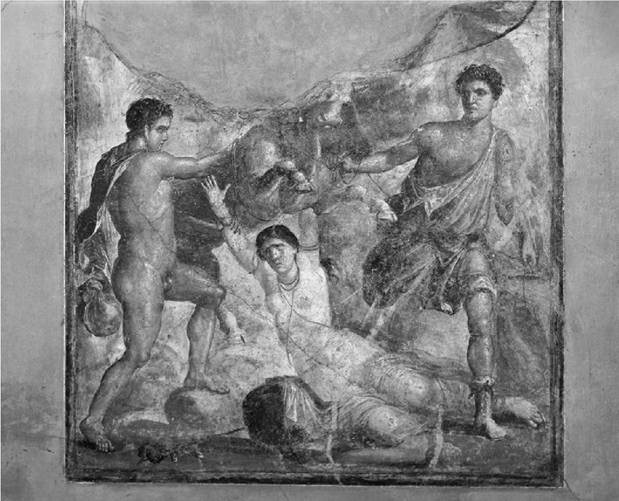
Figure 32.3 The Punishment ofDirce, fresco, first century cb, room N, Casa dei Vettii, Pompeii.
looking at the mythological scenes in Pompeii.[1226] The approaches to the Casa dei Vettii paintings argue that the mythological panels enforce Roman social codes deeply embedded in a patriarchal structure visualised as divine power over the human, where transgressors are punished and the divinely favoured are rewarded.[1227] [1228] The tormentors and victims in the violent scenes - Pentheus dismembered by the bacchantes, Dirce tied to the bull by Amphion and Zethus - can be mapped on to the master-slave and patron-client relationships within the household.
11Mythological landscapes could also be staged using sculptures in villa gardens and imperial horti, a phenomenon beginning in the late first century bce and well developed by the early second century ce. Sculptural groups depicting the Niobids, the doomed children of Niobe slaughtered by Apollo and Diana as punishment for their mother's hubris, are especially vivid examples. Here, too, the erotic and the violent are combined: Niobe's sons and daughters are young and beautiful, with drapery slipping away from their figures as they writhe in pain, grasping at arrows lodged in their bodies. The largest surviving group of Niobids, eleven statues, comes from the Horti Lamiani near the Esquiline Hill in Rome.[1229] Four statues belonging to another Niobid group are linked to the Horti Sallustiani in the area of the Quirinal and Pincian Hills.1[1230] Both properties were imperial possessions under the Julio- Claudian emperors.
The statue groups in the Horti Lamiani and Sallustiani were posed in the natural landscapes of the gardens. The theatricality of these displays placed the viewer inside the action of the myth, confronting figures that were simultaneously erotic and filled with terror. For example, a female Niobid (Figure 32.4) from the Horti Sallustiani desperately reaches for the arrow that has pierced her back, while her drapery has fallen away from her body revealing her naked breasts, torso and left thigh. Her upward gaze directs the viewer's eye towards the source of her terror, which remains invisible to the viewer. Zahra Newby compares the settings of these groups to the mythological landscape paintings, only in this instance, as the viewer wanders through real landscape he is subjected to an almost ‘live action' experience, surrounded by the death and torment that comes from an unseen force above. Newby suggests that strolling among the statues puts the viewer in an awkward and uneasy position:[1231] while they are uncomfortable imaging themselves as a potential victim, nonetheless there is pleasure to be gained from the sculptures' beautiful eroticism. In an imperial garden, an unsettling stroll among dead and dying Niobids could be a clear reminder of the power of Roman emperors to punish transgressive behaviour, especially those actions that challenge his authority.
During the second to fourth centuries ce elite citizens had few means for promoting their achievements and asserting their authority. Sponsoring an
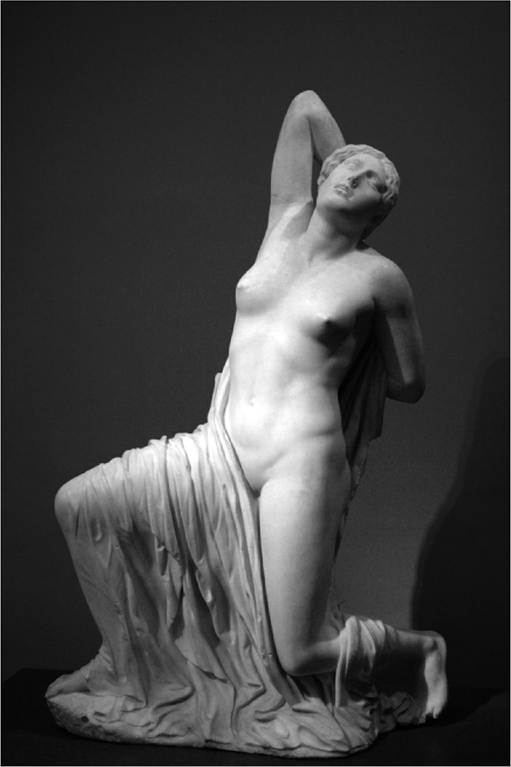
Figure 32.4 Dying Niobid, marble, Horti Sallustiani, Rome.
arena spectacle was an acceptable way for local elites to provide benefactions and bring fame upon themselves. During this period polychrome mosaics of gladiatorial combats, wild animal hunts and even executions adorned elite homes in many parts of the empire. The scenes fall into three basic types: animals versus animals; men versus animals, depicted as hunts or executions ad bestias; and men versus men, usually as gladiatorial pairings. Like the
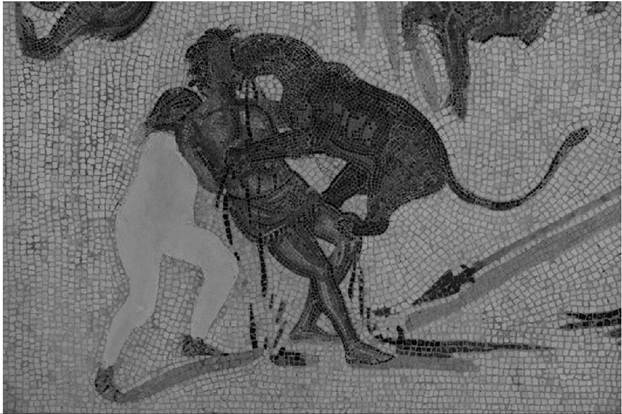
Figure 32.5 Mosaic, marble tesserae, late second/early third century ce, Sollertiana Domus, Thysdrus (El Djem, Tunisia).
mythological paintings, these mosaics usually decorated the floors of dining and entertainment spaces, where host and guests would be at leisure to study and debate the images. If the mosaic depicted an actual spectacle staged by the host, then he could relive that moment as often as he liked, and his guests would be able to share the thrill upon viewing the scene. If the scenes were imaginary, guests were nevertheless entertained.
Katherine Dunbabin suggests that a mosaic in the Sollertiana Domus in El Djem, Tunisia (Figure 32.5) was a special commission depicting specific arena events.[1232] The partly preserved mosaic features scenes of animals attacking bound men, criminals or prisoners of war condemned to execution ad bestias. In one vignette, what is possibly a leopard bites the face of the bound victim while blood gushes from wounds on his body and pools on the ground. Unlike the death of Pentheus or the trampling of Dirce, here the viewer encounters real-life, gory scenes of death. A variety of amphitheatre scenes appear in a third century ce mosaic floor of the Roman villa at
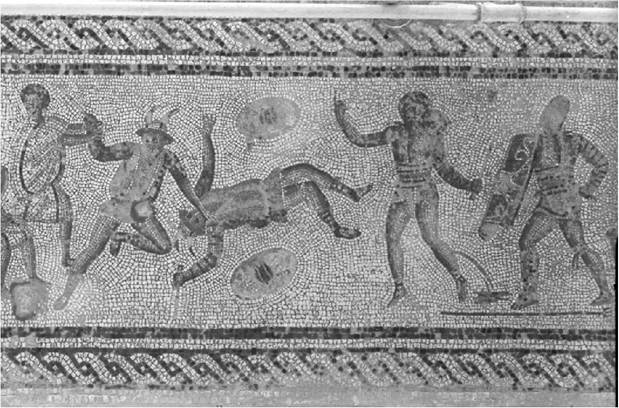
Figure 32.6 Mosaic with scenes of gladiators and referee from a Roman villa at Dar Buc Ammera a Zliten (near Leptis Magna), third century cb.
Zliten (Figure 32.6).[1233] The space adorned with the mosaic was probably a dining room. Sixteen square panels, alternating between geometric opus sectile and emblemata of fish, form the centre of the floor. A wide border of opus sectile panels surrounds this, while a narrow mosaic guilloche border separates it from a frieze-like band in which amphitheatre scenes appear. Another narrow guilloche divides the figural scenes from an outer geometric mosaic border. Musicians, officials, gladiators, hunters, wild beasts and executions ad bestias appear in the figural border. Various gladiator types populate the scenes - murmillo, Samnite, thraex, retiarius and secutor - and are either fighting or in the act of missio, identifiable by the raised index finger of the wounded or fallen gladiator as he pleads for salvation, or by the glance of the victor awaiting the signal to spare or kill the fallen combatant. Surrounding the room and positioned just in front of the dining couches where guests could have easily seen them, these vignettes recreate the thrill of attending actual events, complete with spurting blood and lunging animals.
Regarding gladiatorial mosaics in domestic settings, Shelby Brown observes that the most common subjects are either fights between pairs of gladiators or the act of missio, when a fallen gladiator pleads for his life.[1234] Because the victorious combatant or a referee usually looks directly at the viewer out of the frame of the mosaic, Brown argues that the missio scene casts the viewer in the role of provider of the games, the elite benefactor who is judge, giving the sign to spare the fallen or not. While a modern viewer might have sympathy for the fallen victim, Brown maintains that missio scenes were not intended to elicit empathy for the victims. The viewer was expected to be thrilled by the sight and not at all sympathetic to the plight of the fallen or punished. Domestic mosaics featuring arena spectacles reinforce the power structures of the Roman social order in much the same way that mythological landscapes do, inviting viewers to witness the violent punishment of transgressors of that order.