Greater Comancheria
By the late eighteenth century, Spanish New Mexico and Texas had become captive territories in the shadow of Comancheria, whose population may have neared 40,000. But a Spanish countermove was already underway.
Steered by the energetic Carlos III, New Spain made a concerted effort to stabilize its crumbling northern frontier. More money and men were sent to New Mexico and Texas, and northern New Spain was placed under a new administrative colossus, the Commandancy General of the Interior Provinces of the North. The Bourbon Reforms also marked a shift toward a pragmatic, fine-grained Indian policy that was geared to reverse the humiliating situation in the north. Viceroy Bernardo de Galvez presented a detailed formula on how to pacify the seemingly unstoppable nomads in his famous 1786 Instructions for the Governing the Interior Provinces of New Spain. Realizing that the urban-based Spanish Empire could never be brought into the nomadic Comancheria, he set out to bring the Comanches into the Spanish Empire. The alchemy of commerce, he proposed, would turn the Comanches into loyal proxies who “go to war... in our behalf” while “voluntarily embracing our religion and vassalage.”[2378] Trade, diplomacy, and largesse would do what war could not: pin down the nomads. And so the Spanish officials in Santa Fe and San Antonio began to lavish Comanche leaders with gifts, aiming to unite the many Comanche bands behind strong leaders who in turn would be closely tied to—and dependent upon— the Spanish colonial apparatus.On the surface, the policy was a stunning success. The Comanches who had nearly destroyed New Mexico and Texas in the 1770s now visited Santa Fe and San Antonio regularly, collecting gifts and pledging loyalty to their “father” the Spanish king. But this was merely a surface. Despite the shared metaphors of familial obedience, the two parties held different understandings of the alliance.
Spaniards considered Comancheria an appendix of the Spanish Empire, but Comanches understood their realm as an expansive network of relationships that could embrace anyone willing to adhere to its customs and protocols. The Spaniards had done exactly that. They had expressed largesse, caring for Comanche needs, which, through the logic of reciprocity, gave them access to Comancheria’s human and material resources. But access did not mean control. Spanish colonies were but one facet of Comanche foreign policy, which in the early nineteenth century grew increasingly ambitious. Before long, the Spaniards were again struggling to maintain a meaningful imperial presence on Comancheria’s borders.[2379]The Comanches reached the pinnacle of their power in the early nineteenth century. In the east, a succession of new commercial opportunities opened as American expansion kept funneling people westward. Violating the 1806 border agreement between Spain and the United States, itinerant American traders pushed into Comancheria, drawn by its superior horses that fetched high prices in the emerging cotton kingdom. In exchange, they offered powder, bullets, and state-of-the-art muskets. Eventually, American merchants dotted Comancheria’s eastern border with permanent posts, where Comanches found ready markets not only for horses, but also for bison robes. Even the thousands of removed Southern Indians who were settled in Indian Territory near Comancheria’s northwestern border proved more a resource than a threat. Discouraged by the agricultural prospects in the subhumid climate, many immigrant nations shifted into bison hunting, for which they needed horses. A vigorous borderlands trade developed between Comancheria and Indian Territory. Tens of thousands of horses moved westward in exchange for grain, powder, lead, and US government-issued rifles. Even the once-formidable Osages, now pressed between Indian Territory and the flourishing Comancheria, sought peace with the Comanches and became middlemen between American and Comanche markets.
Comancheria’s eastern flank had become a trade pump comparable to its plains-facing northern flank.[2380]All this unnerved the Spanish Texans. Comanches were gravitating toward eastern wealth and pulling away from the alliance with Spain. Regular gifts kept the alliance alive, but when the chronically underfunded Texas began to struggle with gift distributions after 1800, Comanches responded with violence. They raided the colony to punish the Spaniards for their stinginess—and to pilfer horses to fuel their escalating eastern trade. Desperate to preserve peace, Spanish officials made every effort to keep up the gift-giving institution, which transformed into a blatant tribute arrangement. Texas was locked into a painful dynamic that lasted for half a century—through the Spanish and Mexican eras and through the era of the Texas Republic into the US era. Comanches kept the peace with the province when gifts were available, and raided it for horses when they were not. It was an enduring relationship of violence and exploitation, and it endured precisely because the violence was aimed at exploitation, not destruction. Comanche raiders rarely stripped settlements or ranches of horses, for doing so would have compromised their capacity to raise more animals.[2381]
Meanwhile in New Mexico developments followed a drastically different path. Comanches kept an unbroken peace with the province throughout the Spanish era, trading and collecting gifts, sharing meals with Spaniards, and socializing with the Pueblo Indians. It was an obscene scene to Spain's imperial administrators, who viewed it against the violence that was swallowing up Texas. Yet they could ill-afford to use force; New Mexico's peace with Comanches was too precious to be risked by applying wholesale pressure on Comancheria. Instead, Spanish officials reimagined the Comanches. They began to make a clear distinction between Western Comanches, the Comanche bands living near and in peace with New Mexico, and Eastern Comanches, the Comanche bands that were raiding Texas.
There were good and bad Comanches, and the two deserved to be treated differently. This perceived dual sovereignty of the Comanches was a convenient half-t ruth that allowed the Spanish officials to maintain face and preserve their alliance with the Comanche nation that was slowly consuming an entire Spanish colony. But it also marked a genuine and momentous shift in Spanish imperial policy. The Bourbon Reforms were based on Enlightenment-era notions of rational space—neat territorial blocs bounded by geometrical frontiers. In the far north, however, Spanish administrators began to see nations and empires as composite entities made of distinct nodes and connectable pieces. Without realizing it, they were adopting the nomads' view of the world.A Spanish myth insisted that a Spanish battlefield victory in 1786 had subdued the Comanches, compelling them to live in peace with New Mexico. It had not. Peace with New Mexico was policy. Comanches chose to live in peace with New Mexico, because the colony had restructured itself to accommodate their needs. Spaniards had opened all New Mexico's settlements to their trade and they had granted them a preferential status among the many native groups living around the colony. Guns and horses, the bedrock of Spain's military power in the New World, now flowed freely into Comancheria. Then there were the gifts, the regular distributions of weapons, staffs of office, and other luxuries that were meant to tie Comanche leaders to Spanish policymakers and Hispanize the Comanches. They did not. Instead, the reverse happened.[2382]
As Comancheria grew more powerful and prosperous, New Mexico too fell under its cultural influence. Several eastern borderland villages and the strategically critical Taos region geared their economies toward Comancheria and developed close kinship relations with Comanches, impregnating the nominally Spanish space with a strong Comanche imprint. Comanche language and aesthetics gained popularity, and farming gave way to hunting.
Eventually, loyalties blurred. In 1794, Governor Fernando de la Concha discovered that royal authority was becoming alarmingly frail among eastern New Mexicans who “desire to live without subjection and in a complete liberty, in imitation of the wild tribes which they see nearby.” Concha was not alone in his concerns. Other Spanish officials found similar character flaws—indolence, aversion to farming, and even separatism—in their subjects and attributed them to an eagerness to imitate the Comanches.[2383] It was a sobering realization: local face-to-face interactions, not grand policies dictated in imperial headquarters, now determined the contours of authority and sovereignty in New Mexico. Looking eastward, they found it difficult to pinpoint where New Mexico ended and Comancheria began.New Mexico's drift toward Comancheria runs against conventional assumptions about Indians, colonists, and the arrows of influence. But it becomes less surprising when placed in a broader context. The early- nineteenth- century Comancheria was a transnational nexus that radiated prestige and power, pulling surrounding societies in its sphere. Dwarfed by its commercial reach and dependent on it for horse supply, several bordering native societies gravitated toward it. They learned Comanche language, adhered to Comanche codes of behavior, and adopted aspects of Comanche culture, from religious ceremonies to clothing and hairstyles. Eventually, large numbers of Wichitas, Caddos, Kiowas, and Arapahoes immigrated into Comancheria, seduced by its wealth and safety. They became, in contemporary language, “vassals” and “subordinates” of the Comanches, who “teach them their own martial habits and help to improve their condition,” “finally amalgamating them into their nation.” Historical momentum was turning Comancheria into a multiethnic imperial realm whose sphere of influence was permeating the Southwest. New Mexicans were but one of many people caught in the thrust.[2384]
By the late 1810s, the Spanish Far North was crumbling under Comanche pressure.
Its colonial space had splintered into distinct nodes, which were attached to Comancheria by a constantly shifting web of coercion, exploitation, and dependency. Colonial officials put up a brave face and kept dispatching confident reports back to Mexico City, but the gravity of the situation was not lost on foreign visitors: “The Comanches have made themselves so redoubtable to the Spaniards,” wrote one, “that the governors of the different provinces of the frontiers have found it necessary to treat separately with them. Often they are at war with one province and at peace with another; and returning, loaded with spoil, from massacring and pillaging the frontiers of one province, driving before them horses and frequently even prisoners whom they have made, they come into another to receive presents, taking only the precaution of leaving a part of the spoil, above all the prisoners, at some distance from the establishments.”[2385]Yet, viewed from the imperial headquarters in Mexico City, Comanche operations were still confined. Texas and New Mexico had fallen under Comanche influence, but the rest of New Spain was safe from Comanche violence. That was the situation the Republic of Mexico inherited from the collapsed Spanish Empire in 1821, and it failed to sustain it. In the far north, the Spanish Empire had left behind a hybrid space where nomadic and settler spaces coexisted and overlapped. But the architects of the Mexican republic, galvanized by national ambitions, departed from Spain's pragmatic piecemeal approach and imagined a republic of universal citizenship into which ethnic identities could dissolve. Christianity would stamp out indigenous localism, farming would extinguish nomadism, and trade would replace tribute payments.[2386]
It was a policy that promptly alienated almost all Indians in the far north. Comanche raiding escalated immediately, engulfing Texas and ending the long peace between Comancheria and New Mexico. Soon Comanche war parties pushed south to the Rio Grande and beyond. By the 1830s they were active in western Chihuahua, central Coahuila, and northern Nuevo Leon, and by the 1840s a grid of well-trodden war trails covered nine Mexican departments. The trails converged at Bols0n de Mapimi, a lightly populated desert plateau in western Coahuila, from where Comanches staged raids that carried them all the way into the Mexican tropics, a thousand miles south of Comancheria's center. Bols0n became a semi-permanent settlement colony, a neo-Comancheria in the heart of northern Mexico.[2387]
Several powerful forces fueled this explosive escalation of raiding. The raids were in part punitive expeditions aimed at forcing the Mexican Republic into the tributary mold of old and, as such, they worked. Reluctantly, Mexican officials resumed gift distributions in Texas and New Mexico, resigning themselves to the Spanish custom of buying peace from nomads. The arrangement was, in the words of one Mexican reformer-colonizer, “an insult and degradation to the honor of the nation.” “Millions of pesos are being spent on... impossible truces” and “good will is won with numerous presents at the expense of the people whom they continuously insult, murder, and despoil of their property.”[2388] Those debased people were the Mexican citizens living south of the Rio Grande. The tribute policy shielded Texas and New Mexico against Comanche raids by redirecting them further south into other Mexican departments. Northern Mexico now became a raiding hinterland, where Comanches obtained much of the animal wealth that lubricated their thriving trade with the Americans and their native allies in the north.
The Mexico-bound raiding parties also brought back masses of human captives. Comanches had raided captives for generations on their borderlands, but the 1820s and 1830s saw a dramatic escalation of the practice. Comanches needed captives to tend their growing horse herds, which in the early nineteenth century comprised some 150,000 animals, and they needed extra hands to process bison hides—an arduous and labor-intensive chore—for export. This increasing demand for labor coincided with a sudden decline in Comanche population. Between 1799 and 1816, the Comanches were struck by three smallpox epidemics, which plunged their numbers on a lower plateau and pushed them to augment their diminished labor force with captive bodies. By the 1830s, they had become large-scale slaveholders, the unfree component of their population probably exceeding 10 percent, or some 2,000 people. The majority of the captives were women and children, who could be put to work as horse herders, hide tanners, and menial workers. Many captive women were eventually married into Comanche families, and they became mothers of children who were recognized as full-fledged members of the Comanche nation.[2389]
Comanche raiding in northern Mexico was thus an economic enterprise, but over time it came to double as an ecological strategy. In the 1830s Comancheria’s bison began to show signs of stress: the mass-scale production of buffalo hides for American markets, coupled with grazing competition from growing Comanche horse herds, had started to take a toll. Mexico-bound raids helped stabilize the situation. The raids carried off large numbers of people out of Comancheria for long periods of time, serving as a kind of ecological relief valve. Comanche war parties regularly consisted of hundreds of warriors, who would spend months at a time on Mexican soil, moving from one settlement to another in the search of horses and captives. All along they lived off the land, stealing cattle, pigs, sheep, and goats and extracting meat and bread in urban centers, while their horses foraged on Mexican grass along the war trails that at times bulged into two-mile-wide highways. More abstractly, raiding was a means to appropriate foreign natural resources. Each mature horse taken from Mexico saved millions of calories of plant energy that would have gone into raising an animal from birth in Comancheria— and Comanches probably stole tens of thousands of animals below the Rio Grande. All this—Comanche war parties consuming vast quantities of Mexican stock, food, and grass; Mexicans absorbing a major portion of the ecological costs of Comanche pastoralism—allowed Comanches to preserve their own natural resources and keep Comancheria booming.[2390]
And boom it did. The Comanche empire in its peak years in the 1830s and early 1840s was a prodigious entity with a hemispheric reach. Its core area in the southern Great Plains was a prosperous and socially stratified imperial realm that absorbed wealth, ideas, technology, and people—both free and unfree—from surrounding areas. It was a seat of a sprawling alliance system and a thriving trade network whose tentacles reached deep into North America’s heartland. It blended and imposed cultural practices on others and it was powered by a dynamic pastoral economy that depended on coerced labor. In the south, Comanches had reduced much of northern Mexico to a vast raiding hinterland from which they could mine crucial resources with recurrent seasonal invasions. In a stunning reversal of usual historical roles, this established an essentially colonial relationship between an indigenous and a settler society. Comanches, one observer stated in 1837, treated the
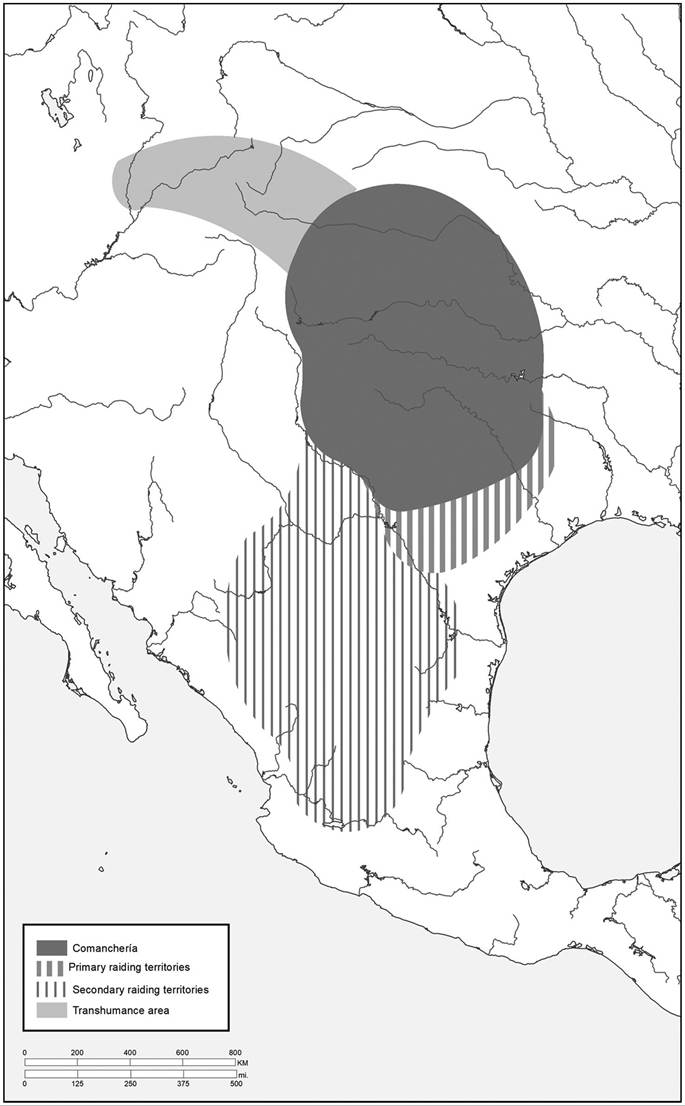
Map 38.1. The Kinetic Empires of Native American Nomads. Copyright: Peter Fibiger Bang with Jonathan Weiland.
Mexicans as “their stockkeepers... out of which nation they procure slaves.” “They declare,” wrote another, “that they only spare the whole nation [of Mexicans] from destruction because they answer to supply them with horses.”[2391]