Massacres in Mesoamerica
The massacre at Cholula may be regarded as a highly successful act of terrorism that sowed fear throughout the whole region. It proved the utter ruthlessness of the invading conquistadors, the supremacy of Santiago Matamoros and the power of their indigenous allies, demonstrating the dangers of resisting their advance and intimidating many local rulers into seeking an alliance with them.
In July 1520 the Spaniards and their allies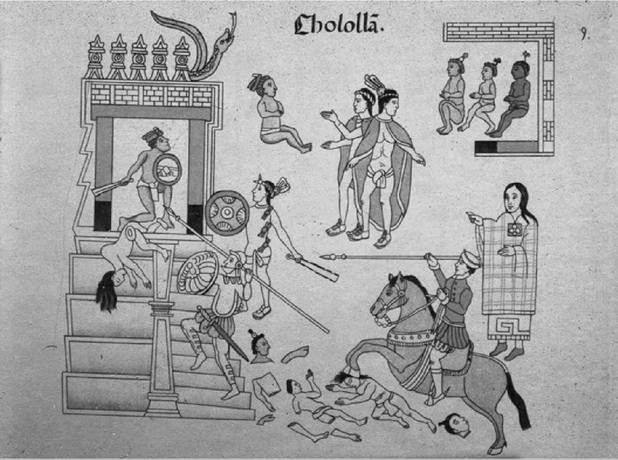
Figure 30.2 ‘The Spanish Horseman in the Massacre at Cholula, Lienzo de Tlaxcala, Mexico', nineteenth-century copy of a sixteenth-century drawing on cloth.
attacked unarmed civilians gathered in the main ritual space of Mexico- Tenochtitlan, in front of the Templo Mayor (Great Temple) for the important religious festival of Toxcatl, in which many of the young warriors of the city participated. Through the night the conquistadors systematically massacred all the people they had isolated in the sacred enclosure. The ensuing urban warfare forced the Spaniards to flee the city. In 1521 they finally managed to subdue Mexico-Tenochtitlan after a brutal siege that lasted several months and led to its total destruction.
The massacre at the Templo Mayor is described and depicted in great detail in several histories written and drawn by the Mexica, and by Spanish priests using indigenous informants. The former are pictographic books such as the Codex Azcatitlan, Codex Aubin and Codex Moctezuma, which use the traditional Mesoamerican system of logographic writing combined with visual narration. The latter, written in alphabetic script in Nahuatl and Spanish, include the Historia General de las Cosas de la Nueva Espana, a huge encyclopaedia directed by the Franciscan Bernardino de Sahagun, and the Historia de las Indias de Nueva Espana, written by the Dominican Diego Duran.
Both contain illustrations by indigenous artists. The written descriptions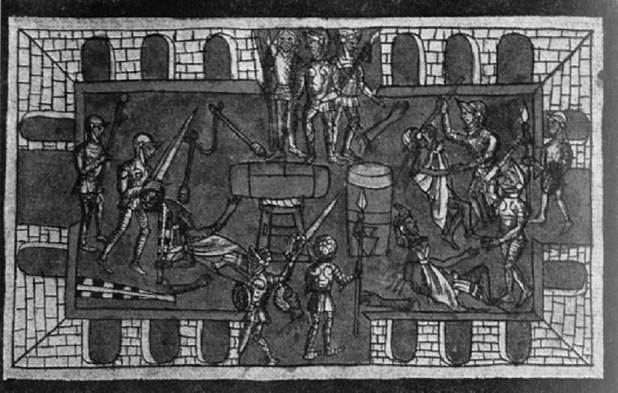
Figure 30.3 The massacre at Tempio Mayor, Còdice Duran, Mexico, sixteenth century.
emphasise the brutal efficacy of the metal arms used by the Spaniards and the mutilations they inflicted. A fragment of one Mexica account transcribed by Bernardino de Sahagun reads:
[The Spaniards and their allies] went into the temple courtyard to kill people. Those whose assignment it was to do the killing just went on foot, each with his metal sword and his leather shield, some of them iron-studded. Then they surrounded those who were dancing, going among the cylindrical drums. They struck a drummer's arms; both of his hands were severed. Then they struck his neck; his head landed far away. Then they stabbed everyone with iron lances and struck them with iron swords. They stuck some in the belly, and then their entrails came spilling out.[905]
The images of the massacre included in pictographic and alphabetic books represent in detail the mutilations inflicted by the steel swords and lances on the hapless musicians, who become a synecdoche for the collectivity of the youth massacred at the site. These depictions work both as a radical innovation meant to represent the unheard of power of the steel weapons brought by the Spaniards and as a continuation of the ways in which violence was presented, formalised and interpreted in indigenous visual histories.
In pre-Columbian art there are many scenes of violence in warfare and of death in ritual sacrifice, but the only representations of dismemberment concern the divine victims of the wrath of the patron god Huitzilopochtli in primeval times. Since his birth was conceived as the dawning of a new cosmic and historical era under his domination and that of his people, the Mexica, the mutilation of his enemies was part of the destruction of an old cosmic order and the violent birth of a new one.
Significantly, the statue of one of his victims, Coyolxauhqui, was placed at the base of the Templo Mayor, dedicated to the patron god, very near where the Spaniards perpetrated their slaughter. Therefore, the images of the massacre establish a significant analogy between the actions of the Spaniards and the cosmogonic mutilations at the beginning of the current era. The latter initiated the cosmic and historical period of domination by Huitzilopochtli and his people, while the former marked its end. Thus, the terrifying novelty of Spanish steel weapons and their capacity to cut through human bodies was interpreted according to traditional conceptions of divine and human power, Mesoamericanised in a way. This identification also constructed a cosmic explanation for the end of the era of Mexica domination, and for the beginning of a new one where Christianity and Spanish rule held sway. Also, the ruthless brutality employed by the human representatives of the Christian god was compared to the violence used by Huitzilopochtli to establish his supremacy.This interpretation of the emblem of the massacre at Templo Mayor poses a question: why would the Mexica attempt to legitimise their own defeat at the hands of the Spaniards and their allies? In order to answer this, it is necessary to explore the different public and political uses of this intercultural emblem. First of all, we should take into account that several of the depictions of the massacre at Templo Mayor were included as illustrations in narratives produced by Spanish authors. It can be argued that they would have approved them because they conformed, at least overtly, with their own views on the conquest. This agreement opened avenues of collaboration for the indigenous elites (the producers of these emblems, since not all Mexicas had the means and the education needed to participate in these cultural enterprises) as Christianised and loyal participants of the new regime. In this sense this emblem operated like that of Santiago Mataindios in the Andes: both displayed the massacre of Indians in order to demonstrate the adherence of indigenous elites to Christianity and Spanish rule.
The representations of the massacre were also meant to bolster the status of the elite within indigenous society. They couched a potent interpretation of the conquest in cosmographical and historical terms that were familiar to most of the population. The capacity of the elite to produce these elaborate discourses was not an insignificant aspect of its social role and legitimacy. The emphasis on the cosmic role of Spanish violence also underplayed their responsibility in the defeat. Furthermore, it confirmed that the Mexica people as a whole still shared a common destiny.The Tlaxcalans also produced a rich corpus of visual histories of the conquest that gave great salience to the representations of massacres and the dismemberment of the bodies of their enemies. Based on a set of murals painted on the walls of the new cabildo (town house) of the colonial city of Tlaxcala, the most spectacular work of this genre is the Lienzo de Tlaxcala, a huge painted cloth that presents the official version of the Tlaxcalan elite's participation in the conquest of Mexico-Tenochtitlan and in the establishment of Spanish colonial rule over New Spain and beyond, from Guatemala to what is now northern Mexico. The Lienzo depicts the massacre of Cholula in all its explicit violence: a mounted Spaniard tramples on the mutilated bodies of the Cholulteca as Tlaxcalan warriors assault the main temple. In the scenes that follow there are depictions of dismembered and defeated enemy warriors in almost all the images of battle between the Tlaxcalans and Spaniards and their indigenous enemies, the Mexica included.
The figure of the victorious Christian horseman and the mutilated bodies trampled by his horse is a direct reference to the iconography of Santiago Matamoros. The prominence of these scenes in the Tlaxcalan histories can be interpreted as an overt appropriation of this Spanish emblem, used to confirm the power and irreversible triumph of the ‘true religion'. At the same time, from a Mesoamerican perspective, as in the case of the Mexica, the mutilations could be interpreted as an allusion to the primordial dismemberments that had helped establish the cosmos.
In this case, however, they were meant to symbolise not only the destruction of the old political and cosmic order, centred on Mexico-Tenochtitlan, but more significantly the creation of a new one, centred on Tlaxcala and its alliance with the Spaniards, and based on Catholicism.The full intercultural significance of this emblem of violence can be grasped in the image that occupies the central position in the Lienzo de Tlaxcala, a highly synthetic and conceptual depiction of the siege of Mexico- Tenochtitlan and the defeat of the Aztecs. It represents the besieged capital surrounded by the four peripheral towns that were used as launch sites for the final assault. Beyond its historical accuracy, this is an adaptation of a widespread Mesoamerican political and religious emblem, the quincunx,
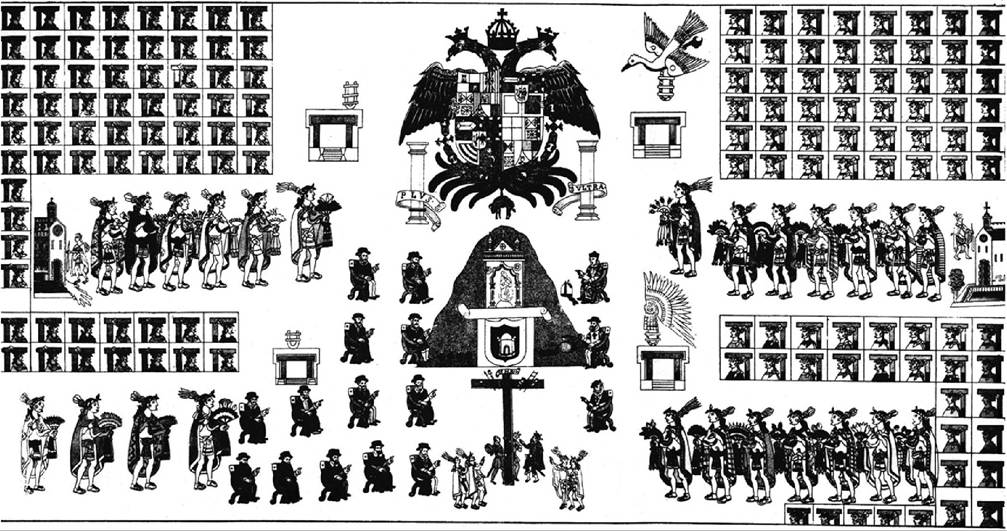
Figure 30.4 The city of Tlaxcala, main image of the Lienzo de Tlaxcala.
a cosmogram that represented the four cardinal directions of the world and its cosmic centre. For instance, in the initial plate of the Codex Mendoza, a pictographic history of the Aztecs, the logograph for Mexico-Tenochtitlan is represented at the centre surrounded by a quatrefoil that is both a geographical representation of the four quarters of the city and a conceptual schema of the cosmos. Below are depicted the Mexica conquests of the two previous capitals of the Valley of Mexico. Thus the political and ritual primacy of the new capital is based on its subjugation of the previous cosmic centres.
The emblem of the Lienzo de Tlaxcala works as a negative quincunx, a dramatic representation of the destruction of Mexico-Tenochtitlan, materialised in the brutal dismemberment of the bodies of the defeated Mexicas warriors. Its full meaning, however, can be only grasped if we relate this central plate to the main image on top of the Lienzo. This is a conceptual representation of the colonial polity of Tlaxcala as the centre of the new Christian political and cosmic order that includes the Spanish Crown and the Christian cross. Thus the new order is shown being born out of the ruins of the older one. This highly compelling political emblem relies on a very elaborate combination of Christian and Mesoamerican iconographical and visual traditions. As such it was meant to be interpreted from both cultural viewpoints, presenting distinct but complementary messages for its different audiences. The appropriation of Christian icons and discourses was a singularly effective vehicle for constructing an emblem that demonstrated the centrality of Tlaxcala according to traditional Mesoamerican cosmography.