The Beheading of the Inca
The emblem of the decapitation of the Inca in Peru is another interesting example of the interaction between native and European traditions and the construction of an intercultural discourse with many layered meanings.
Without a doubt one of the key historical events in the conquest of Peru was the execution of the reigning, but not crowned, ruler of the Inca Empire, Atahualpa, in 1535. After being judged for the alleged murder of his former rival to the throne and then being held for ransom, the king was garroted in private by the conquistadors. His death opened the way for the subjugation of his empire. In 1571 the rebel Inca Tupac Amaru was also executed, thus ending a decades-long rebellion by the descendants of the ancient rulers of Cuzco, the Inca capital. His public beheading in the main square of that cityIntercultural Emblems and Spanish Colonisation of the Americas was regarded as a momentous event. A contemporary Spanish account reveals that his severed head became an object for worship:
The head was placed on a lance near the gallows. Every day it became more beautiful, since the Inca had a beautiful face when he was alive. One dawn, Juan de la Sierra, looked out of the window by chance and witnessed the idolatries being perpetrated by the populace. The viceroy was informed and ordered the head to be buried alongside his body in a chapel in the cathedral.[906]
Andean social memory appears to have conflated two distinct royal executions into a single one, and so, by 1615, the native historian Guaman Poma de Ayala represented the slaying of Atahualpa as a beheading, nearly identical to that of Tupac Amaru. Furthermore, we have evidence as early as 1602 of the belief that the Inca would return to rule again over his empire. Frequently his resurrection was conceived as the result of his severed head being reunited with his body, and this acquired the import of a cosmic cataclysm that would wipe away the Spaniards and establish a social order with no suffering, labour and death.
This expectation was invoked by the leaders of major rebellions in the eighteenth century, such as Juan Santos Atahualpa in 1742 and Tupac Amaru II in 1789. Thus we can propose that the beheading of the Inca and the fate of his head became the centre of an emblem of indigenous defeat and possible restoration. Significantly, the executed and expected ruler received the mixed name of Inkarri, Inca and rey, king in Spanish.
There are strong disagreements among scholars over the actual historical and geographical formation of this emblem and its continuity across the centuries. It has been identified in twentieth-century oral narratives in several Andean communities, and today many communities still perform ritual re-enactments of the execution of the Inca. However, key elements, such as the expectation of a cosmic cataclysm that would annihilate the Spaniards, were present already in the millennial Taky Onqoy movement during the second half of the sixteenth century. There are also late colonial visual representations of this emblem such as the oil painting La degollacion de Juan Atahuallpa (The Beheading of Juan Atahuallpa). In it, the decapitation of the Inka is presented as the central event of the Spanish conquest and as a cosmic transformation, a change of era symbolised by the rainbow that presides over it. Twentieth-century indigenous ceramics and paintings also contain allusions to the beheading and the return of the Inca. While overtly
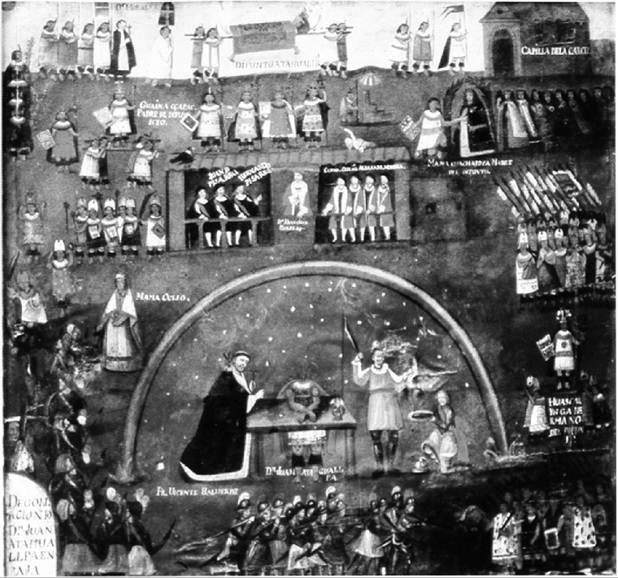
Figure 30.5 La degollacion de Juan Atahuallpa, oil on canvas, probably eighteenth century.
nativistic, this emblem is also the result of the confluence of indigenous and Western ideas.
In the Andes, the public display of so-called trophy heads, the mummified severed heads of defeated enemies, was a common regalia of kings and other powerful figures. The Inca themselves exhibited them, and manufactured queros, ceramic cups in the shape of decapitated heads. These cups were used to perform ritual toasts that confirmed the submission of the conquered enemy polities and commemorated their conquest by Inca rulers.
Even in colonial times, pre-Columbian conquests carried out by the Incas were celebrated in public processions with the exhibition of severed heads. On the European side, there was a long tradition of beheading rebels against royal power. According to the symbolic logic of punishment, decapitation was the proper punishment for conspiring against the king, the head of the realm. The heads of traitors were often exhibited in public squares, as was the head of the rebel Inca Tupac Amaru.Like its counterparts in New Spain, this emblem had many contradictory meanings. For the Spaniards, who were the first to display the severed head of Tupac Amaru, the legal execution of the Inca was incontestable proof of the final subordination of the Andean dynasty to the power of their own king, who became the legitimate successor of his defeated enemies. Thus the portraits of the ancient Inca of Cuzco became a central part of their political propaganda. For the Andean elites, particularly the native aristocracy of Cuzco, the death of the sovereign was also a potent demonstration of the historical and supernatural victory of the Spanish Crown and the new Catholic religion. For them, as allies of the Spaniards in the fight against the rebel Incas in the sixteenth century, it also proved the futility of military resistance against Spanish rule. At the same time, aristocrats sought to extol the glories and legitimacy of the pre-Columbian monarchs, and their own direct descent from them. The defeat of the Incas dramatically expressed by the execution of the last ruler of this dynasty, was fundamental to this claim being compatible with collaboration with the Spanish regime.
While Spaniards and Andean aristocrats agreed that the Incas belonged in the glorious past of the Viceroyalty of Peru, the Andean peasantry apparently was compelled by the expectation of the future return of the Inca and the cosmic cataclysms and social reordering it would bring about. Though all these groups agreed on the cosmic import of the death of the Inca, they disagreed on their meaning.
For the peasants, it seems, the acts of violence that culminated in the beheading of the Inca did not mark a definitive break with the past and the incontestable establishment of a new legitimate regime, but rather opened up a transient situation that would only be made right by the reversal of the same violence.During peaceful times the Spanish authorities, the Andean aristocracy and the peasantry participated in ritual commemorations of the beheading of the Inca, and agreed in exalting the figure of the defeated rulers because the contradictory readings of this emblem were not so evident. However, the differing interpretations of this powerful emblem became painfully evident during the great Andean rebellions of 1781 and 1872, led by two figures who claimed to be the new Incas, Tupac Amaru, in what is now Peru, and Tupac Katari, in what is now Bolivia. This movement started as a defence of the interests of the local aristocracy within the framework of the existing regime, but when the first leader of the rebellion, Jose Gabriel Condorcanqui, a lesser aristocrat from the provinces around Cuzco, adopted the name of Tupac Amaru II, he unleashed a radical popular rebellion that attacked both Spaniards and nobles and sought to destroy colonial rule altogether. In Bolivia, the Katari movement also sought to uproot the established social order, so aristocrats from Cuzco sided with the Spanish troops against the rebel Inca and his peasant supporters. Significantly, after the revolution was brutally defeated and Tupac Amaru II was executed by dismemberment, the emblems of the ancient Incas and representation of the beheading were officially banned.