Relations with Peoples of African Descent
In the destructive process of compelling native peoples to work in the sugar export economy, the Portuguese drew on notions of religious and racial difference borrowed from their long experience in Africa.
Conversely, by the time enslaved Africans became Brazil's primary plantation labour force, planters and their allies in the royal and ecclesiastical administration could invoke models of colonial violence perfected for decades in their assault on coastal Indians. The bucolic world of the plantation described by Freyre exaggerated the power of paternalism to mitigate the cruelty at the heart of slavery. Proponents of Brazil's myth of racial harmony gauged the existence of multiple forms of inter-ethnic accommodation by the proliferation of racially mixed progeny. But metigagem never negated the power of coercion. In practice, coercion quickened such cooperation as slaves were taught to dread the consequences of resistance. No less than in indigenous slavery,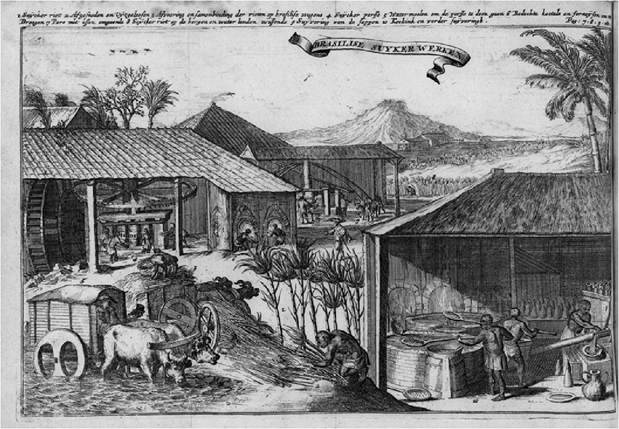
Figure 3.2 Racialised violence served pedagogical purposes in the shift to a plantation export economy increasingly based on Afro-Brazilian slavery.
racialised violence served its grim pedagogical purpose in the shift to African slavery, as survivors of the middle passage arrived in accelerating numbers.
As noted, attitudes and actions drew on African precedents. A chronicler of a 1444 encounter between Portuguese and West Africans in Lagos had no qualms categorising slaves by their skin colour and disparaging them according to their relative blackness. He marvelled at an assemblage of captives: ‘among them were some who were reasonably white, handsome, and genteel; others, not so white, who were like mulattoes; others as black as Ethiopians, so deformed both in their faces and bodies that it seemed to those who guarded them that they were gazing upon images of the lowest hemisphere’.[89] Such preconceptions crossed the Atlantic as swiftly as the officials, sailors, merchants and planters destined for Portuguese America, with its ideal climatic and soil conditions.
For a full century, between 1580 and 1680, the colony was the world’s leading exporter of sugar. By the middle of the sixteenth century it became the primary destination for slaves shipped across the Atlantic, and by the end of the seventeenth century it had received more than 800,000 captive Africans, nearly half of all the slaves transported across the Atlantic. Over its entire colonial period, just over four of every ten slaves departing Africa headed for Brazil. Of these, according to the best estimates, 4.4 million left African shores, some 3.9 million surviving to disembark in Brazilian ports.[90]As the numerical gap between departures and arrivals makes clear, the death toll could be shattering; yet those who survived did so in such numbers that they Africanised the colony, with its comparatively small Portuguese population. Arriving yearly by the thousands, they exceeded the capacity of clergymen to convert them. They influenced not only popular religion but also foodways, healing practices and many other beliefs and customs, as well as virtually all social conventions and configurations. As with native relations, practical adjustments to the challenges of assembling an Afro-Brazilian labour force were later misconstrued as indicators of colonists' comparatively humane conduct. But despite a receptiveness among some to African cultural influences, violence continued to play a major role. It is worth noting, moreover, that the era's standard of humane conduct regarding slaves angled decidedly towards behaviour later defined as callous. A planter in the northeastern captaincy of Pernambuco, for example, tutored his senior administrator to avoid beating slaves with sticks, rocks and bricks; rather, ‘they should be tied to an oxcart and punished with a whip, and after being well- lashed, they should be cut with a razor or knife and then treated with salt, lemon juice, and urine and then placed for some days in chains'. Unlike slaves, he counselled, oxen ‘that work one day' should ‘not work the next'.[91]
Although an earlier generation of historians credited the Roman Catholic Church with fostering a comparatively compassionate slavery in Brazil, subsequent research has left this argument unsustainable.
The church rarely wavered in its support for the enslavement of Africans and their descendants. Brazilian clergymen viewed their bondage as a desirable alternative to the abuses inherent in Amerindian slavery. Priests frequently became slaveholders themselves. A number of clerics did set out to instruct the colonial populace, both masters and slaves, on the role of piety in a society dependent on forced labour. They generally limited their critiques of the plantation system to the unjust treatment of slaves, not to the injustice of slavery. The most vociferous critic, the famed Jesuit missionary, orator and statesman Antonio Vieira, adhered to this logic, admonishing slaveholders to be prudent in meting out corporal punishment. They should guard against their own perdition by treating their captives compassionately. Grandson of an Afro-Portuguese serving-woman, Vieira was atypical in questioning the physio-racial basis for slavery. He rejected the widespread belief that Africans suffered from physical, mental and moral deficiencies as a consequence of being born closer to the sun. ‘An Ethiopian [black African] if washed in the waters of the Zaire [Congo River] is clean but not white; but if washed in the water of baptism, he is both one thing and the other,' Vieira declared in a celebrated 1662 Epiphany sermon delivered to the Portuguese monarch.[92] Spiritual whitening achieved through conversion, however, did not portend Africans' liberation in this world. Justice would be theirs in heaven, earned through obedience, he preached.With its emphasis on logical exercise, submission to authority and hierarchical certitude, Vieira's message constitutes a study in baroque theology. Most telling for our purposes is his pedagogy. He drew on scripture, classical myth and history to guide his listeners to a view of their condition that must have struck many as challenging if not preposterous. ‘Black brothers,' he explained in another sermon delivered to the members of a Bahian Catholic confraternity, ‘the slavery you suffer, however hard and grinding it may be, or seems to be to you, is not total slavery', since slaves' souls remained free.
He urged them to ‘adapt' to this bodily bondage in order to ‘take advantage' of their servitude. When unjustly punished, they should ‘suffer it bravely and with a Christian spirit, since these punishments are martyrdoms', instances of God's providence, bestowed so that through ‘temporal captivity you may more easily acquire eternal freedom'. By this formulation, masters must be instructed on how to fairly mete out violence; slaves, on how to accede to it. For the Afro-Brazilian slave, redemption came from faith in God, Christ-like acceptance of suffering, and surrender to a master's just punishment.[93]By necessity, given the size of Brazil's enslaved population, an uncommon degree of flexibility characterised its forced labour regime. Reliance on slaves defined not only large plantations and, by the eighteenth century, gold and diamond mining operations, but also virtually every other labour-intensive activity, including food production, artisanal production, commerce, transport, construction and domestic service. The threat of corporal punishment loomed in all these activities. As a rule, however, overseers administered whippings and other forms of bodily and psychological abuse most frequently to slaves occupied in tasks requiring the greatest physical effort and the least skill. Particularly vulnerable were those employed at large plantations and mines dependent on routinised gang labour. In myriad skilled and semi-skilled activities, masters moderated their use of violence, integrating it into a spectrum of positive and negative incentives.[94]
Force administered in tandem with these incentives combined to provide the ultimate didactic tool, teaching slaves to conform, at least as a strategy of survival if not as an act of submission. The Italian Jesuit Andre Joao Antonil, who sailed for Brazil in 1681, captured this calculus as incisively as any observer: ‘If the planter treats the slaves like a father, giving them what they need to sustain and clothe themselves and some needful respite from work, he can subsequently treat them like a master.
They will not then object to being punished rightly but mercifully for the misdeeds they have committed.' In turn, slaves learned how to persuade masters ‘not to punish them by promising to behave better'. A seventeenth-century slaveholder's adage put things more starkly: ‘Whoever wants to profit from his blacks must maintain them, make them work well, and beat them even better; without this one gets no service or gain whatsoever.'[95] Whipping, beating, branding, confining with chains and stocks, mutilation, rape and child abuse, amid back-breaking toil and the withholding of adequate food, clothing, shelter and medical care, stood at one end of the spectrum.[96] Increased rations and alcohol, release from forced work to cultivate garden plots or participate in religious festivities, permission to form families and tend to needy loved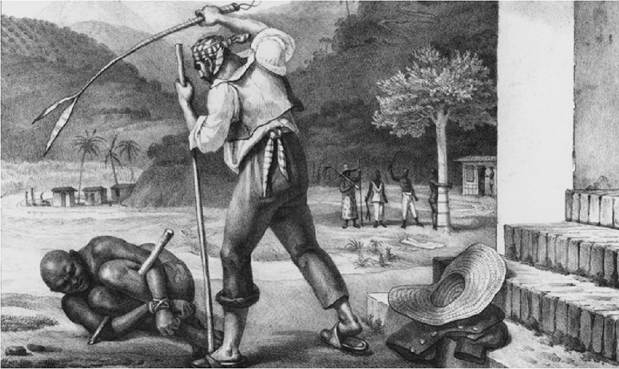
Figure 3.3 Corporal punishment administered alongside incentives provided slaveholders with a didactic tool, teaching slaves to conform in order to survive.
ones, opportunities to earn money and in some cases even pronounced autonomy for weeks at a time beckoned at the other end. Mostly female food marketers and mostly male itinerant miners, for example, often operated on their own recognisance, providing for their own sustenance and shelter. Their masters required them merely to deliver a portion of their earnings on a regular basis. Yet every positive incentive could be withdrawn. Every opportunity for greater freedom, if abused according to the master's estimation, presented the risk of physical punishment and psychic torment. Every reward for good behaviour was a threat thinly disguised.
A crude ethno-racial classificatory scheme overlaid occupational distinctions. In their comparatively skilled positions, Brazilian-born slaves, particularly those of mixed European and African origins with lighter skin, could anticipate in exchange for compliant behaviour less punishing work assignments and less exposure to bodily abuse.
They were also the most likely, particularly females and their children, to benefit from the most enticing of incentives, the remote but real possibility of selfpurchase. The institutionalised practice of manumission made the colony home to the largest number of free black and coloured people of African descent outside of Africa. Dripping with prejudice, Antonil diagnosed the effects of this systemic flexibility, stating the common conviction that those with lighter skin frequently gained the upper hand. Mulattoes, ‘both male and female', he wrote, ‘are usually luckier than anyone else in Brazil. For, thanks to that portion of white blood in their veins - which is perhaps derived from their own masters, they bewitch these to such an extent that some masters will put up with anything from them, and forgive them any excess.'[97] Later notions of benign colonialism, it is worth remembering, hinged on such racist inversions with their sexual innuendo.Even more than birthplace, colour appears to have determined the position of slaves in the plantation occupational order. Data from Bahian sugar plantations show blacks far outnumbering lighter-skinned mulattoes in the captive workforce. Mulattoes were more than twice as likely to be assigned managerial, artisanal and household jobs, while blacks more commonly laboured in the fields, where slaves suffered the most persistent application of corporal punishment.[98] Nor did the burdens associated with race relent if a slave gained his or her freedom. Data analysed for multiple colonial regions show that slaves born in Brazil (therefore, more likely to have lighter skin) experienced rates of manumission at least double that of African-born slaves. Women and children predominated among the manumitted, which prompted commentators from Antonil to Freyre to posit the amorous power such women held over their masters. Contemporary scholars, by contrast, emphasise the patriarchal domination evidenced by this gender disparity. While the rapid growth of a free coloured population over the course of the colonial period was traditionally cited in support of the myth of racial tolerance, those who gained their emancipation continued to suffer from caste and colour discrimination. Adding to the complexity of colonial society, a small but significant minority of slaveholders in virtually every region of the colony were themselves free persons of colour, especially small farmers and artisans. As a group and as individuals, they held far fewer slaves than their white counterparts, who denigrated them.[99] Such ownership was the surest marker of freedom secured. It also serves as a reminder that slavery's multidimensional history, and its associated violence, cannot be understood through the prism of race alone.
By the eighteenth century, when many scholars argue that racism as we know it first emerged in the Atlantic world in tandem with Enlightenment classificatory biology, the mature Brazilian slave system was firmly rooted in oppressive methods long based on its workforce's origin and colour. Cruelty spread fear among blacks and sometimes prompted rebellion, flight, suicide, legal action and other acts of resistance. But violence also regulated the system as a didactic apparatus, more or less crudely honed. Manoel Ribeiro Rocha, a Portuguese priest and lawyer resident in Bahia, insisted that ‘for the punishment of slaves to be pious and conform with our religion and Christianity, it must be administered with prudence', at the right time, for the right reasons, in the right form, and to a proper degree. It should be applied not in ‘anger and rage but rather with mildness and benevolence'. Otherwise, the master risked provoking the ire of his slaves and obscuring the lessons he wished to convey. Like children, slaves required calibrated, exemplary punishment to be properly educated.[100] Silvia Lara describes Rocha's proposals as the epitome of a ‘veritable science of domination' with which elites refined corporal punishment into an ‘instrument of instruction, discipline, and correction'.[101] Although Rocha evinced more concern for blacks than many of his fellow literati, he nonetheless maintained they were mentally inferior and prone to aggression as a byproduct of their colour and origin. To prepare for their potential freedom, they required dedicated, punitive training from their owners.[102] Applied methodically, he averred, corporal punishment served as a mechanism of humane reeducation.