‘There is no point trying to make the Greeks nice', one scholar has recently stated.1
A small Attic red-figure chous (wine jug) (Figure i8.i) supports that stance. It gives interesting access to the difficult and often disturbing subject of domestic violence in ancient Greek society - unsurprisingly, a long- neglected area of research.[754] [755] The jug depicts a cross section of a building where a solid door demarcates the inside-outside/female-male space.
In the outdoors, a naked man lifts up his staff and beats it against the door, ignoring the doorknocker. His deshabille, the garland he wears on his head, and the musical instrument he holds all suggest he has recently left a party. He is drunk. His belligerent banging on the door reminds us of a line from Aristophanes' Wasps (1254-5): ‘from wine come broken doors, beatings, [and] throwing stones'. Inside the female/domestic space, a woman approaches the door from the other side while holding an oil lamp (thereby confirming that the scene occurs in the hours of darkness) and her body language suggests timidity, fear and clear apprehension.Who are the protagonists of the scene? The master of the oikos (‘house', ‘household', ‘family') for sure, and whom? His slave? His wife? His daughter? How do we feel when we view this image? Disturbed, challenged or
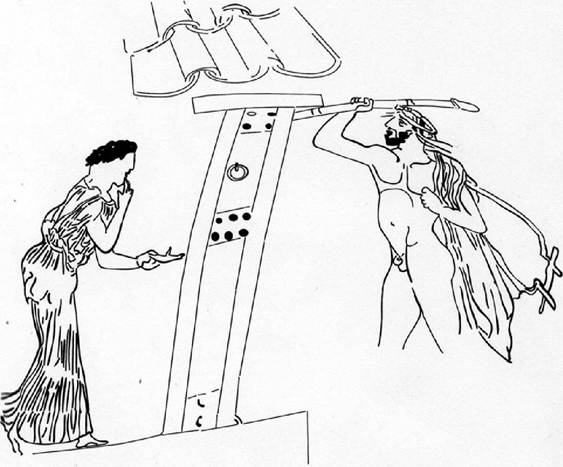
Figure 18.1 Attic red-figure chous, c. 450 bce, Metropolitan Museum of Art, New York.
affronted? Amused? That may well have been the intention of the artist, for after all, the image is painted on a small wine jug, the kind of pot used in allmale drinking parties. We cannot be certain of the scenario, but I tend to think it depicts a drunken husband coming home from a lively party to find the door bolted; he takes out his frustration by raising a hullabaloo.[756] The woman (whosever she is) approaches with palpable unease because she knows that when she unlocks the bolt the likelihood is that she will be on the receiving end of that walking stick too.
The image on the chous is provoking in many ways. If this is indeed a humorous image, then how can we justify it? It might be regarded as ‘a reversal of the modern comic cliche of the drunk sneaking home in fear of reprisals'.[757] But how did the ancients justify it? Did they even attempt to do so? The image of the drunk at the door is an amusing but matter-of-fact representation of domestic violence. It hints at an aggressive strain within Greek society and suggests that men could be aggressive and that women might suffer as a consequence of that aggression. But is it evidence for what we can term ‘domestic abuse'?
More on the topic ‘There is no point trying to make the Greeks nice', one scholar has recently stated.1:
- Humility is held to be more valuable, more morally praiseworthy, than pride. Some make this point in terms of virtues — that humility counts as virtuous, whilst pride, if not a vice, fails to be a virtue.
- Single arguments referred to in legal reasoning are those that make the conclusion valid as a legal standpoint - that is, that connect the arguments as well as the conclusion to the legal order. From this point of view, the arguments are called the sources of law.
- The Scholar, the Journalist, and the Political Thinker
- Ivan Lysiak-Rudnytsky, Scholar and “Communicator”
- Robert Conquest, the preeminent scholar of Soviet Communist totalitarianism,1
- The Greeks Fight Each Other
- PRAISE FOR THE GREEKS
- Direct-to-consumer (DTC) availability of genetic testing is a relatively new phenomenon, which has, until recently, largely escaped the attention of regulators.
- Economic growth appears to have slowed recently, partly reflecting a softening of household spending.
- 3 Greeks and scythians
- 16 HUMILITY AMONG THE ANCIENT GREEKS
- CHAPTER NINETEEN The Early Greeks
- CHAPTER TWENTY-FOUR The Wars of the Greeks
- The Point of Morality and Society-Centered Moral Theory
- A new political order emerged in Eastern Europe after the First World War as nation-states replaced the empires that had, until recently, ruled the region.
- The Turning Point
- The importance of point of view for jurisprudence