When the emperor of Byzantium ascended the imperial box or kathisma of the hippodrome in Constantinople, the people welcomed him by chanting the anateilon (Rise up!),
a formalized hymn linking his appearance to the arrival of the sun illuminating the day.1 The chanting began before the emperor started his ascent and continued as he came into view.
The ritual summons of the crowd thus culminated in and was completed by the imperial epiphany. Our evidence for this imperial rising comes from the Book of Ceremonies, a tenth-century amalgamation of source materials from previous eras that constitutes a handbook for solemn ceremonies, more than a description of particular ritual events.2 Among the many similarly attested ceremonial acclamations that invested the emperor with divine and cosmic symbolism, the anateilon at the hippodrome was especially significant because this site was the nexus of ceremonial life in the early Byzantine capital. It was in the hippodrome that the Roman people encountered their emperor directly, where they saw him in all his majesty with their own eyes.The setting for this encounter was adorned with an array of celebrated antique monuments such as the bronze horses now at San Marco in Venice and the victory tripod from the Temple of Apollo in Delphi known today as the serpent column.3 Unlike most of the lost or damaged objects that once adorned this site, the most commanding monument of the hippodrome still stands there largely intact: the red granite obelisk originally installed at the Theban temple of Karnak to celebrate
1 Cross-field comparative studies such as this are only possible with brilliant and generous interlocutors. I am extremely thankful for the following readers who all offered comments on the full draft in advance (needless to say, mistakes and gross generalizations remain my own): Jonathan Sachs, Sinem Arcak Casale, Giancarlo Casale, John Hall, Anthony Kaldellis, and Peter Fibiger Bang.
2 Moffatt and Tall 2012 follows the pagination and chapter numbering of Reiske 1829, which is included alongside the English translation, but also cross references the sequencing of Vogt 1935-1939.
In Dagron's words [1996] 2003, 54, it “synthesiz[es] various protocols and, according to the rules of the genre, removing the proper names and dates in order to transform a historical document into a model.” Most scholars acknowledge the difficulties of relying on this kind of text as an accurate historical mirror. On the anateilon, see Dagron, 2003, 180-181; Kantorowicz 1963, 158f; Treitinger 1938, 112f.3 In addition to Bassett 2007, see the essays in Pitarakis 2010, and, most recently, Stephenson 2016.
Cecily J. Hilsdale, Imperial Monumentalism, Ceremony, and Forms of Pageantry In: The Oxford World History of Empire.
Edited by: Peter Fibiger Bang, C.A. Bayly, Walter Scheidel, Oxford University Press (2021). © Oxford University Press. DOI: 10.1093/oso/9780199772360.003.0006.
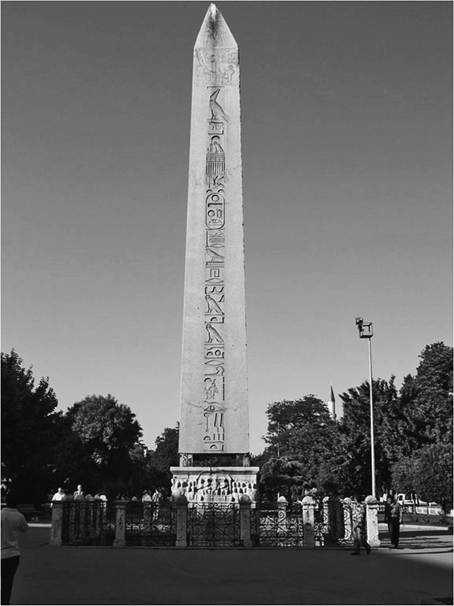
Figure 6.1. Obelisk of Thutmose III installed on the base of Emperor Theodosios in the Hippodrome of Constantinople (Istanbul).
Photo: Cecily J. Hilsdale.
the renewal of Thutmose III's rule (Figure 6.1). In Constantinople, this enormous Egyptian monolith rests on a Byzantine marble base that evokes the culmination of anateilon in visual terms: all four sides depict Emperor Theodosios I (r. 379-396), who has risen to the kathisma: surrounded by members of his household, he is shown presiding over the games and festivities of the hippodrome and receiving obeisance and tribute from vanquished enemies (Figures 6.2, 6.12-13, and 6.19-20). Presented with the utmost hieratic austerity, each figure stands frontally, erect and immobile, staring out from the imperial loge, above and in contrast to the more dynamically rendered activities of racing, dancing, offering, and even obelisk raising carved on the lower portions of the base.
The solemn, symmetrical, and hierarchical tone of the obelisk base encapsulates the Byzantine conception of taxis or “order,” a foundational term for imperial ideology.[422] In his seminal study of the emperor in Byzantine art, Andre Grabar compared the imagery of the Theodosian base to the later Byzantine Last Judgment
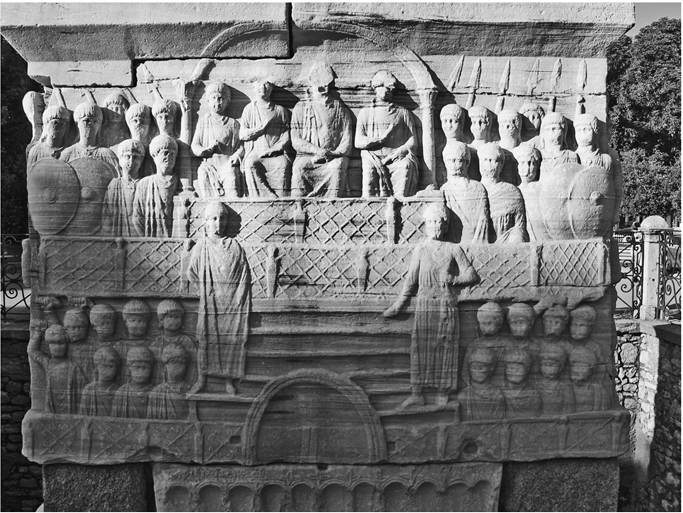
Figure 6.2.
Obelisk base, Hippodrome, Constantinople (Istanbul), Southwest Face.Photo: Cecily J. Hilsdale.
scene in the parekklesion of the Church of the Chora (the Kariye Camii).[423] Despite radically different iconographies and ritual and historical contexts, they both, he argued, convey the ideology of taxis. As a theophany of the heavenly court, the Last Judgment fresco displays the strict hierarchy and symmetry that defined Byzantine ideas of order, and the base presents its epiphany of the imperial court in formal terms analogous to its celestial counterpart. That same argument extends beyond these two images: visual precedence informed by the conception of taxis emerges as the defining formal language or register for official Byzantine imperial imagery.
The entrenched system of precedence predicated on the ideology of taxis constituted the organizing principle for the imperial hierarchy in reflection of the heavenly kingdom. It thus rendered earthly vicissitudes part of an immutable and eternal divine plan. Such a hierarchy provides the framework for Byzantine worlds of state, court, and divinity, in which taxis contrasted with ataxia, chaos or disorder. In the opening of the Book of Ceremonies, again our primary compilation of imperial ceremonial, these concepts are mapped onto the body Byzantine: “for just as when a body is not harmoniously fashioned, but has its limbs set in a contorted and ill-coordinated way, one would describe this as a disorder, so too when the imperial administration is not led and governed by order, it will differ in no way from an ignorant and servile way of life.”[424] Furthermore, imperial ceremonial is situated as fundamental to empire building. The prologue explicitly states that imperial rule, well ordered by praiseworthy ceremonial, strikes wonder in “both foreigners and our own people.”[425] By preserving and prescribing the choreography of such ritual, the Book of Ceremonies transmits them strategically for future generations.
The Ottomans, who conquered Constantinople in 1453 and made it their own capital city, had their own prescriptive book of imperial protocol. The Ottoman dynastic law codes known as the kanunname codified a policy of imperial seclusion, curtailing the public appearance of the sultan who participated in the public life of the city only on principal religious holidays and special occasions such as imperial weddings and circumcision festivals, which were celebrated in the public space of the hippodrome and set amidst the antiquities set up there by their Byzantine predecessors.[426] Aside from those select and infrequent public celebrations, the sultan was mostly inaccessible and invisible inside the Topkapi palace, according to one source, like a pearl hidden deep in an oyster shell.[427] The architecture of the Topkapi palace itself expresses this system of imperial seclusion, with its distinct but interlocking courtyards and grilled windows from which the sultan could survey court activities such as processions without being seen directly. These windows further implied his sovereign omniscience even in his physical absence, an especially important message since he administered the empire in seclusion by delegating his authority to his administration.[428]
If Byzantine imperium and the imperial city that was laid out as its architectural stage were governed by the ideology of taxis, the urban fabric of the city as the Ottoman capital later came to be understood by the unwritten rules of “de- corum”—the concept of visual distinction or precedence that Gülru Necipoglu sees as the primary motivating factor for architectural patronage in sixteenth-century Constantinople.[429] According to the system of decorum that structured the highly centralized Ottoman imperial system, gradations of precedence were governed by the relative proximity to the increasingly secluded sultan. The corporate identity of the imperial court was reinforced through personal bonds such as marriage,[430] and was made manifest on a grand scale through monumental architectural projects that transformed the skyline and the city.
For example, the nearly 80 Friday mosque complexes associated with the architect Sinan exhibit a variety of finely-tuned formal distinctions—not just site and size but elaboration of minaret or courtyard— that correspond to the social rank, gender, and accomplishment of the patron as a palpable expression of the codified system of decorum.Taxis for the Byzantines and decorum for the Ottomans constituted different versions of hierarchical schemas that orchestrated the performance of empire. While distinct and fully imbricated in the politics of their own moments, hierarchical coding has been a central debate in the modern arena as well. These ideas resonate particularly strongly with David Cannadines reading of “ornamentalism” deployed in the peripheries of the British Empire. Cannadine shows that British imperial elites sought to duplicate in the various arenas of their rule the hierarchies of home and that central to the agenda was the enlistment and co-optation of existing native hierarchies. As he suggests in illustrating the neologism that stands as his central concept:
ornamentalism was hierarchy made visible, immanent and actual. And since the British conceived and understood their metropolis hierarchically, it was scarcely surprising that they conceived and understood their periphery in the same way, and that chivalry and ceremony, monarchy and majesty, were the means by which this vast world was brought together, interconnected, unified, and sacralized.[431]
Cannadine has drawn considerable fire for his single-minded insistence on the importance of class over race. For the present purposes, however, the distinction is less important; indeed, it distracts from the central issue in his argument: how the ornamental and ceremonial forms used to project imperial power and establish order amidst potential conflict are fundamental to those forms of power themselves. Order, in other words, creates order—in the sense that the “trappings” of empire establish and reinforce a political and social mandate that enables the empire to disseminate its power to others and to endure through time.
In the British case, the most important features were the use of pageantry and costume alongside formal and intricate rituals of precedence. There were, for example, 77 ranks in the “warrant of precedence” that established such problems as who should be placed where at a dinner party.It is this central claim about the importance of ceremony, whether allied to class or race, that allows us to compare empires disparate in both time and place. The significance of imperial ceremonial for making manifest the prevailing ideology of empire emerges with particular clarity in the ceremonial pageantry of Victoria’s proclamation (in absentia) as Empress of India in 1877. In the days leading up to the proclamation, for example, Lord Lytton received the 63 ruling princes of India in order of strict etiquette. As each prince was conducted to Lytton, an appropriate salute was fired, and upon arrival the prince was seated to Lytton's right beneath a full-length portrait of Victoria, after which, as described by Field Marshall Lord Roberts,
A satin banner, richly embroidered with the chief's armorial bearings surmounted by the imperial crown, was next brought in by Highland soldiers and planted in front of the throne, when the Viceroy, leading the particular chief towards it, thus addressed him: “I present Your Highness with this banner as a personal gift from Her Majesty the Queen, in commemoration of her assumption of the title of Empress of India.”[432]
The pageantry on display here reveals an elaborate system of social precedence and deference. It has also been called a “grand historicist extravaganza” in its ceremonial anachronism that drew on Roman, feudal, and Indian symbolism.[433] Empires build identities from variegated pasts, their own and as well as others', but they typically cast those histories as singular despite the heterogeneity of the sources, in the process obscuring their cultural and ideological borrowings.
The pretense of imperial singularity, more often than not, draws upon a lexicon of the plural and the serial to construct and project ascendency. Scholars today are increasingly invested in comparative interpretive frameworks for exposing the cacophony of ceremonial voices curated historically in the service of empire building. As Peter Fibiger Bang and Dariusz Koiodziejczyk make clear, the work of empire before colonialism is at its core a pursuit for precedence over and against other empires. As a struggle for “hegemonic pre-eminence,” the notion of universal empire was a contest across Eurasia from the Persians to the Qing dynasty. Sanjay Subrahmanyam traces transhemispheric “connected histories” from the Tagus to the Ganges, the Mughals and the Franks.[434] Laura Doyle offers a framework of “inter- imperiality” for thinking about imperial formations as inextricably entangled over time. In order “to capture the dialectics of empires more fully,” she stresses accretion and sedimentation alongside innovation in the “long accruing interactions of empires.”[435] Barbara Fuchs similarly emphasizes inter-imperial imbrication and competition as fundamental to the modern notion of national exceptionalism, which arises from “the crucible of imperial rivalries.”[436] And the cultural fields— literary, visual, and performative—constitute the arenas for these entanglements.
As these and other studies of empire have shown in considerable detail, the ideological deployment of royal pomp and circumstance is hardly unique and is consolidated in the built environment as well. Stephen Blake, for example, in his analysis of Shahjahanabad, the Mughal capital of Old Delhi, shows how what he describes as the patrimonial-bureaucratic state drew its force and order from the layout of the imperial city, with the palace- fortress and the great mansions of the nobility at its center. These spaces established the norms of etiquette among elites who were bound through rituals and ceremonials, in turn molding them “into a great extended family whose members were the urban population and whose mansions was the city itself.”[437] The urban layout of the capital, in other words, was more than a mere setting for the performance of the imperial city but was integral to the very production and maintenance of power—the city lent form to the entire patrimonial- bureaucratic principle on which the empire was based. Furthermore, for Blake, defining the principles of the sovereign city is a comparative enterprise: the dynamics of authority at the capital of Mughal India comes into clearer focus when seen in relation to Istanbul, Isfahan, Beijing, and Edo, that is, the capitals of the Ottoman, Safavid, Ming, and Tokugawa empires, respectively. It is not that the cities share the same physical layout, but that in each case the palace, city, and by extension empire are modeled to a degree on the imperial household. Gulru Necipoglu has taken another comparative approach to the sovereign cities of the three rival “gunpowder” empires by focusing on ocular politics. The Ottoman policy of imperial seclusion was distinct from the exercise of power by contemporary Safavid and Mughal rulers, and the palaces of these three rival empires serve as architectural metaphors for the framing and staging of imperium. The architectural layout of and ceremonial performances of Ottoman Istanbul’s Topkapi Palace, Isfahan's Safavid Palace, and the Red Fort in Mughal Delhi, according to Necipoglu, visually framed and staged their rulers so as to naturalize distinctive social hierarchies predicated on the discourse of absolutism.[438]
Collectively, this scholarship asks us to take seriously the “trappings” of empire, that is, the spaces, monuments, ceremonials, and styles of comportment and decorum that have been instrumental to empires cross-culturally throughout history. The role of ceremony to empire over time—that is, its temporal dimension—is of particular concern here. David Cannadine notes the ephemeral quality of royal ritual: “Power is like the wind: we cannot see it, but we feel its force Ceremonial is like the
snow: an insubstantial pageant, soon melted into thin air.”[439] The force of power is felt, whereas pageant is seen and fleeting. But is the ceremonial facet of imperium entirely ephemeral? Royal performances are anchored, amplified, and commemorated by monuments that were designed to stand the test of time. The discussion that follows tracks the relationship between repeated yet transitory performances of empire—the snow that bolstered the force of power even as it melted—and their concrete, permanent articulations that endure as imposing testaments to power, both as felt and as seen. Motivated by the dynamic performative and commemorative aspects of empire, in other words, this chapter traces the relationship between imperial ritual, as performed in time and over time, and its persistent monumental articulations that structured and often memorialized those performances.
The touchstone for this discussion is the obelisk and base installed in Constantinople’s hippodrome where the Byzantine emperor appeared to the Roman people as a living icon of imperium. The potency of this monument lies not only in its performative setting—again, the hippodrome was among the most important ceremonial spaces of the capital, a civic and public pendant to Hagia Sophia in terms of defining the contours of the imperial office in ceremonial terms—but also in its composite nature, as an ancient Egyptian dedication put to the service of a Byzantine imperial agenda. Raised by an Egyptian pharaoh for the great temple of Amun at Karnak, dismantled by a Roman emperor to legitimize his vast Mediterranean empire, erected in one of the most highly visible public arenas of New Rome for the performance of Byzantine imperial power, and preserved as the city became the early modern capital of the Ottoman Empire, this is a monument of distinct inter-imperial resonance. This chapter does not aim to provide a comprehensive study of the monument itself nor a history of obelisks more generally and their significance in other cultural contexts—excellent studies of all these topics exist.[440] The goal, by contrast, is to consider a diverse range of ceremonial worlds marked by obelisks in order to generate a set of labile diachronic and cross- cultural insights about imperial ceremonial and monumentalism. What is of particular interest is the relationship between the imperial projection of permanence expressed in stone and the equally important yet transient ceremonial qualities of imperium.
On the most basic level, an obelisk was an imposing marker that defined its terrain as exalted, and, more specifically, imperially sponsored as such. In defining a site, the obelisk asserts dominance in a manner immediately recognizable and even visceral in that its scale dwarfs the human body and elicits awe. The profound dissonance of scales between the enormity of the monument and the relative minuteness of the human body is especially evident in aerial views of an obelisk that was abandoned unfinished and still lies in its quarry bed in Aswan (Figure 6.3). The view also makes plain the daunting technical challenges associated with mastering such a large quantity of stone, the height of which commanded views from great distances, while its traditionally monolithic construction proclaimed economic and technical prowess on account of its obdurate forcefulness.
As a commemorative strategy, the obelisk has assumed primacy as the visual icon of authority par excellence from the ancient world to the present day. In the modern era, the obelisk ranks among the most recognizable commemorative monuments, subsumed within the modern architectural vernacular for commemoration, as testified by the 1884 Washington monument celebrating America’s first president (Figure 6.4). At over 100 meters tall, it exceeds the height of ancient
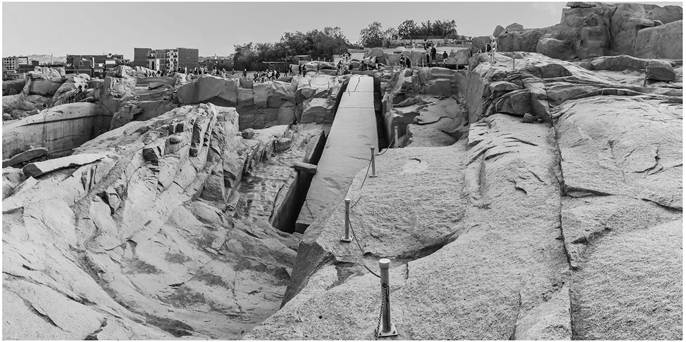
Figure 6.3. Unfinished obelisk, Aswan, Egypt.
Photo: Shutterstock
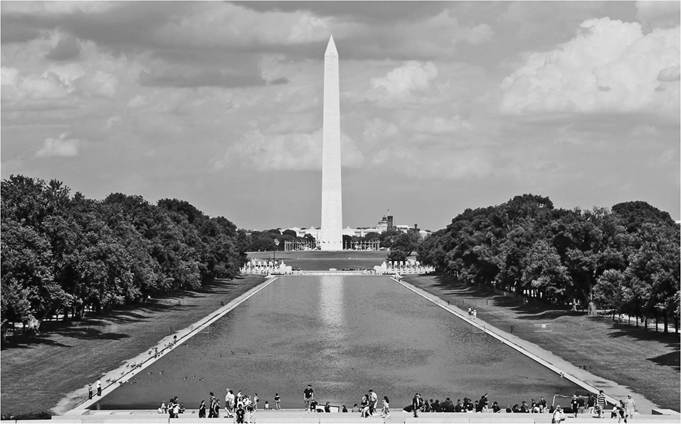
Figure 6.4. Washington Monument, Washington, DC.
Photo: Shutterstock
Egyptian obelisks. Although it is not a true monolithic obelisk (indeed its interior can be scaled by elevator), it anchors the ceremonial space of the mall in the nation’s capital as a modern secular parallel to the sacred sites marked by obelisks in ancient Egypt.[441]
Intimately tied to the conception of royal renewal in ancient Egypt, obelisks underscored a conception of rejuvenation and cyclicality—or empire as process—by commemorating the renewal of rule and marking the ceremonial spaces in which that sacral aura was reinvested. Over time and in other contexts, obelisks served as markers of imperial ascendency over and against the past. All of this helps to explain why such immense and seemingly permanent monuments traveled so widely throughout the Mediterranean, both in antiquity as spoils of war in the consolidation of empires and more recently as artifacts of cultural diplomacy in the service of modern imperialism. Dominating the space in which they are installed then and now, obelisks are commemorative even as they move. Itinerant obelisks merge networks of historically specific events: created and inscribed for particular occasions of triumph, their movement reinscribes other agendas of dominance and in the process puts that previous history into the service of their own narrative. In this sense, obelisks illuminate how empires incorporate diverse histories in the service of singular teleologies, thus exemplifying the processes of inter-imperial rivalry and historical accretion over time and across cultures.