About the Editors
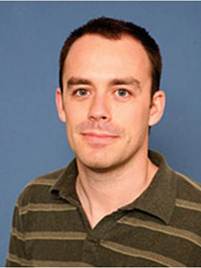
Christopher Harker Christopher Harker received his Ph.D. from University of British Columbia, Canada, in 2009 and now works in the Department of Geography at Durham University, UK.
His work examines the practice and politics of everyday life in the occupied West Bank. His previous research examined the assembling of place through homemaking, mobility, and family. His current project, “Families and Cities,” funded by The Leverhulme Trust, explores how the recent and rapid growth of debt in Palestine have enabled and undermined contemporary forms of endurance in the city of Ramallah. His future research seeks to develop a broader account of the spatiality of debt through comparative research. As part of this process, he has recently launched the Financing Prosperity Network, in collaboration with the Institute for Global Prosperity at UCL.He has published widely, including in the journals Transactions of the Institute of British Geographers, Environment and Planning A, and Geoforum and Children ,s Geographies. He is currently writing a monograph based on his most recent research, tentatively titled “Debt Space: Obligations and Endurance in Ramallah, Palestine.”
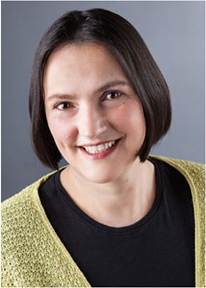
Kathrin Horschelmann Kathrin Horschelmann is a Research Associate at the Leibniz Institute for Regional Geography in Leipzig (IfL), Germany, whose work focuses on postsocialist transformations, geographies of (in)security, critical geopolitics, the political and cultural geographies of children and youth, gender, transnational identities, and social inequalities. Prior to taking up her position in Leipzig, she worked as a Senior Lecturer at the Universities of Durham (UK) and Plymouth (UK).
She is currently conducting IFL-funded research on the “New Regional Geographies of (In) security in the Common House of Europe” and coordinating a work-package-lead in the EU-Horizon 2020 funded project “NATURVATION,” where her work focuses on participatory processes and governance trajectories for sustainable cities. She is further contributing to an EU-Horizon 2020 funded project on “Spatial Justice and Territorial Inequalities in Europe” (IMAJINE) and supervising research in the Leibniz-Association funded Campus on “Eastern Europe as a Global Area.” Dr. Horschelmann’s publications include a coauthored monograph on Children, Youth and the City (Routledge), several coedited volumes and articles in international journals such as Political Geography, Geopolitics, Transactions of the Institute of British Geographers, Environment and Planning A, and Children’s Geographies. She is also currently writing a research- monography on “Children in War and Peace - Perspectives from the West” for Routledge and coediting special issues young people’s landscapes of (in)security and security, and peripherality for the journals, Social and Cultural Geography, and Geopolitics.
More on the topic About the Editors:
- About the editors
- Harker C., Horschelmann K. (Eds.). Conflict, Violence and Peace. Springer,2017. — 456 p., 2017
- 3 On a Legacy to the Jews of Antioch A Rescript of Caracalla
- ACKNOWLEDGMENTS
- Oetzel John, Ting-Toomey Stella. The SAGE Handbook of Conflict Communication: Integrating Theory, Research and Practice. SAGE Publications,2013. — 912 p., 2013
- Series Editor Introduction
- CODE OF CONDUCT
- Conclusion
- CONCLUSION
- WHEN THE PRESS Council was disbanded in 1990 and succeeded by the Press Complaints Commission, there was a strong plea that the new body should set about establishing a code of future adjudication on privacy;