Conflict in dating relationships and marriages has generated enormous scholarly and popular interest.
When handled well, conflict in romantic unions can enable relational partners to learn about each other and foster a sense of cohesion and commitment (Siegert & Stamp, 1994).
When not managed well, conflict can have negative implications for the relationship and for the relational partners (e.g., Zacchilli, Hendrick, & Hendrick, 2009). Conflict in romantic relationships also has implications for individuals beyond those directly involved. Marital conflict, for instance, is an even more important predictor of negative outcomes for children than is parental divorce (Booth & Amato, 2001). The effects of parents’ conflicts appear to follow children into adulthood; parental conflict is associated with conflict and poor relational quality and insecure attachment in the children’s relationships as young adults (Cui & Fincham, 2010; Rodrigues & Kitzmann, 2007).Because of the enormity of the literature on conflict in romantic relationships, any review of this research must be highly selective. With the breadth and complexity of the work on this topic, it was useful to organize our review around a framework that we adapted from Huston’s (2000) social ecological model for understanding marriage and similar unions (see Figure 6.1). We employed this framework because it was applicable to a wide variety of close dyadic unions, it provided a general schema for understanding conflict in romantic relationships, and it highlighted some potentially important issues and questions that appear to be understudied (e.g., the impact of the social context on relational conflict).
The core assumption of Huston’s (2000) model is that there are “historical, multilayered, interdependent causal pathways that produce, maintain, and modify” (p. 298) relational behaviors, including conflict. The complexities of these interconnections imply that analyses of conflict in dating and married couples are extraordinarily complex.
Following Huston (2000), we approach this complexity by considering three interconnected levels of analysis: (1) the environment, which ranges from broad societal influences to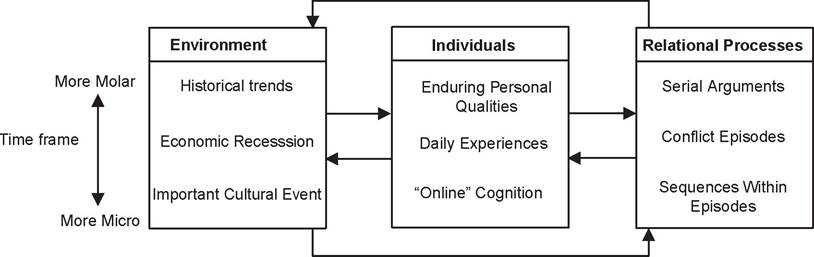
Figure 6.1 Framework for Organizing Questions About, and Research on, Conflict in Romantic Relationships
a couple’s specific social and physical context; (2) the individuals, including the enduring characteristics that people bring to their relationship and attitudes and beliefs they develop during the relationship; and (3) the relational processes, which are composed partly of relational conflict behaviors and conflict patterns. One important aspect of this perspective is that it highlights the dynamic nature of the individuals and their relationship, including the conflict behaviors and patterns in that relationship (Huston, 2000).
The dynamic aspect of relational conflict implies that questions about conflict can reflect various time frames. As depicted from top to bottom in each of the boxes in Figure 6.1, all three levels of analysis can be examined over different temporal periods, such as different historical periods or different seasons within a year (e.g., the impact of holidays on conflict). Varied time frames also can be considered when examining individuals engaging in conflict; for example, individuals’ attachment styles may influence conflict over a fairly long time period (Feeney, Noller, & Roberts, 2000), but scholars may also be interested in the specific “online” thoughts that individuals have during a particular conflict (e.g., Sillars, Roberts, Leonard, & Dun, 2000). Finally, with the relational process level, researchers could examine relational conflicts that occur over long time periods spanning many specific encounters (Malis & Roloff, 2006) but also could study specific, microscopic sequences of conflict behaviors (Buysse et al., 2000).
Although the conceptual model summarized in Figure 6.1 indicates that there is interplay among the various levels, the main foci of relational conflict researchers have been on relational behaviors and the individuals who enact them (rather than on connections to environmental factors).
The largest portion of the relationship conflict literature has examined connections between conflict behaviors and relational outcomes like satisfaction or relational stability (for reviews, see Bradbury, Cohan, & Karney, 1998; Sillars & Canary, 2013).Because research on the connection between conflict behaviors and relational outcomes has been such a focus of the literature, we begin by reviewing this research. Next, we examine how individual dyad members influence the behavioral system (and particularly conflict) in a relationship. Finally, we examine how the larger environment influences conflict processes in romantic relationships.
Conflict Behaviors and Relational Outcomes
The primary outcomes of interest have been individuals’ satisfaction with their relationships and relational instability (i.e., breakups among dating couples and divorce among married dyads). The prototypical studies in this genre are based on the problem-solving paradigm, which involves dyads engaging in relatively brief discussions of issues that they nominate as problematic and then researchers examining the conversations to determine if the partners’ behaviors are associated with relational outcomes (e.g., Sullivan, Pasch, Johnson, & Bradbury, 2010). Until the early 1990s, most of this research compared the behaviors of satisfied couples with those of couples who were dissatisfied (for a review, see Robinson & Jacobson, 1987). Since then, there has been a surge in longitudinal studies examining whether conflict behaviors predict changes in relational satisfaction and relational dissolution (e.g., Birditt, Brown, Orbuch, & McIlvane, 2010; Heavey, Christensen, & Malamuth, 1995; Sullivan et al., 2010).
More on the topic Conflict in dating relationships and marriages has generated enormous scholarly and popular interest.:
- Conflict in dating relationships and marriages has generated enormous scholarly and popular interest.
- Oetzel John, Ting-Toomey Stella. The SAGE Handbook of Conflict Communication: Integrating Theory, Research and Practice. SAGE Publications,2013. — 912 p., 2013
- Eruptions of collective popular violence punctuated the entire earlymodern period of European history and assumed three chief forms.
- Modernism’s National Narrative
- The Long Nineteenth Century