Levels in Multilevel Approaches
There are many approaches to examine the specific levels in multilevel frameworks including meso-organizational research (Rousseau & House, 1994) and social ecological frameworks (Stokols, 1996).
In this volume and this chapter, we utilized four specific contexts (interpersonal, organizational, community, and intercultural/international) to discuss conflict communication. Our approach most closely follows Bronfenbrennehs (1979, 1989) work, which divides environmental influences into four system levels: (1) micro (face-to- face interactions in specific settings—inter- personal conflict), (2) meso (interrelationships among various microsystems—organizational conflict), (3) exo (forces within the larger social system—community to institutional/ structural conflict), and (4) macro (cultural beliefs, values, and ideologies—intercultural/ international conflict). Figure 31.1 illustrates these contexts as a set of concentric circles and also includes arrows to identify specific types of relationships among the levels.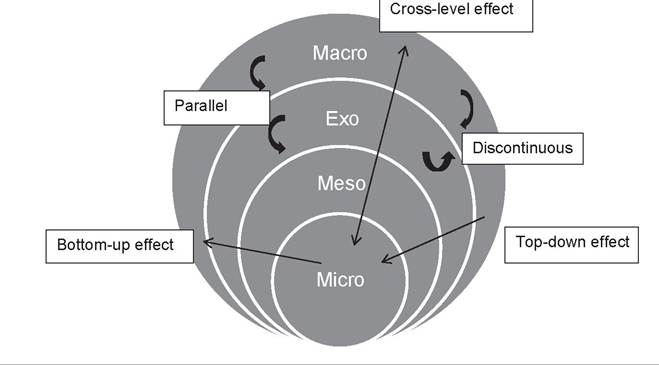
Figure 31.1 Multilevel Model of Conflict Contexts
Throughout this volume, a number of authors have used multilevel approaches to organize their review of literature, and we present a few here to illustrate. The levels do not directly correspond with the ones that we have presented, and yet they still represent multilevel approaches. Jiang and Buzzanell (Chapter 3) illustrate the ways that qualitative data have been used to study conflict communication at multiple levels. Caughlin, Vangelisti, and Mikucki-Enyart (Chapter 6) employ three levels to organize their review of literature about conflict in dating and marital relationships: (1) environment, (2) individuals, and (3) relational processes. Jameson and Albada (Chapter 16) utilize the levels of interpersonal, group, and organizational to synthesize the literature on patient-provider conflict in health settings.
Kirby, Wieland, and McBride (Chapter 14) consider multiple levels of analysis in exploring the research about work-life conflict balance: macrolevel and cross-cultural level, organizational-level policies, relationship levels, and microlevel perceptions. Ting-Toomey and Oetzel (Chapter 29) integrate macro-, exo-, meso-, and microlevels into the culture-based situational conflict model.Most of the authors utilize multiple level components, particularly macro- and microlevels, in presenting their core arguments. For example, Guerrero (Chapter 4) considers how emotions and conflict communication are manifest and influenced by individuals nested in interpersonal relationships. Jones (Chapter 15) discusses the mesofeatures of the organization and microfeatures of childrens’ socioemotional skills in examining conflict resolution education in the schools. Croucher (Chapter 21) discusses macro- and microlevel aspects in illustrating the ways in which religion shapes conflict behavior. Stohl, McCann, and Bakar (Chapter 27) argue that “conflict dynamics occur at the nexus of macro features of the environment and the micro context of the work group” (p. 714). Beyond the increased attention to multilevel analysis as reflected in this Handbook, scholars also started paying astute attention on the interrelationship among levels.
More on the topic Levels in Multilevel Approaches:
- Oetzel John, Ting-Toomey Stella. The SAGE Handbook of Conflict Communication: Integrating Theory, Research and Practice. SAGE Publications,2013. — 912 p., 2013
- Transformation
- Toward Integration and Cross-Fertilization
- Overview of Social Ecological Model
- The study of intercultural/international conflict is a daunting task.
- Participation-Based CMS
- 7.1 The relevance and novelty of SHD at the local level
- Subject Index
- Organizations have always had conflict management strategies such as lockouts, legal proceedings, arbitration, facilitation, and mediation, yet some of these options are neither efficient nor effective (Nabatchi & Bingham, 2010).
- Critique of the CBSCM