Answers to Figure Legend Questions
FIGURE 6.6 The “Before selection” and “After selection” data show that nearly all fly larvae in galls less than 17 mm in diameter were killed by wasps. A much greater proportion of larvae in the largest galls survived, suggesting that wasps provide a stronger source of selection than do birds.
FIGURE 6.7 When the simulation began, each population had 9 A alleles and 9 a alleles. At generation 20, 8 populations still had both alleles. Eventually, it is likely that the A allele would either reach fixation (a frequency of 100%) or be lost from each of those 8 populations.
FIGURE 6.14 No. The added risk of mortality due to reproduction is represented by the difference between the solid blue curve (females that reproduced) and the red dashed curve (females that did not reproduce). That added risk decreases for females 3-7 years old, then rises for females 8-13 years old (and remains roughly constant thereafter).
FIGURE 6.23 If evolutionary changes in plant genotype did not affect moth abundance, we would expect that predicted and observed moth abundance would not be correlated to one another. If that were the case, the graph should look like this:
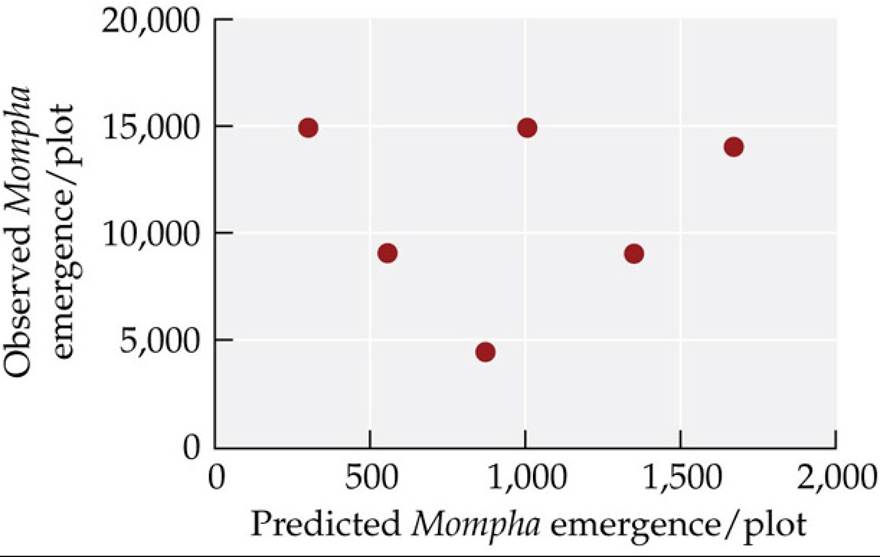
FIGURE 6.24 From the graph we can estimate that in 1832, the initial frequencies were 0.52 for genotype AA, 0.31 for genotype Aa, and 0.17 for genotype aa. Likewise, we can estimate that in 1923, the final frequencies were 0.73 for genotype AA, 0.22 for genotype Aa, and 0.05 for genotype aa. Using the approach for genotype frequencies described in the footnote in Concept 6.1, we can calculate that the frequency of the a allele was about 0.33 in 1832 and about 0.16 in 1923. Thus, the frequency of the a allele declined by more than 50% in about 100 years.
More on the topic Answers to Figure Legend Questions:
- Answers to Figure Legend Questions
- Answers to Figure Legend Questions
- Answers to Figure Legend Questions
- Reviewers
- Reclamation of Soil
- The Formative Age