Biomes are large-scale biological communities shaped by the physical environment in which they are found.
In particular, they reflect the climate variation described in Chapter 2. Biomes are categorized by the most common growth forms of plants distributed across large geographic areas.
The categorization of biomes does not take taxonomic relationships among organisms into account; instead, it relies on similarities in the morphological responses of organisms to the physical environment. A biome includes similar biotic assemblages on distant continents, indicating similar responses to similar climate conditions in different locations. In addition to providing a useful introduction to the diversity of life on Earth, the biome concept provides a convenient biological unit for modelers simulating the effects of environmental change on biological communities, as well as for those simulating the effects of vegetation on the climate system (see Concept 2.4). The numbers and categories of biomes used vary from source to source, depending on the preferences and goals of the authors. Here, we use a system of nine biomes: tropical rainforest, tropical seasonal forest and savanna, desert, temperate grassland, temperate shrubland and woodland, temperate deciduous forest, temperate evergreen forest, boreal forest, and tundra. This system provides a teaching tool for linking biological systems to the environments that shape them.Terrestrial communities vary considerably—from those in the warm, wet tropics to those in the cold, dry polar regions. Tropical forests have multiple verdant layers, high growth rates, and tremendous species diversity. Lowland tropical forests in Borneo have an estimated 10,000 species of vascular plants, and most other tropical forest communities have about 5,000 species. In contrast, polar regions have a scattered cover of tiny plants clinging to the ground, reflecting a harsh climate of high winds, low temperatures, and dry soils.
High-latitude Arctic communities contain about 100 species of vascular plants. Tropical rainforest vegetation may reach over 75 m (250 feet) in height and contain over 400,000 kg (882,000 pounds) of aboveground biomass in a single hectare (about 2.5 acres). Plants of polar regions, on the other hand, rarely exceed 5 cm (2 inches) in height and contain less than 1,000 kg (2,200 pounds) of aboveground biomass per hectare.Terrestrial biomes are classified by the growth form (size and morphology) of the dominant plants (e.g., trees, shrubs, or grasses) (FIGURE 3.3). Characteristics of their leaves, such as deciduousness (seasonal shedding of leaves), thickness, and succulence (development of fleshy water storage tissues), may also be used. Why use plants rather than animals to categorize terrestrial biomes? Plants are immobile, so in order to occupy a site successfully for a long time, they must be able to cope with its environmental extremes as well as its biological pressures, such as competition for water, nutrients, and light. Plant growth forms are therefore good indicators of the physical environment, reflecting the climate zones discussed in Concept 2.2 as well as rates of disturbance (e.g., fire frequency). In addition, animals are a less visible component of most large landscapes, and their mobility allows them to avoid exposure to adverse environmental conditions. Microorganisms (archaea, bacteria, and fungi) are important components of biomes, and the composition of microbial communities reflects physical conditions as plant growth forms do. The tiny size of these organisms, however, as well as rapid temporal and spatial changes in their community composition, makes them impractical for classifying biomes.
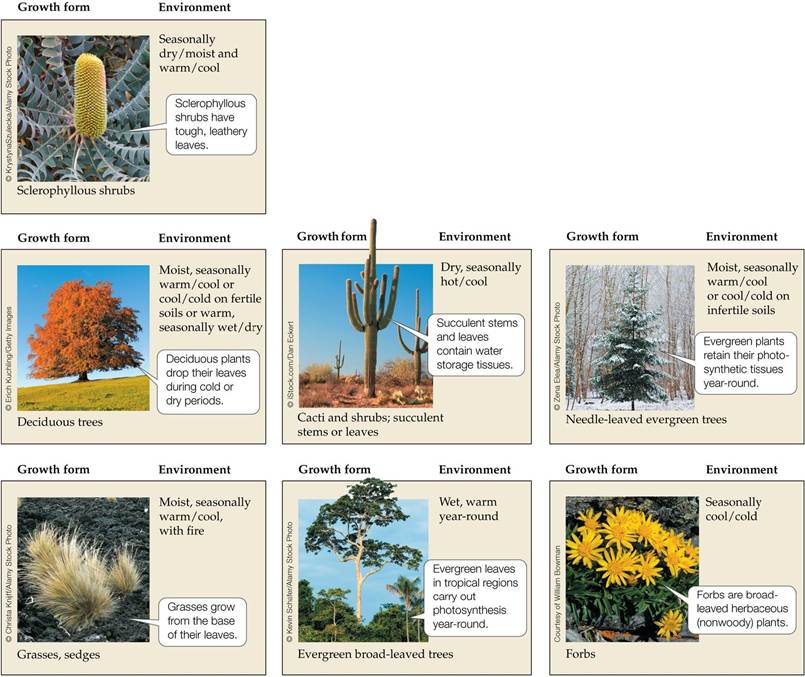
FIGURE 3.3 Plant Growth Forms The growth form of a plant is an evolutionary response to the environment, particularly climate and soil fertility.
View larger imageSince their emergence from the oceans about 500 million years ago, plants have taken on a multitude of different forms in response to the selection pressures of the terrestrial environment (see Figure 3.3). These selection pressures include aridity, high and subfreezing temperatures, intense solar radiation, nutrient-poor soils, grazing by animals, and crowding by neighbors. Having deciduous leaves, for example, is one solution to seasonal exposure to subfreezing temperatures or extended dry periods. Trees and shrubs invest energy in woody tissues in order to increase their height and ability to capture sunlight and to protect their tissues from damage by wind or large amounts of snow. Perennial grasses, unlike most other plants, can grow from the bases of their leaves and keep their vegetative and reproductive buds below the soil surface, which facilitates their tolerance of grazing, fire, subfreezing temperatures, and dry soils. Similar plant growth forms appear in similar climate zones on different continents, even though the plants may not be genetically related. The evolution of similar growth forms among distantly related species in response to similar selection pressures is called convergence.
More on the topic Biomes are large-scale biological communities shaped by the physical environment in which they are found.:
- Which biomes and marine biological zones have the highest NPP and, as a consequence, the greatest effect on atmospheric CO2 dynamics?
- In the previous section, we saw how nutrients undergo biological, chemical, and physical transformations as they are taken up by organisms and released through decomposition, ultimately returning to their original forms (or similar ones).