In the previous section, we saw how nutrients undergo biological, chemical, and physical transformations as they are taken up by organisms and released through decomposition, ultimately returning to their original forms (or similar ones).
This movement of nutrients within ecosystems is known as nutrient cycling (FIGURE 22.10). For example, we've traced the path of nitrogen into and through an ecosystem, starting with nitrogen-fixing microorganisms, as it is converted into chemical forms that can be used by plants.
The plants incorporate the nitrogen into organic compounds (e.g., proteins and enzymes), which may end up being consumed by heterotrophs. Eventually plants, heterotrophs, and microorganisms all end up as detritus. Inorganic and organic nitrogen released from the detritus by decomposition is taken up again by plants and microorganisms, thereby completing the nitrogen cycle (FIGURE 22.11).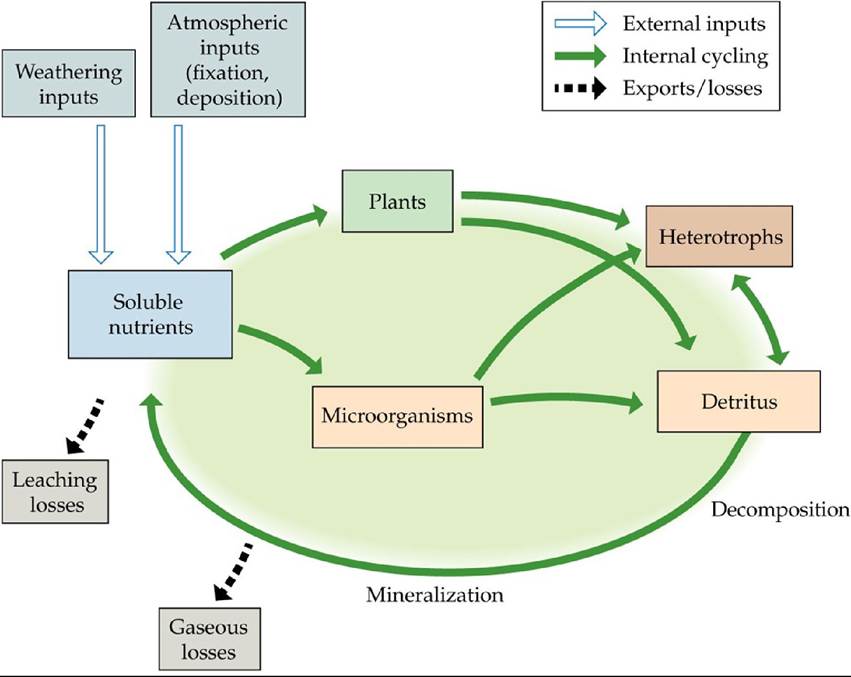
FIGURE 22.10 NutrientCycles A generalized nutrient cycle, showing the movements of a nutrient among the components of an ecosystem and the potential pathways for inputs and losses. View larger image
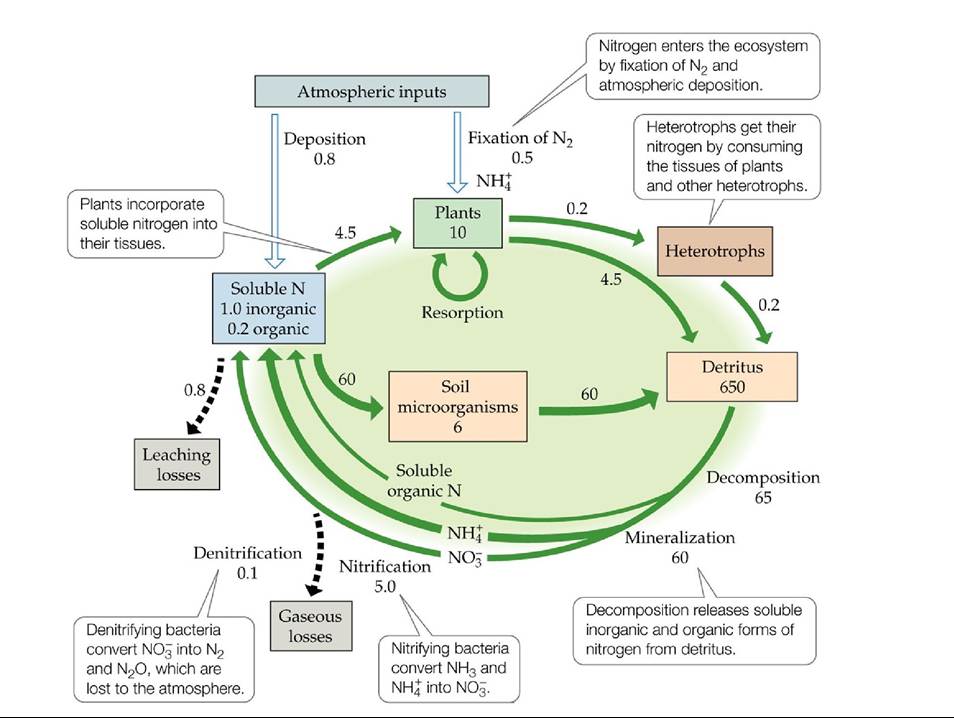
FIGURE 22.11 Nitrogen Cycle for an Alpine Ecosystem, Niwot Ridge, Colorado Boxes represent pools of nitrogen, measured in grams per square meter; arrows represent flows of nitrogen, measured in grams per square meter per year. Note the large amount of nitrogen passing through soil microorganisms, which indicates a high turnover rate for nitrogen in this relatively small pool. (After W. D. Bowman and T. R. Seastedt. 2001. Structure and Function of an Alpine Ecosystem, Niwot Ridge, Colorado. Oxford University Press: New York.) View larger image
More on the topic In the previous section, we saw how nutrients undergo biological, chemical, and physical transformations as they are taken up by organisms and released through decomposition, ultimately returning to their original forms (or similar ones).:
- CONCEPT 22.2 Chemical and biological transformations in ecosystems alter the chemical form and supply of nutrients.
- Microorganisms modify the chemical form of nutrients
- The physical environment can affect competition and ultimately the distribution of species
- Biomes are large-scale biological communities shaped by the physical environment in which they are found.
- Physical and Chemical Defences
- In this section, we will present the results of the execution of the simulation using the model described in the previous section.
- Ecologists often delineate communities by their physical or biological characteristics
- CONCEPT 22.1 Nutrients enter ecosystems through the chemical breakdown of minerals in rocks or through fixation of atmospheric gases.
- Other Chemical and Physical Aspects of Culture
- In the most general sense, biological evolution is change in organisms over time.
- CONCEPT 5.1 Organisms obtain energy from sunlight, from inorganic chemical compounds, or through the consumption of organic compounds.
- In the previous section we saw how a child-in-power (like a slave) can acquire both property and obligations for a paterfamilias.
- Decomposition is a key nutrient recycling process
- Throughout this book, we have emphasized the role that climate plays in ecological processes, including the distributions and physiological performance of organisms, the rates of resource supply, and the outcomes of biological interactions such as competition.