The physical environment can affect competition and ultimately the distribution of species
In a series of classic experiments, Joseph Connell (1961a,b) examined factors that influenced the local distribution, survival, and reproduction of two barnacle species, Chthamalus and Semibalanus.
The larvae of barnacles drift through ocean waters, then settle on rocks or other surfaces (such as boat hulls), where they metamorphose into adults, forming a hard outer shell.At Connell's study site along the coast of Scotland, the distributions of Chthamalus and Semibalanus larvae overlapped considerably: the larvae of both species were found throughout the upper and middle intertidal zones. However, adult Chthamalus were usually found only near the top of the intertidal zone, whereas adult Semibalanus were not found there but were found throughout the rest of the intertidal zone (FIGURE 14.16). What accounted for these differences in distribution?
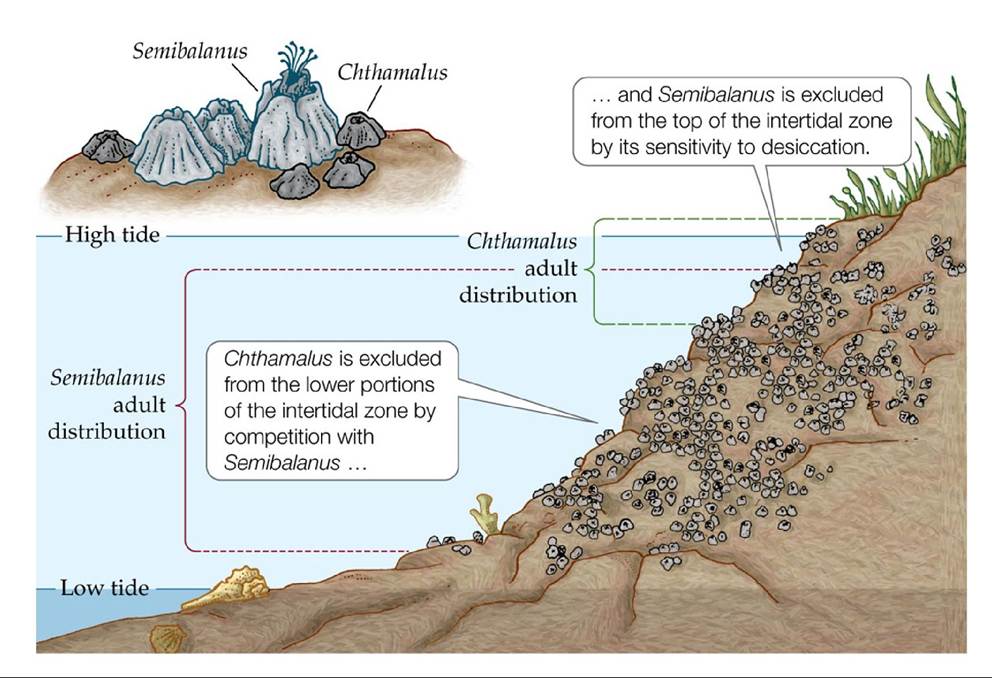
FIGURE 14.16 SqueezedOutbyCompetition Removal experiments at a field site in
Scotland showed that competition mediated by the physical environment determines the local distribution of two species of barnacles, Chthamalus stellatus and Semibalanus balanoides. (After J. H. Connell. 1961b. Ecology 42: 710.) View larger image
To answer this question, Connell examined the effects of competition and of abiotic features of the environment, such as the risk of desiccation (drying out because of exposure to air, which is greatest in the upper intertidal zone). To test the importance of competition under different abiotic conditions, he chose some individual young barnacles of each species that had settled in each zone and removed all nearby members of the other species. For other focal individuals, he left nearby members of the other species in place. He found that competition with Semibalanus excluded Chthamalus from all but the top of the intertidal zone, where Chthamalus was able to thrive under reduced competition.
As they grew, Semibalanus smothered (by growing on top of) or crushed the Chthamalus in the middle intertidal but not in the upper intertidal zone. Averaging across all regions of the intertidal zone, only 14% of Chthamalus survived their first year when faced with competition from Semibalanus, whereas 72% survived where Connell had removed Semibalanus. Chthamalus individuals that survived a year of competition with Semibalanus were small and reproduced poorly.Semibalanus, in contrast, was not affected strongly by competition with Chthamalus. However, whether Chthamalus was removed or not, Semibalanus dried out and survived poorly near the top of the intertidal zone. Thus, Semibalanus appears to have been excluded from that zone by its sensitivity to desiccation rather than its interactions with Chthamalus.
As observed for Tansley's bedstraw plants and Connell's barnacles, competition can restrict the local distribution of a species to a particular set of environmental conditions—the bedstraws, for example, could be growing inches away from each other, but each species was restricted to a particular soil type. Competition has also been shown to prevent a wide range of species, including mammals, marine invertebrates, birds, and plants, from occupying geographic regions in which they would otherwise thrive.
In some cases, a “natural experiment”—a situation in nature that is similar in effect to a controlled removal experiment—provides evidence that competition can vary depending on environmental conditions and ultimately affect geographic distributions. Such a situation was found for chipmunks in the genus Tamias (previously known as Neotamias or Eutamias). These chipmunks live in forests on mountains in the southwestern United States, where mountain ranges are separated from one another by desert flatlands. Patterson (1980, 1981) studied the distributions of Tamias chipmunks and found that when a species lived alone on a mountain range because it preferred those environmental conditions, it consistently occupied a broader range of habitats and elevations than when it lived with a competitor species (FIGURE 14.17).
As in Connell's removal experiments, this result suggests that competition may have restricted T. quadrivittatus to less desirable higher elevations where conditions are colder and the habitat is less suitable.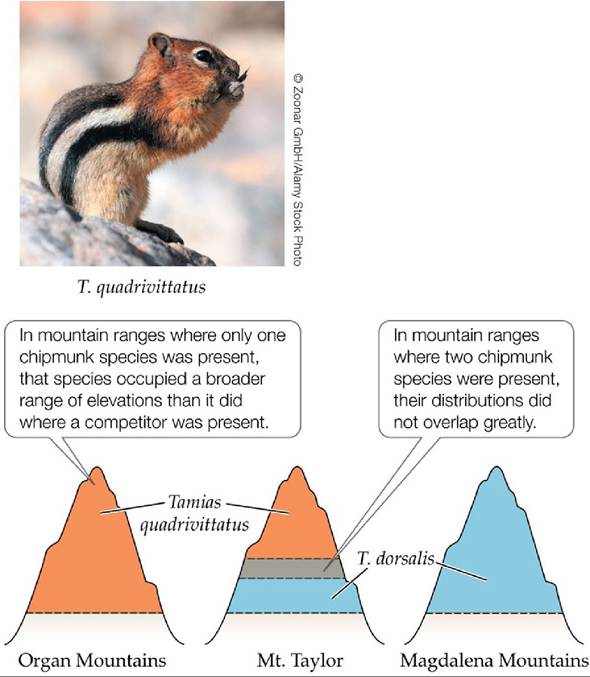
FIGURE 14.17 A Natural Experiment on Competition between Chipmunk Species Observations of the distributions of Tamias chipmunks on mountain ranges in New Mexico suggest that competition may restrict the preferred habitats in which they live. In competition, T. quadrivittatus was restricted to less desirable colder elevations compared to T. dorsalis. Similar results were obtained for Tamias species living in Nevada. (After M. V. Lomolino et al. 2006. Biogeography, 3rd ed. Oxford University Press/Sinauer: Sunderland, MA.) View larger image
Climate Change Connection
Climate Warming, Non-Native Species, and
Competition
We have learned that competition often varies in its intensity, can be asymmetrical in its effects, can occur between closely or distantly related species, and can be modified by the physical and biotic environment. Given an understanding that species interactions can vary under a variety of contexts, ecologists are interested in exploring how climate change might modify competitive interactions and ultimately influence abundance and distribution of species. Nowhere is this more important than how climate change might influence the competitive interactions of non-native, invasive species. To explore the effects of climate change on the competitive interactions of invasive species, and how that will ultimately influence their distribution and abundance, experiments can be conducted to compare those interactions with and without simulated climate conditions. One such experiment examined how warming temperatures could alter the competitive interactions of the two intentionally introduced non-native beachgrass species along the U.S.
Pacific Northwest coast (Biel and Hacker 2021). The European beachgrass Ammophila arenaria (FIGURE 14.18A) was introduced in the early 1900s and spread widely along the Pacific coast (Mexico to Canada), and the second species, the American beachgrass A. breviligulata (FIGURE 14.18B), was introduced in the mid-1980s and occurs only in the north (Canada to northern Oregon). Over the last century, these two invasive species have dramatically converted coastal landscapes from sparsely vegetated and shifting sandy environments to highly vegetated hills of sand (FIGURE 14.18C, D). Ammophila breviligulata is a better competitor than A. arenaria, but given morphological and growth-form differences between the two species, A. arenaria captures more sand and builds taller and more protective dunes. The competition experiment was conducted by planting both species together and alone in large bags filled with sand that were artificially warmed with heating tape (FIGURE 14.18E). The researchers found that A. breviligulata had lower biomass when exposed to warming conditions, but A. arenaria showed neutral or positive responses to warming. Nevertheless, under either experimental treatment, A. breviligulata had strong negative effects on A. arenaria, while A. arenaria had weaker effects on A. breviligulata. Using the Lotka-Volterra competition model (see Concept 14.3), the researchers predicted that although A. breviligulata mostly excludes A. arenaria, elevated temperatures can increase the likelihood of species coexistence. Thus, under climate warming, the differences in physiological tolerance and the mediation of species interactions might result in an expansion of the northern distributional limit of A. arenaria but restriction in the southern limit of A. breviligulata. Given that beachgrass abundance can have direct effects on dune ecosystems, reductions in vigor and competitive ability from warming could ultimately alter coastal protection and biodiversity.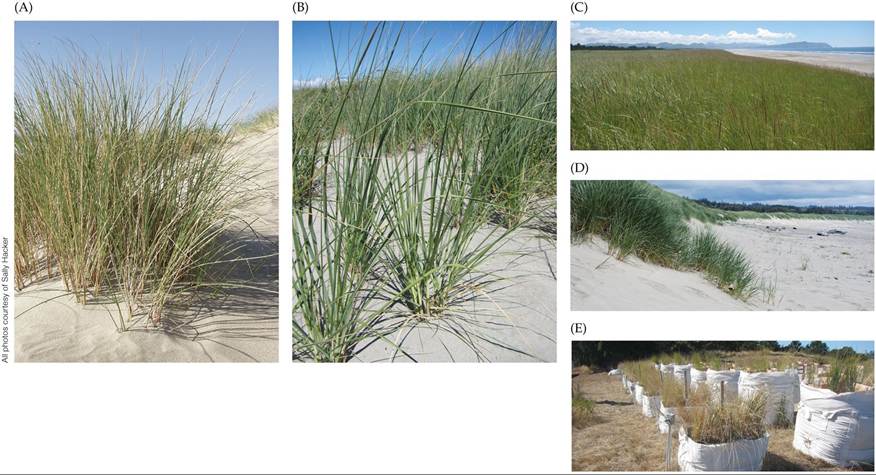
FIGURE 14.18 Implications of Climate Warming to Competition of Invasive
Species Warming from climate change affects the competitive interactions of two nonnative beachgrass species with consequences for dune ecosystems. (A) European beachgrass Ammophila arenaria. (B) American beachgrass A. breviligulata. (C) Dune covered in A. breviligulata in Oregon. (D) Dune covered in A. arenaria. (E) Beachgrass competition experiment that manipulated warming. (After R. Biel and S. D. Hacker. 2021. Oecologia 197: 757-770.) View larger image
More on the topic The physical environment can affect competition and ultimately the distribution of species:
- The outcome of competition between species can be changed by a broad suite of factors, including features of the physical environment, disturbance, and interactions with other species.
- CONCEPT 14.4 The outcome of competition can be altered by predation, the physical environment, and disturbance.
- Species distribution models can be used to predict a species' geographic range
- In the previous section, we saw how nutrients undergo biological, chemical, and physical transformations as they are taken up by organisms and released through decomposition, ultimately returning to their original forms (or similar ones).
- CONCEPT 12.4 Predation can affect prey distribution and abundance, in some cases causing a shift from one community type to another.
- Explain how interactions between organisms and their environment can affect other organisms and potentially lead to unexpected consequences.
- 2 The Physical Environment
- As indicated above, ecologists have long thought that competition between species was important in communities.
- Competition between species in theory and reality
- Biomes are large-scale biological communities shaped by the physical environment in which they are found.
- The distribution and abundance patterns of species and populations vary in their spatial extent across the landscape.
- CONCEPT 2.1 Climate is the most fundamental component of the physical environment.