Humans are an integral part of ecosystems
Human actions affect natural ecosystems, and human economies are affected by supplies of natural resources. Ecosystem managers must manage natural resources and biodiversity across large landscapes, as well as devise plans that protect both natural ecosystems and human economies.
Ecosystem management incorporates human social and economic factors as fundamental parts of the decision-making process, along with legal requirements and, of course, ecological integrity (FIGURE 24.22). The integration of these different components is seen as necessary to achieve a successful management outcome.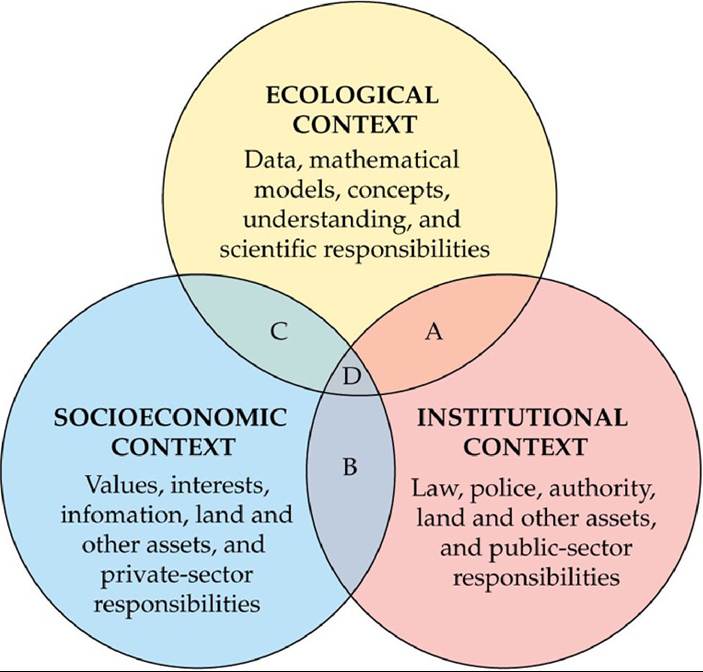
FIGURE 24.22 Humans Are an Integral Part of Ecosystem Management Ecosystem management integrates interests derived from ecological, institutional, and socioeconomic contexts. The letters represent the overlap of the three contexts: A, zone of regulatory or management authority; B, zone of social obligations; C, zone of informal decisions (as opposed to legal requirements); D, zone of win-win-win partnerships. (From Dennis A. Schenborn, personal communication.) View larger image
As we have seen, people need natural ecosystems for many reasons, ranging from the economic to the spiritual. Ecosystem management incorporates education of the public about their reliance on ecosystem services as part of its mission. It also engages the public in helping to solve those problems that degrade the ecosystem services that they rely on.
Any conservation plan that excludes the human component will not be accepted, ultimately, by the stakeholders. The plan for Masoala National Park took the needs of the people living around the park into consideration. Conservation planners not only calculated their need for wood and provided for them in a buffer zone designated for managed forestry, but also surveyed the region for tree species that would have value in an export market and included them in an economic plan for future use.
The idea was to remove economic pressure for park resources by identifying ways that people could support themselves and increase their incomes using resources outside the park. In addition, Kremen's team worked in conjunction with local people and with the Malagasy government to develop the plan, recognizing the importance of local acceptance of any proposal they made. In the end, the park plan provided for the economic needs of the people, by identifying forest resources that could be used to enrich the region, as well as for the habitat requirements of all the taxa included in the planners' analysis. While some problems have arisen with time, such as illegal hunting and logging within the park, the original conservation goals have generally been achieved (Kremen 2014).A Case Study Revisited
Wolves in the Yellowstone Landscape
The reintroduction of wolves into the GYE in 1995 reflected a shift to using an ecosystem management approach in decision making. It was a bold step that followed years of study and preparation. That it happened at all reflects a quantum shift in human attitudes toward nature over the last century. In the late 1800s and early 1900s, wolves were feared and reviled. They were perceived primarily as a threat to people and livestock. Wolves were hunted to extinction in the area of Yellowstone National Park by the late 1930s and throughout virtually all of the conterminous United States not long thereafter.
The removal of a top predator can alter the landscape substantially, in part because herbivores whose populations were once controlled by the predator may increase in number and negatively affect vegetation dynamics, such as we've seen in several examples of trophic cascades. In Yellowstone, the growth and reproduction of riparian tree species, such as cottonwoods, aspens, and willows, declined after wolves were removed (Ripple and Beschta 2007). A possible reason was that the trees experienced heavy browsing by herbivores such as elk, which roamed freely along rivers and streams once the wolves were gone.
How strong is the support for this explanation?Many observations are consistent with this idea. The reintroduction of wolves began in the winter of 1995-1996, when 31 wolves captured in Canada were released into the park. Their numbers increased rapidly; by 2004, there were about 250 wolves in the park. Following the reintroduction, populations of elk, the wolves' principal prey, have declined by 50%. Elk were initially naive and very vulnerable to wolf predation, but they have since modified their behavior, showing a preference for foraging in places that provide high visibility (see Figure 8.10). Furthermore, cottonwoods, aspens, and willows have begun to recover in some areas. In some cases, the early signs of recovery appeared to be concentrated in areas where elk face a high risk of predation, such as locations where visibility is poor, escape routes are lacking, or ambush sites are common. Thus, elk may be avoiding areas where they are most vulnerable to attack by wolves, allowing trees in those areas to recover—and possibly leading to a series of other, cascading effects (FIGURE 24.23).
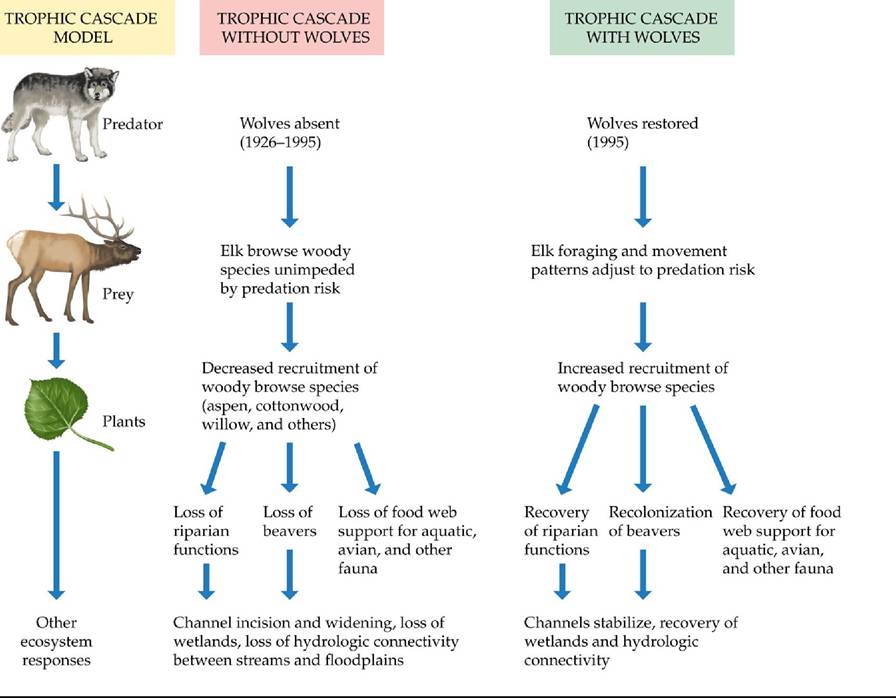
FIGURE 24.23 ATrophiccascadeHypothesis Wolves are top predators, and their reintroduction to the Greater Yellowstone Ecosystem (GYE) has the potential to cause cascading trophic effects. According to the hypothesis shown here, elk now avoid those sites where they are most vulnerable to predation, and trees and shrubs are now returning to those sites after decades of suppression by elk. Researchers are actively testing this and other hypotheses about effects of wolves in the GYE. (After W. J. Ripple and R. L. Beschta. 2004. BioScience 54: 755-766.) View larger image
However, some studies have questioned whether a trophic cascade like that shown in Figure 24.23 is occurring. In an experimental test of the hypothesis that elk forage less in areas with wolves, leading to the recovery of woody species in those areas, Kauffman et al.
(2010) found that aspen survival was not affected by the presence of wolves. Similarly, Creel and Christianson (2009) found that willow consumption by elk was more strongly affected by snow conditions than by the presence of wolves. Contrary to expectation, willow consumption actually increased when wolves were present. While the reintroduction of wolves may have affected willow and aspen abundance, it may be because predation by wolves has decreased the size of the elk population, not because fear of predation has led to changes in elk foraging behavior. Whatever the reason for the link between wolf introduction and increased willow and aspen cover, the reintroduction of wolves provides a wonderful opportunity to test hypotheses about how heterogeneity of a large landscape can be influenced by its component organisms.Connections in Nature
Future Changes in the Yellowstone Landscape
If riparian trees continue to increase in abundance in the GYE, a series of linked effects (like those described in Concepts 16.3 and 21.3) may ensue. In some locations, increased numbers of willows have slowed stream flow and increased sedimentation rates (Beschta and Ripple 2006). The increased growth of riparian tree species is also expected to provide shade and habitat for migratory birds and for trout, which prefer shade-cooled waters. More riparian bird species have been observed under similar conditions in Alberta (Hebblewhite et al. 2005). As populations of willows, a preferred food for beavers, have increased, new beaver colonies have appeared. In turn, the dams built by the beavers have changed patterns of water flow, creating marshlands that may favor the return of otters, ducks, muskrats, and mink. The willow regrowth has also helped reverse the degradation of rivers and streams associated with the heavy grazing of streambank vegetation prior to wolf reintroduction (Beschta and Ripple 2019).
Other even more fundamental changes may be taking place in the Yellowstone ecosystem.
Recall from Chapters 2, 3, and 4 that climate is the single most important determinant of where species live. With rising concentrations of greenhouse gases in the atmosphere, climate warming is occurring and will continue in the coming century (see Chapter 25). Will Yellowstone be able to maintain its current biological diversity in the face of global climate change?A modeling study shows what the vegetation of the region surrounding Yellowstone National Park may look like under a doubling of current atmospheric CO2 concentrations, which may happen within a century (FIGURE 24.24). Generally, the projections are for higher temperatures, no changes in precipitation, and more frequent fires. Based on these projected changes in the physical environment, the model predicts upslope and northward migrations of many species. These migrations will cause shifts in forest communities, with some species declining within the park and others increasing their range to include the park. Species currently rare in or absent from the GYE that may increase substantially there include gambel oak, western red cedar, and ponderosa pine. A near elimination of whitebark pine is predicted to occur as suitable habitat for that species shifts to the north (Bartlein et al. 1997).
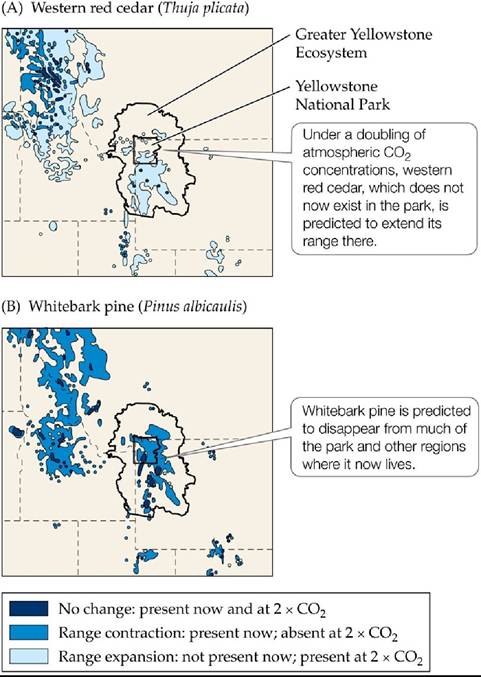
FIGURE 24.24 Projected Effects of Climate Change in the Northern Rockies
Shifts in the distributions of some principal tree species in the northern Rocky Mountains are projected by a model of a future climate driven by twice the current atmospheric CO2 concentrations. These shifts include (A) the increased distribution of western red cedar, which is currently uncommon in the region, and (B) the near disappearance of whitebark pine. (After P. J. Bartlein et al. 1997. ConservBiol 11: 782-792.) View larger image
The loss of whitebark pine would have a number of other ecological impacts. This tree is a keystone species that produces large, fatty, and nutritious nuts, an important food source for Clark's nutcracker, as well as for black and grizzly bears.
Clark's nutcracker, in turn, is the primary disperser of the whitebark pine's seeds (Tomback 1982). One consequence of warmer winters during the past few decades has been an expansion of the range of the mountain pine beetle (Dendroctonus ponderosae) to high-elevation pine forests, including those where whitebark pine grows (Logan and Powell 2001). This beetle has devastating effects on whitebark pine (FIGURE 24.25). Whitebark pine is also being attacked throughout much of its North American range by the fungus blister rust Cronartium ribicola, an introduced pathogen (Tomback and Achuff 2010). The combined effects of the mountain pine beetle and blister rust have caused an extensive die-off of whitebark pine, and this die-off has potentially reduced the occurrence of Clark's nutcracker in some areas (McKinney et al. 2009). Loss of whitebark pine also means loss of a food source for grizzly bears. Thus, it appears that climate change and introduced disease are having a major influence on whitebark pine populations, and that these effects have the potential to be transferred to wildlife, such as grizzly bears.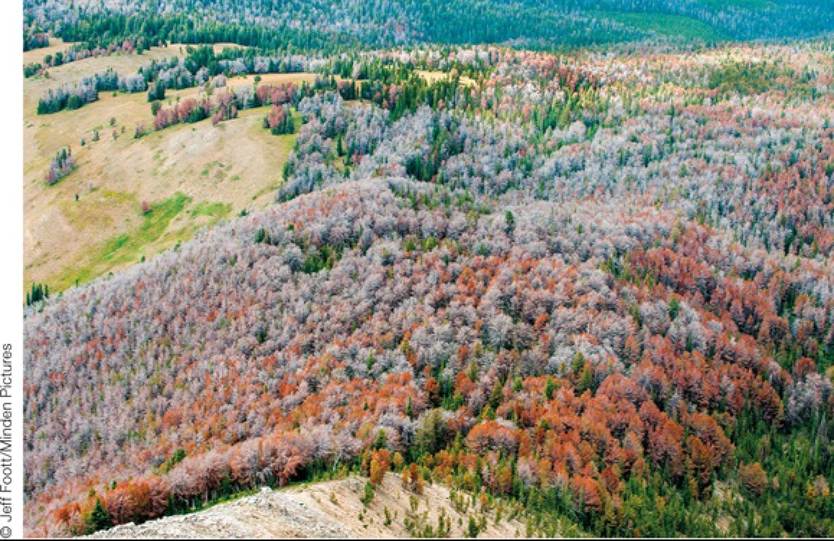
FIGURE 24.25 Warm Winters Have Promoted a Devastating Insect Outbreak
Once excluded from whitebark pine forests by cold winter temperatures, the mountain pine beetle has expanded its range as temperatures have warmed in recent decades. These
beetles have contributed to the death of millions of whitebark pines, which turn red and subsequently gray when they die (as in this forest in the southern Rocky Mountains). In July 2011, the U.S. Fish and Wildlife Service announced that it will list whitebark pine as a candidate species under the Endangered Species Act. View larger image
As we've seen in this chapter, landscape ecology and the use of tools such as remote sensing and GIS can elucidate current patterns of biodiversity and help us to predict future ones. Over the past century we have put much effort into selecting, establishing, and undertaking management of new protected areas, but now we need to ask how well those areas will maintain their species in a warmer world. If biodiversity losses are projected under climate change, are there steps we can take now that can improve habitat connectivity, create or improve buffer zones around core natural areas, or restore degraded areas to greater ecological integrity? Or will we need to move species to new areas of suitable habitat, especially if they cannot migrate quickly enough to keep up with climate change?
With a growing human population and growing demands on ecosystems, these challenges will be considerable. Ecologists will have the critical role of providing the scientific information needed to make decisions about how we proceed as a society. The future of untold numbers of species relies on how effective we can be at this task.