Net primary production is the energy remaining after respiratory losses
Not all of the carbon taken up in photosynthesis is available for growth and other functions in plants. As noted above, some carbon is lost in respiration. Carbon not used in respiration is available for growth and reproduction, storage, and defense against herbivory.
The carbon available for these functions is determined by the balance between GPP and autotrophic respiration, and is called net primary production (NPP):NPP = GPP — respiration
(20.1)
The NPP of a terrestrial ecosystem is the amount of energy captured by autotrophs that results in an increase in living plant matter, or biomass. NPP is the energy left over for plant growth, plant reproduction, defense, and consumption by herbivores and detritivores. It also represents the total net input of carbon into ecosystems.
Plants respond to varying environmental conditions by allocating carbon to the growth of different tissues. The allocation of carbon within a plant varies according to the species, the availability of resources, and the climate. Allocation of carbon to photosynthetic tissues is an investment in potential future NPP, but the demands of the plant for other resources, particularly water and nutrients, as well as biological interactions such as herbivory, influence whether that investment pays off.
A plant's allocation of NPP to the growth of leaves, stems, and roots is generally balanced so as to maintain supplies of water, nutrients, and carbon to match the plant's requirements. For example, plants growing in desert, grassland, and tundra ecosystems are regularly exposed to shortages of water or nutrients. Plants in these ecosystems may allocate a greater proportion of NPP to root growth, relative to the growth of shoots (leaves and stems), than plants growing in ecosystems with higher soil water and nutrient availability (FIGURE 20.5). This greater allocation to root growth facilitates their acquisition of the resources that are in short supply.
In contrast, plants growing in dense communities, with neighbors that may shade them, may allocate NPP preferentially to stems and leaves in order to capture more sunlight for photosynthesis. In other words, plants tend to allocate the most NPP to those tissues that acquire the resources that limit their growth.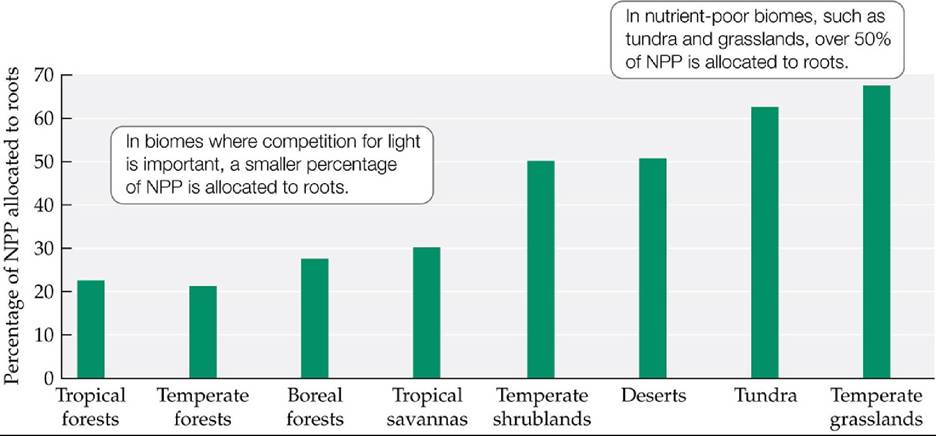
FIGURE 20.5 AllocationofNPPtoRoots The proportion of NPP that plants allocate to roots varies with the resources available to them.
In addition to low supplies of resources in the soil, what other factors might favor greater allocation of NPP to tissues below the soil surface?
(After B. Saugier et al. 2001. In Terrestrial Global Productivity, J. Roy, B. Saugier, and H. A. Mooney [Eds.], pp. 543-557. Academic Press: San Diego, CA.) View larger image
Allocation of NPP to storage compounds such as starch and carbohydrates provides insurance to compensate for losses of tissues to herbivores, disturbances such as fire, and weather events such as frost. These compounds are usually stored in the stems of woody plants or in belowground stems and roots of herbaceous plants. Where levels of herbivory are high, plants may allocate a substantial amount of NPP (up to 20%) to defensive secondary compounds, such as tannins or terpenes, that inhibit grazing.