Contents
15.1. Introduction 1304
15.2. TheLong-RunEvolutionofWealth-IncomeRatios 1308
15.2.1 Concepts, Data Sources, and Methods 1308
15.2.1.1 CountryBalanceSheets 1308
15.2.1.2 Concepts and Definitions: Wealth Versus Capital 1309
15.2.2 TheVery Long-Run: Britain and France, 1700-2010 1310
15.2.3 OldEuropeVersustheNewWorld 1312
15.2.4 The Return of High Wealth-Income Ratios in Rich Countries 1316
15.3.
TheLong-RunEvolutionofWealthConcentration 131915.3.1 Concepts, Data Sources, and Methods 1319
15.3.2 The European Pattern: France, Britain, and Sweden, 1810-2010 1320
15.3.2.1 France 1320
15.3.2.2 Britain 1322
15.3.2.3 Sweden 1324
15.3.3 The Great Inequality Reversal: Europe Versus the United States, 1810-2010 1325
15.4. The Long-Run Evolution of the Share of Inherited Wealth 1326
15.4.1 Concepts, Data Sources, and Methods 1326
15.4.1.1 Basic Notions and Definitions 1327
15.4.1.2 TheKotlikoff-Summers-ModiglianiControversy 1328
15.4.1.3 TheLimitationsofKSMDefinitions 1330
15.4.1.4 The PPVR Definition 1331
15.4.1.5 A Simplified Definition: Inheritance Flows versus Saving Flows 1333
15.4.2 The Long-Run Evolution of Inheritance in France 1820-2010 1334
15.4.2.1 The Inheritance Flow-National Income Ratio byt 1334
15.4.2.2 The Inheritance Stock-Aggregate Wealth Ratio φt 1337
15.4.3 Evidence from Other Countries 1339
15.5. Accounting for the Evidence: Models and Predictions 1342
15.5.1 Shocks Versus Steady States 1342
15.5.2 TheSteady-StateWealth-IncomeRatio: β¼s/g 1344
15.5.3 The Steady-State Capital Share: a ¼ r ■ β ¼ a ■ 't~~ 1349
15.5.4 The Steady-State Level of Wealth Concentration: Ineq ¼ Ineq (r— g) 1351
15.5.4.1 An Illustrative Example with Closed-Form Formulas 1352
15.5.4.2 Pareto Formulas in Multiplicative Random Shocks Models 1355
15.5.4.3 On the Long-Run Evolution of Г- g 1356
Handbook of Income Distribution, Volume 2B
© 2015 Elsevier B.V.
All rights reserved.
1303ISSN 1574-0056, http://dx.doi.org/10.1016/B978-0-444-59429-7.00016-9
15.5.5 TheSteady-StateLeveloftheInheritance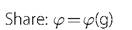 1360
1360
15.5.5.1 The Impact of Saving Motives, Growth, and Life Expectancy 1360
15.5.5.2 A Simple Benchmark Model of Aging Wealth and Endogenous μ 1361
15.5.5.3 Simulating the Benchmark Model 1363
15.6. ConcludingCommentsandResearchProspects 1365
Acknowledgments 1366
References 1366
Abstract
This chapter offers an overview of the empirical and theoretical research on the long-run evolution of wealth and inheritance. Wealth-income ratios, inherited wealth, and wealth inequalities were high in the eighteenth to nineteenth centuries up until World War I, then sharply dropped during the twentieth century following World War shocks, and have been rising again in the late twentieth and early twenty-first centuries. We discuss the models that can account for these facts. We show that over a wide range of models, the long-run magnitude and concentration of wealth and inheritance are an increasing function of r — g where r is the net-of-tax rate of return on wealth and g is the economy's growth rate. This suggests that current trends toward rising wealth-income ratios and wealth inequality might continue during the twenty-first century, both because of the slowdown of population and productivity growth, and because of rising international competition to attract capital.
Keywords
Wealth, Inheritance, Distribution, Growth, Rate of return, Pareto coefficient
JEL Classification Codes
E10, D30, D31, D32
15.1.
More on the topic Contents:
- Contents
- CONTENTS
- Contents
- Contents
- Contents
- Contents
- CONTENT AGGREGATION AND MARKET STRUCTURE
- REVENUE MODELS FOR CONVERGEDVIDEO SERVICES
- AAP. Guidelines for Air and Ground Transport of Neonatal and Pediatric Patients. 4th edition. — American Academy of Pediatrics,2015. — 488 p., 2015
- Adhikari S.. Diagnosketch: A Visual Guide to Medical Diagnosis for the Non-Medical Audience Oxford: Oxford University Press,2022. — 665 p., 2022