Christian Science and New Thought
The religious philosophy known as Christian Science has its origins in the life experiences and teachings of Mary Baker Eddy (1821-1910). As a young woman, Eddy suffered from illnesses and nervous disorders for which the physicians and hypnotists she consulted could offer no lasting relief.
In 1866, however, she claimed to have been completely cured while reading an account of one of the miraculous healings effected by Jesus in the New Testament. This led her to discover the Science of Christianity, or “Christian Science,” which she later described in her book Science and Health with Key to the Scriptures (published in 1875). A skilled organizer, Mrs. Eddy (as church members prefer to call her) established the Church of Christ, Scientist, in 1879 with its headquarters in Boston. Today there are nearly 2,500 Christian Science communities throughout the world, and the newspaper she helped establish, The Christian Science Monitor, is a well-known and respected publication.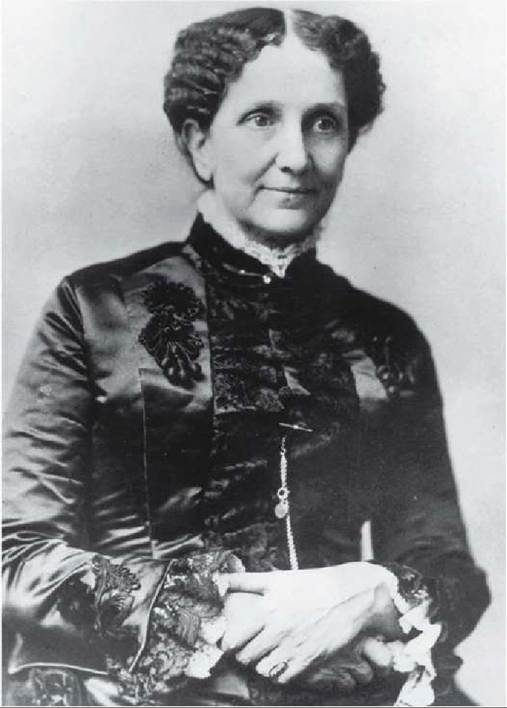
Mary Baker Eddy was the founder of the Church of Christ, Scientist (Christian Science).
Like many “offshoot” Christian communities, including the Mormons, Christian Scientists regard their church as a “restored” form of primitive Christianity. Although they acknowledge the Bible as the inspired word of God, they nevertheless maintain that its full meaning can only be grasped through studying Science and Health, which they believe was written under divine inspiration. But what truly distinguishes Christian Science is its foundational belief that all reality is spiritual, for it derives from the purely spiritual nature of God. Matter and the body do not really exist, nor do the evils associated with them, such as disease, deformity, and death. These are nothing more than mental errors created by our limited minds.
We experience pain and illness only as long as we think we are suffering from these things, and as long as we attribute objective reality to these illusions, we will find ourselves cut off from God. To achieve salvation from this delusional state, we must follow the example of Jesus Christ, the “Way-shower,” whose awareness of God and God’s goodness allowed him to overcome all forms of suffering and to perform miraculous healings of body and mind.Because Christian Scientists deny the existence of material reality, they do not accept the traditional Christian doctrine of the Incarnation. Instead, they believe in Christ as the divine idea of “sonship” to God and in Jesus as the one in whom that idea was perfectly expressed. God is the Father-Mother of all, while the Holy Spirit is God’s loving relationship with creation. Christian Science teaches that prayer based on a correct understanding of God and reality as spiritual existence is the key to improving human life. Prayer is therefore not so much a matter of asking God for healing as it is a yielding of the individual mind to the Divine Mind and to the truth that whenever God’s presence and loving power are recognized, health and healing are sure to follow. For example, Christian Scientists trust in God’s love rather than in vaccinations for the prevention of diseases; when they do become ill, they turn to prayer for healing, often with the assistance of “practitioners,” that is, church members who devote themselves full time to teach others how to use “scientific prayer” in gaining access to God’s healing love. Nevertheless, church members remain free to obtain help from medical professionals if they so choose, and they have broadened their understanding of the principle of spiritual healing to include the elimination of major social problems.
Christian Science is viewed by historians as just one of the forms taken by a larger American religious movement known as New Thought. Though more a philosophical current within late nineteenth-century religious thought than an actual creed, New Thought advocates embraced a transcendentalist belief in the presence of the divine within nature, and especially within the human mind.
In 1914, the International New Thought Alliance was formed, dedicated to the constructive power of the mind and the “freedom of each soul as to choice and as to belief.” Within that larger community of optimistic faith in the human spirit various groups took root, particularly the Unity School of Christianity. Founded by Charles Fillmore (1854-1948) and his wife Myrtle (1845-1931) in 1903, Unity was originally based on the concept of “mind cure,” or the relief from illness through the exercise of mind over matter. A prime example of this phenomenon occurred in 1886, when Myrtle Fillmore was cured of tuberculosis after repeating inwardly, for two years, “I am a child of God and therefore I do not inherit sickness.” Today, Unity practitioners describe themselves as engaged in a positive and practical form of Christianity in which the daily application of the principles exemplified by Jesus Christ promotes health, prosperity, and happiness. Unity teaches that the spirit of God lived in Jesus Christ, just as it lives in everyone. By living as Christ did, we overcome sin— which Unity understands to be separation from God in our consciousness—as well as illness, depression, and doubt. Like many New Thought churches, Unity believes that a heightened awareness of God’s presence will bring peace, health, and happiness to the human race.
More on the topic Christian Science and New Thought:
- Notes
- 10 The Jewel of Truth
- §29. Nominalism
- Pre-independence India
- References
- Pacifism and Nonviolence
- §27. Doctor Mirabilis
- Notes
- 11 Meanwhile in Europe
- Theoretical background of the study