The Church of Jesus Christ of Latter-day Saints
The Church of Jesus Christ of Latter-day Saints (LDS) was founded by Joseph Smith (1805- 1844) in 1830 in Fayette, New York. Although its members are commonly referred to as “Mormons,” they prefer to be known as Latter-day Saints.
According to Joseph Smith’s account, he was fourteen years old when, in 1820, he withdrew to the woods near his home and asked God which church he should join. While praying for guidance, he was approached by two figures who identified themselves as God the Father and Jesus Christ. They informed Smith that he should not join any existing church but rather establish his own and that he had been chosen to restore the one true faith of Jesus Christ. Three years later, Smith was visited by the Angel Moroni, who revealed to him the location of two thin golden plates covered with strange writing. His translation of these plates, accomplished “by the gift and power of God,” resulted in the writing of the Book of Mormon, one of the principal scriptures of the Church of Latter-day Saints. Although these plates were later taken away by an angel, witnesses testified to having seen and touched them.Published in 1830, the Book of Mormon tells how the prophet Lehi and his followers fled Jerusalem around the year 600 bce and migrated to America, where they founded a great civilization. During subsequent centuries, their descendants recorded their history on metal plates. These plates described how conflict eventually divided the people into two groups, the Nephites and the Lamanites. These plates also included prophecies of the birth and crucifixion of Jesus Christ and described how, after his resurrection, Jesus appeared to the peoples of North America and established his church among them. In 421 ce, the Lamanites (ancestors of the people we know as Native Americans) annihilated the Nephites, whose memory was preserved only in the history they had written.
A surviving Nephite, the prophet Mormon, wrote an abridgment of that history on two golden plates and gave them to his son, the prophet Moroni, who hid them. Fourteen centuries later, Moroni—who by then had become an angel—revealed their location to Joseph Smith. Mormons believe that the Book of Mormon is divinely inspired scripture and recognize it as having an authority equal to that of the Old and New Testaments. They also make extensive use of two other texts: Doctrines and Covenants (1835) and The Pearl of Great Price (1842), both of which consist of revelations, statements, translations, and other writings, many by Joseph Smith.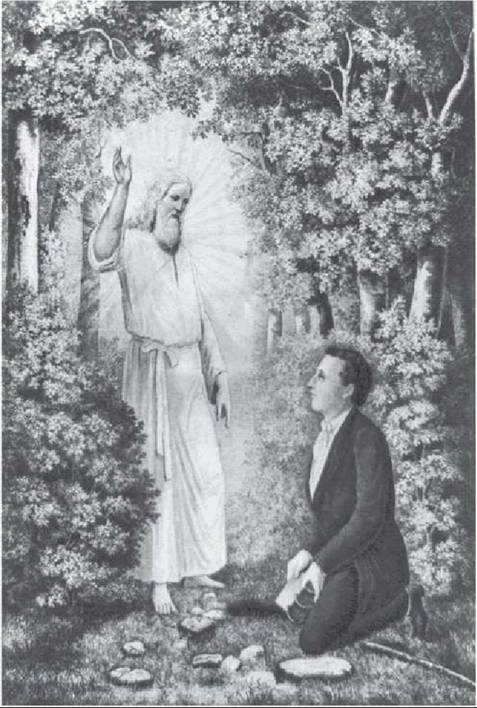
The Angel Moroni delivering the plates of the Book of Mormon to Joseph Smith.
The discovery of the Book of Mormon soon attracted followers to Joseph Smith and his church. At the same time, conflict with their detractors soon forced the Mormons to leave New York. After settling briefly in Kirtland, Ohio, continued opposition to Smith’s teachings forced the Mormons to move on, first to Jackson County, Missouri, and then to Nauvoo, Illinois. For a time the Mormons prospered in Nauvoo, but their practice of polygamy (abolished in 1890) aroused the animosity of their neighbors. On June 24,1844, Joseph Smith was killed by an angry mob opposed to the Mormon way of life. The leadership of the movement then fell to Brigham Young (1801-1877), who led the Mormons on an epic trek from Nauvoo to the Great Salt Basin of Utah, where they settled and established their church headquarters at a site known today as Salt Lake City.
Mormons accept many familiar Christian doctrines, though often with radical (and, to most Christians, unacceptable) changes. Like mainstream Christians, the Mormons believe in a Trinity, consisting of God, the Heavenly Father; his Son, Jesus Christ; and the Holy Ghost (sometimes referred to as the Holy Spirit). However, Mormons understand these figures to be three separate gods.
Moreover, Mormons believe that the Heavenly Father was once a mortal man: descended from human beings who themselves had become gods, the Heavenly Father attained divinity and became the ruler of our region of the universe. Through intercourse with a celestial wife, he produced a Son, Jesus Christ, who also progressed from humanity to divinity, and finally the Holy Ghost. Whereas the Heavenly Father and Jesus Christ possess material bodies (albeit perfect and immortal), the Holy Ghost is pure spirit.Mormons also believe that all human beings are “spirit children” of the Heavenly Father, who sends us to earth so that we can receive physical bodies and gain both knowledge and experience that are essential for spiritual progress. We are guided in this life by the perfect example of Jesus Christ and by the Holy Ghost that dwells within believers and helps them to grasp eternal truths. Ultimately, we can return to dwell eternally with the Heavenly Father, become gods ourselves, and have spirit children of our own. Sin can prevent us from achieving this goal, but it need not do so, for Jesus Christ atoned for our sins through his suffering and death. We can therefore achieve salvation if we have faith in Christ’s atonement, repent our sins, accept baptism, and receive “the gift of the Holy Ghost.” The critical factor, for Mormons, in determining who can or cannot be saved from sin is the acceptance of “the Gospel of Jesus Christ in its fullness,” and that form of Christian teaching can only be found within the Church of Latter-day Saints. However, it is possible for Mormons to obtain baptism (by proxy) on behalf of deceased family members who were not Latter-day Saints—and therefore ensure their retroactive salvation; this explains the extraordinaiy interest Mormons take in genealogical research. Finally, Mormons abstain from the consumption of alcohol, tobacco, coffee, tea, caffeinated soft drinks, and illegal drugs, believing that such abstentions are not only conducive to good health but are also part of the revelation given to Joseph Smith in 1833.
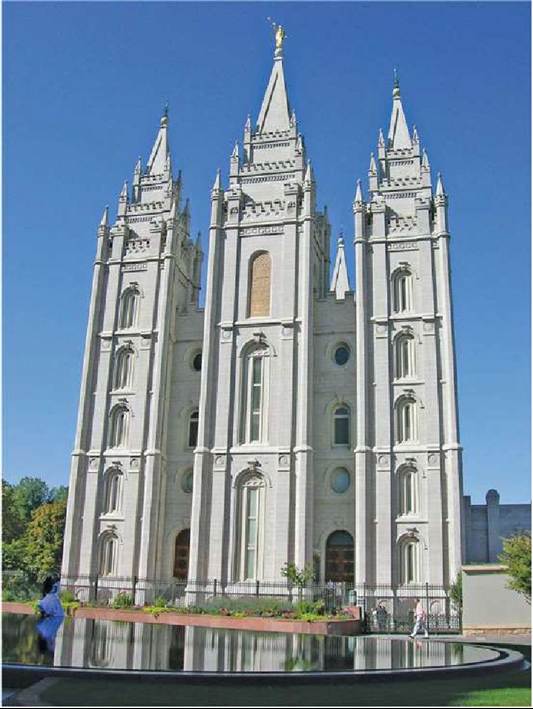
The Salt Lake Temple in Salt Lake City, Utah.
Mormons are millennialists who believe that one day Christ will return to judge and rule the world for a thousand years. Although they acknowledge the existence of a hell, where some will suffer temporary punishments, Mormons are convinced that, in the end, all people will be saved. However, the final destiny of every individual will be determined by the extent of his or her obedience to God’s commandments. Accordingly, there are two distinct levels of salvation: Mormons who faithfully follow the teachings of their church will attain divinity and eternal life in the presence of the Heavenly Father; non-Mormons will receive lesser rewards and will therefore enter lesser “kingdoms” in eternity. Mormons also believe in continuing divine revelation and, more specifically, they believe that God’s will is revealed through the senior leadership of their church. Its president (often referred to as “the prophet”), his two counselors, and the members of the Quorum of the Twelve Apostles are all recognized as having prophetic abilities, and together they possess the same authority as the prophets and apostles described in the Bible. This link with the biblical past underlies the Mormon Church’s conception of itself as the restored church of Jesus Christ, and because other churches have corrupted the teachings of Christ, the Mormon Church is therefore the only true and living church upon the earth. Needless to say, no other Christian community is prepared to accept this claim.
GLOBAL SNAPSHOT
The Church of Jesus Christ of Latter-day Saints in Africa
The Mormon Church is one of the most energetically proselytizing churches in the world today, with over 70,000 full-time missionaries serving in missions throughout the world. This is particularly true in Africa, where the church has established no fewer than thirty- one missions, serving the needs of over 300,000 members, chiefly in Ghana, Nigeria, and South Africa.
Mormon interest in Africa—which the Church has long thought of as fertile ground for the revelations of Joseph Smith—began gradually in the 1850s, when LDS missionaries sought to promote the Book of Mormon among the white, English- speaking residents ofCape Town. Outreach to black Africans, however, throughout the nineteenth and much of the twentieth centuries, was hampered by the church’s refusal to admit persons of African descent to the priesthood. It was not until June 9,1978, in fact, that the leadership of the Mormon Church decided, in response to a new revelation, to reverse a policy that dated back to the time of Brigham Young, and began admitting Mormon converts to the priesthood without regard to race or skin color. This decision—referred to by Mormons as the “Revelation on Priesthood”—made it possible to actively missionize among the native African population and to choose black African elders for leadership positions within the church.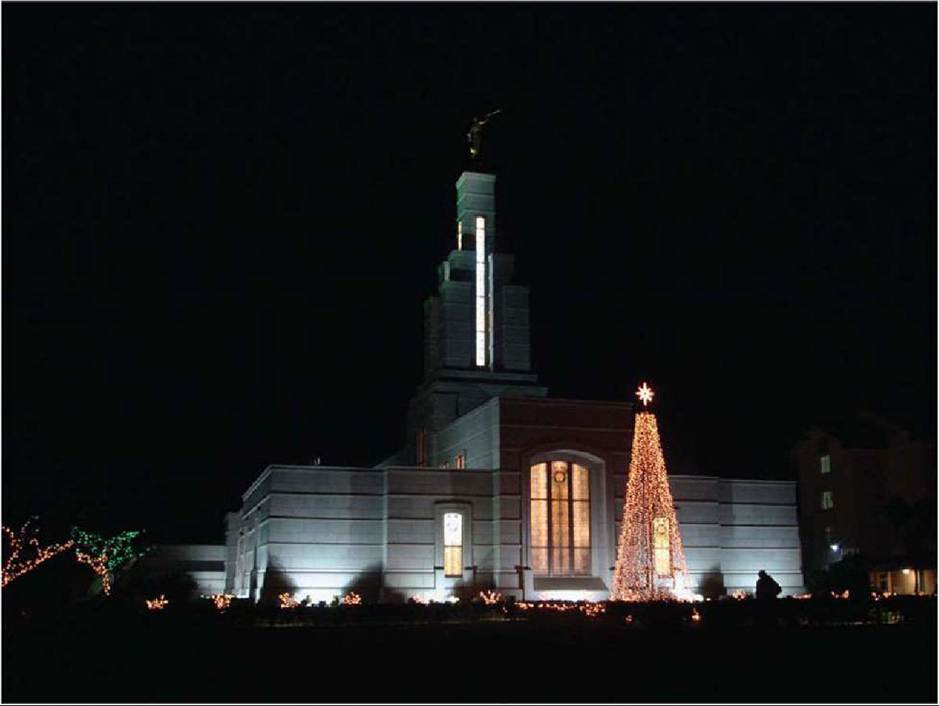
The Accra Ghana Temple, dedicated in 2004, was the second LDS temple to be built in Africa.
LDS missionaries do more than distribute copies of the Book of Mormon, however. Part of the appeal of any mission derives from the kind of humanitarian aid it provides to local populations, often in the form of education, business loans, and, wherever possible, medical services and irrigation supplies. The ultimate goal of such activities is to improve Africans quality of life, to make the recipients of LDS assistance ultimately self-sufficient, and to encourage them to regard themselves as worthy “children of God.”