Hinduisation and Revivalism
Tamil Nadu since prehistoric times is considered to be secular and the non-Brahmans dominated the religious sphere; folk worship played an important role in their everyday life.
The Hinduisation of Tamil folk religion is a historical process. The process of Hinduisation in society with regard to south India came into effect only after the Pallavas’ rule. Then it continued during Cholas, Pandyas, and the rule of chieftains. They gave preference to the Brahmanical Vedic community who influenced all the spheres such as social, economic, political, and cultural life. They slowly influenced religion too and emerged as a priestly class to the non-Brahman temples (Xavier 2009:34). The thing to be remembered is that they never allowed lower castes and subalterns to become priests in traditional temples.One such example of the earliest Hinduisation is that the deity Murukan worshipped on a broader level was previously a folk deity. He demanded blood sacrifices from his devotees. Valli was his wife. He was first assimilated with the Vedic religion. He got names such as Shanmugha, Karthikeyan, Subramaniyan, and also was made the son of Lord Siva. Deivayanai, the daughter of Indra was made the wife of Murukan. His original wife belonging to the Kuravar community was made his second wife. Now, Lord Murukan has been represented within the pantheon of the Hindu gods, especially under the Saiva tradition. Hence, Murukan is the first victim in the cultural battle between the Vedic and Tamil folk people.
The present and on-going process of Hinduisation involves the systemic conversion/ equalisation of a multitude of guardian folk deities as Vedic gods. Even in this, not all the folk deities are Hinduised. Only the popular male and female deities such as Ayyanar, Madurai Veeran, Mariamman, and Ankallamman are Hinduised and the unpopular deities
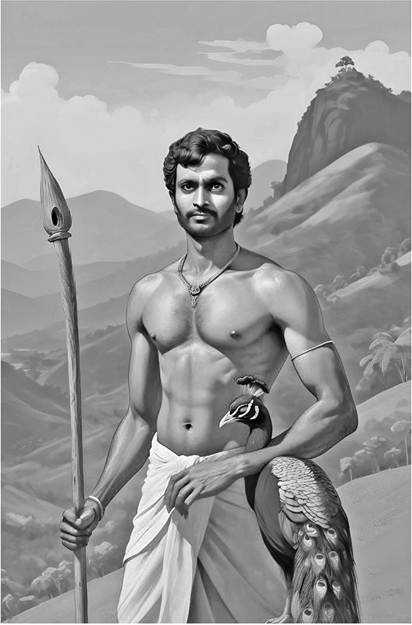
Figure 25.1 NTK’s Illustration of Lord Murukan
Source: NTK’s official website
like Agarathiappan of Upper Palani hills are out of its purview.
The process of Hinduisation of folk deities is non-linear across the Tamil geography; through cross examination we can delineate various methods of this process. Some of the prominent methods of the process are installation of Vedic deities in the temples of folk deities, creation, and restructuring of Vedic sthalapuranas33 which emphasise the relation between the folk gods and goddesses with any one of the gods and goddess of Vedic religious tradition, performance of rituals and worships by Vedic priests in folk temples, creating aversion over the blood sacrifices, attempts at giving a benign look to ferocious folk deities, popularisation of agamic forms of worship, and extensive temple building activities (Xavier 2014:38).Apart from Hinduisation, the modernisation and associated economic prosperity have resulted in people’s attitudinal change14. When a village or town is expanded due to new settlements, the folk temple in the boundary is drawn inside the village or town. This change in the temple's position makes it adopt some of the features of the Vedic Hinduism by incorporating the Hindu deities like Vinayakar, Hanuman, and Navakiragam, expanding the temple, performing kumbhabhishekam35 and so on. Until then, the icons were considered mere stone statues. Only after the kumbhabhishekam, it is believed that the gods and goddesses gain power and life. Appointment of Brahmans as pusaris and chanting Sanskrit mantras are the other aspects of Hinduisation of the Tamil folk religion.
Another type of upward mobility found in the folk religion is the augmentation of festival days. Generally, folk festivals are conducted only for a shorter period. But in the Vedic tradition, celebrations are performed for more than ten days, called Brahmotsavam. This feature of the Vedic Brahmanism is now absorbed in the folk religion16. The above describes how the roots of Hinduisation have been heavily entrenched into the waters of the folk religious rituals.
The water has been completely absorbed by the roots and has given way to a full-grown tree of the Brahmanical Hinduism.Predominance of the Hindutva ideology in governance since 2014 has catalysed the Hinduisation or the pan-India Hindu homogenisation process, which is also associated with many counter reactionary sentiment movements. Radical right-wing Tamil outfits like Naam Tamizhar Katchi (NTK) (We Tamils Party) wanted to grab a political space by utilising the anti-Hindutva sentiment of Tamils. NTK wants to glorify Tamil culture by reviving its rich ancient history. It claims that the Tamils have lost their prestige due to medieval Brahmanical-Aryanisation and modern Dravidian politics. NTK, in its endeavour to bring back Tamil’s lost glory, wants to de-Aryanise Murukan and redefine Murukan as moopatan (forefathers) by citing the Sangam Murukan (^ITIX) ^iXl^lj - Naam Thamizhar
Katchi 2018).
We can better understand Tamil culture through the interpretations of Lord Murukan as ‘Sangam Murukan’ and ‘Puranic Murukan’. The interpretation of Lord Murukan as the forefather of Tamil people can be traced to the ancient Sangam literary works. The various Sangam poems vividly describe the valour, youthfulness, and warring skills of Murukan, who lived in the early Sangam period, and how he protected his people from enemies. Tamil literary works such as the Tholkappiam, Pattuppattu, and Ettuttokkai establish that the socio-cultural and religious life of the ancient Tamil people revolved around the Murukan. The Tholkappiam, the most ancient and authoritative Tamil grammatical literature, describes Murukan as the head of Kurinji Nilam (hill areas) and worshipped by various tribes like Kuravar, and at present, we can locate Murukan temples at numerous hillocks across Tamil land. Various Sangam literary works describe Murukan as a ruler who ruled a part of the lost Kumari Kandam/Lemuria and he was revered by the Tamil people for his valour. Ancient Tamil people venerated Murukan’s valor through nadugal (hero stone) worship.
Nadugal worship is a precursor to the contemporary Kula Deiva Valipadu (tutelary/tribe deity worship), a folk religious tradition ubiquitous in Tamil culture. Sangam literature, the Kurunthogai, reveals that Murugan was venerated through the practice of animal (goat and fowl) sacrifice and the follow-on community feast by the worshippers.Puranic Murukan is associated with various names of Skanda/Kandha, Subhramainya, Karthikeya, and Saravana Bhava, which are Sanskrit in origin. The Skandapuranam, a medieval literary work, has put Murukan in the pantheon of Aryan Gods through its puranic stories. Accordingly, Murukan is considered the second son of Lord Shiva and Parvathi. Agnihotram Ramanujam Tathachariaar, a renowned Vedic scholar, in his book Indhu Madham Engay Pogirathu (Where is the Hindu Religion Heading Towards (2014)) have elaborately described how Brahmanical-Aryans hijacked the ancient Tamil cultural elements, including Murukan. He has interpreted various slogans of the Skandapuranam and defined the obscenity associated with multiple Sanskrit names of Murugan. The medieval Tamil Bhakti literary works are based on the veneration of the pantheon of Aryan gods,
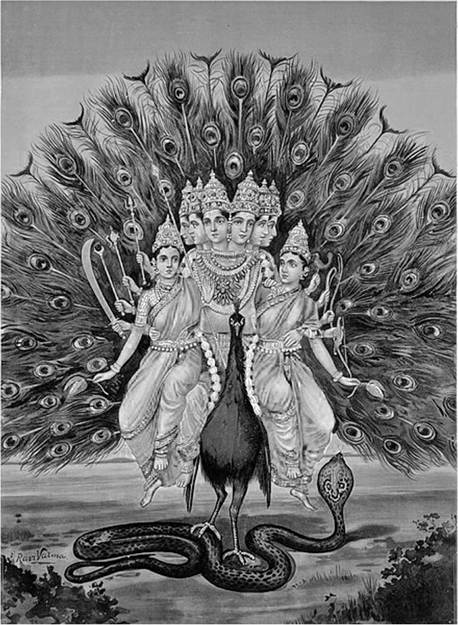
Figure 25.2 Raja Ravi Verma’s Painting of Lord Murukan Source: Wikipedia
including Murukan. Though contemporary worship of Lord Murukan by Tamils is through the Brahmanical Vedic rituals, it is equally dominated by various folk practices. It includes pathaiyathiraF7, kavadi tradition18, tonsuring, and offering of goats and fowl to the temple (though not sacrificed). The folk practice of Murukan worship is an integral part of the popular Tamil sentiment.
In its endeavour to de-Aryanise Murukan, NTK has released a new portrait of Lord Murukan, which differs from Raja Ravi Verma’s portrait having been inspired by Sanskrit epics Puranic texts and containing Aryan elements (Figure 25.2). NTK’s portrait of Murukan as a dark-skinned muscular man with a fiery moustache connects well with the Tamils and reinforces the popular Tamil folk sentiment19 (Figure 25.1). By reviving the popular Tamil folk sentiment, NTK has emerged as the third largest political party in Tamil Nadu in the recently concluded 2021 assembly elections with a vote share of around 7%20, which has increased from 1% in 2016 assembly elections.
25.3