The Fountain of Glauke
Before considering its intersection with mythological traditions and its spatial context, we must first take stock of Glauke's appearance (see fig. 1). Cut from an oolitic limestone dune which also yielded raw material for the archaic Temple of Apollo, roughly eighty meters to the northeast (Hayward 2003), the fountain featured a tripartite basin supplied by initially four reservoirs.
A series of steps at the north led to a rock-cut covered porch providing access to a parapet, over which water from the basins below was drawn. A simple Doric facade, now mostly missing, greeted the fountain's thirsty visitors. Since Glauke lacked a natural water source of its own, it drew its resource from elsewhere; the discovery of pipes running downhill from the south suggest a source for its water, at least during its Roman period (Elderkin 1910; Hill 1964; Landon 2003; Robinson 2005).The fountain's date of origin—whether during the Greek or Roman period of Corinth—is debated.[301] Incontrovertible, however, is that the Roman colony's
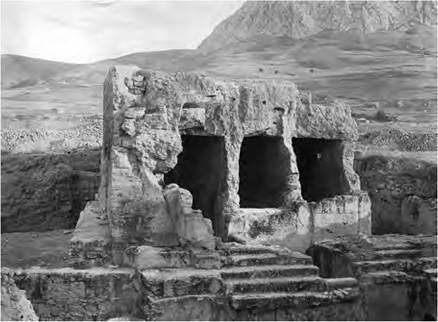
Figure 1. Fountain of Glauke; image reproduced from Hill 1964, Corinth 1.6, fig. 144, courtesy of American School of Classical Studies at Athens, Corinth Excavations.
planners envisioned a place for the fountain in Corinth's civic space. Tiles laid in front of the fountain aided access to the Sikyon Road (Hill 1964; Robinson 2005), and not far to the east—rounding Temple C—one entered the city's forum. Because we treat these issues of spatial context below, it is not necessary to linger on them here. We simply observe the significance of Roman Corinth's incorporation of a fountain such as Glauke, hewed out of indigenous limestone.[302] Beyond satisfying archaizing sensibilities, Glauke's cavernous appearance contributed to the fountain possessing a numinous quality frequently associated with features of the natural landscape such as grottoes (Robinson 2005). A charged atmosphere of this sort meant that the fountain, even without a history of cultic activity, resembled the type of place where divine-human encounters might occur.[303] Consequently, as Robinson argues, the fountain would have had a legitimizing effect on the colony and its nearby civic spaces (Robinson 2005, 139). Thus, even though planners' adoption of Glauke offered support of Roman cultural values, as argued below, it did so while tapping into a broader symbolism accruing from the fountain's (apparent) antiquity, connection to the land, and numinous aura.