Aminoglycosides
GENERAL PRINCIPLES
Aminoglycosides exert their bactericidal effect by binding to the bacterial ribosome, causing misreading during translation of bacterial messenger RNA into proteins.
These drugs are often used in combination with cell wall-active agents (i.e., β-lactams and vancomycin) for treatment of some severe infections caused by gram-positive and gram-negative aerobes. Use in combination with cell wall-active antibiotics can lead to synergistic killing. Aminoglycosides do not have activity against anaerobes, and their activity is impaired in the low pH/low oxygen environment of abscesses. Cross-resistance among aminoglycosides is common, but not absolute, and susceptibility testing with each aminoglycoside is recommended. Use of these antibiotics is limited by significant nephrotoxicity and ototoxicity.TREATMENT
• Traditional dosing of aminoglycosides involves daily divided dosing with the upper end of the dosing range reserved for life-threatening infections. Peak and trough concentrations should be obtained with the third or fourth dose and then every 3-4 days, along with regular serum creatinine monitoring. Increasing serum creatinine or peak/troughs out of the acceptable range requires immediate attention.
• Extended-interval dosing of aminoglycosides is an alternative method of administration in patients without significant renal impairment and is more convenient for most indications. Extended-interval doses are provided in the following specific drug sections. A drug concentration is obtained 6-14 hours after the first dose, and a nomogram (Figure 15-1) is utilized to determine the subsequent dosing interval. Drug concentrations 6-14 hours after the prior dose should be monitored at least every week; serum creatinine should be checked at least thrice weekly. In patients who are not responding to therapy, a 12-hour concentration should be checked, and if that concentration is undetectable, extended- interval dosing should be abandoned in favor of traditional dosing.
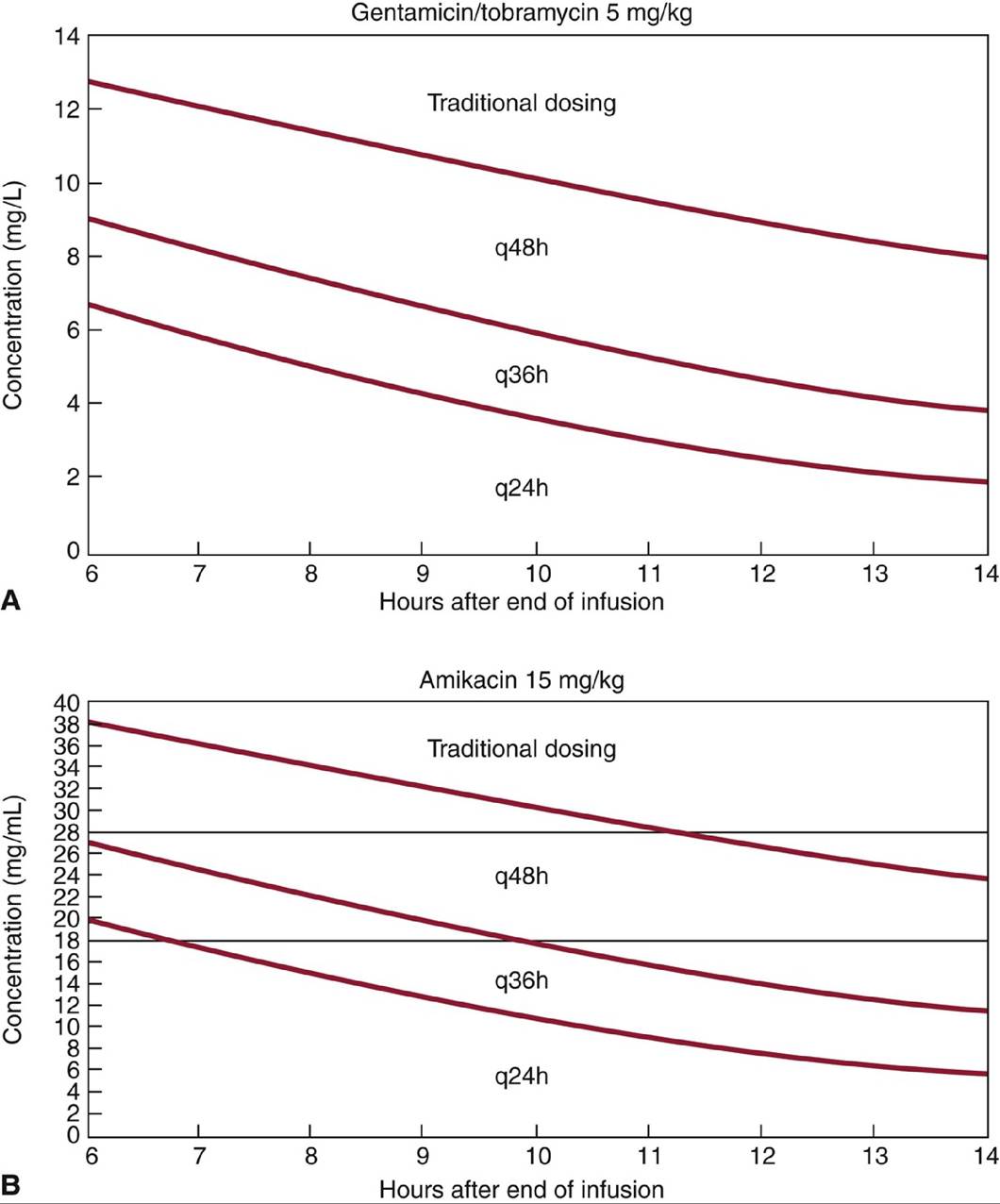
Figure 15-1 Nomograms for extended-interval aminoglycoside dosing.A, GentamicinZtobramycin. B, amikacin.
• For obese patients (actual weight >20% above ideal body weight [IBW]), an obese dosing weight (IBW + 0.4 ? [actual body weight - IBW]) should be used for determining doses for both traditional and extended-interval methods. Traditional dosing, rather than extended-interval dosing, should be used for patients with endocarditis, burns that cover more than 20% of the body, anasarca, and creatinine
clearance (CrCl) of are recommended as above. Goal serum trough levels are 14 d).
More on the topic Aminoglycosides:
- ACUTE KIDNEY INJURY
- Cystic fibrosis
- Index
- In human medicine, certain systemic drugs used to treat diseases can have profound negative effects on hearing and balance.
- Index
- INDEX
- Treatment
- Drug Therapy in Pregnancy
- Index
- Macrovascular Complications of Diabetes Mellitus