Skin, Soft-Tissue, and Bone Infections Purulent Skin and Soft-Tissue Infections (Furuncles, Carbuncles, Abscesses)
GENERAL PRINCIPLES
Methicillin-resistant S. aureus (MRSA) and methicillin-sensitive S. aureus (MSSA) account for 25%- 50% of cases.
TREATMENT
• Incision and drainage (I&D) alone is usually adequate, especially for abscesses measuring levels include TMP-SMX, clindamycin, and doxycycline.
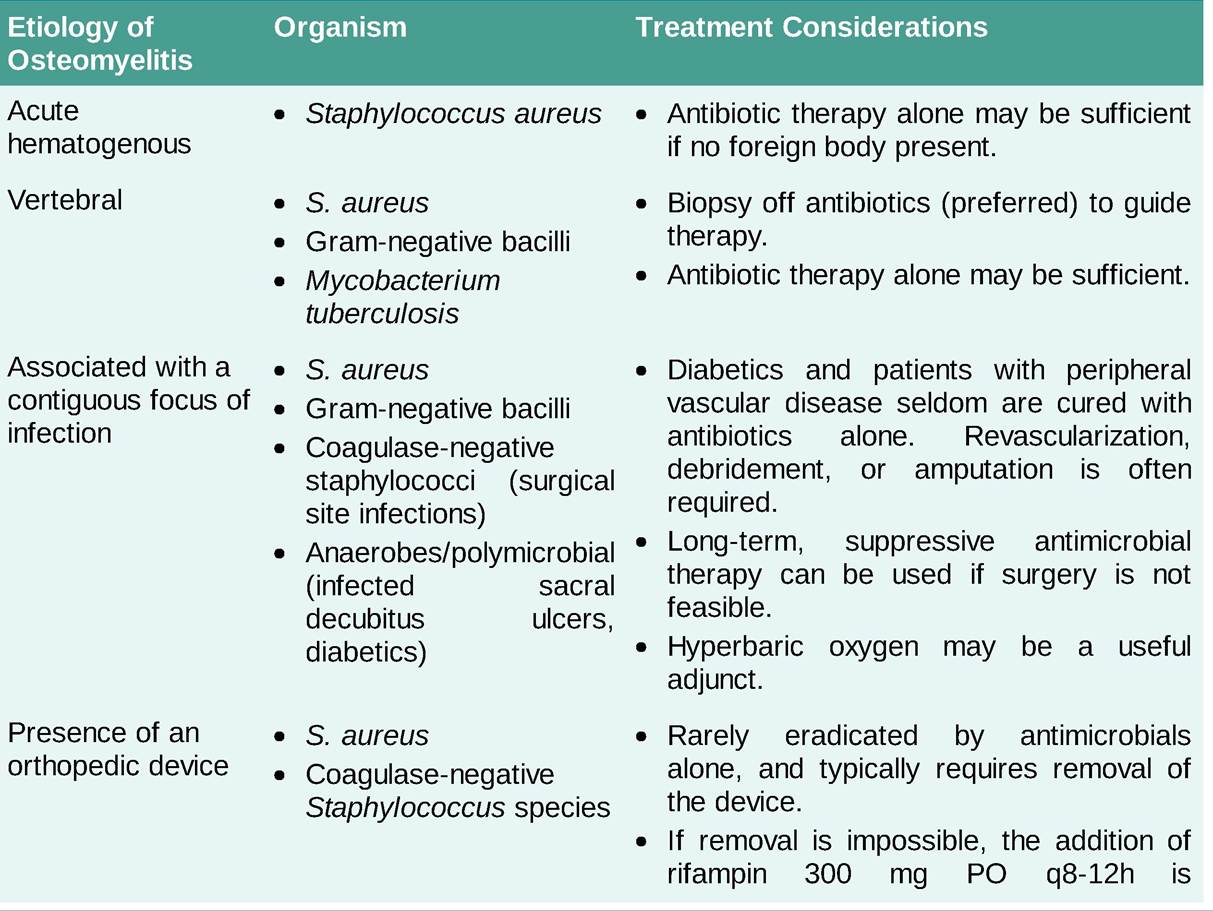
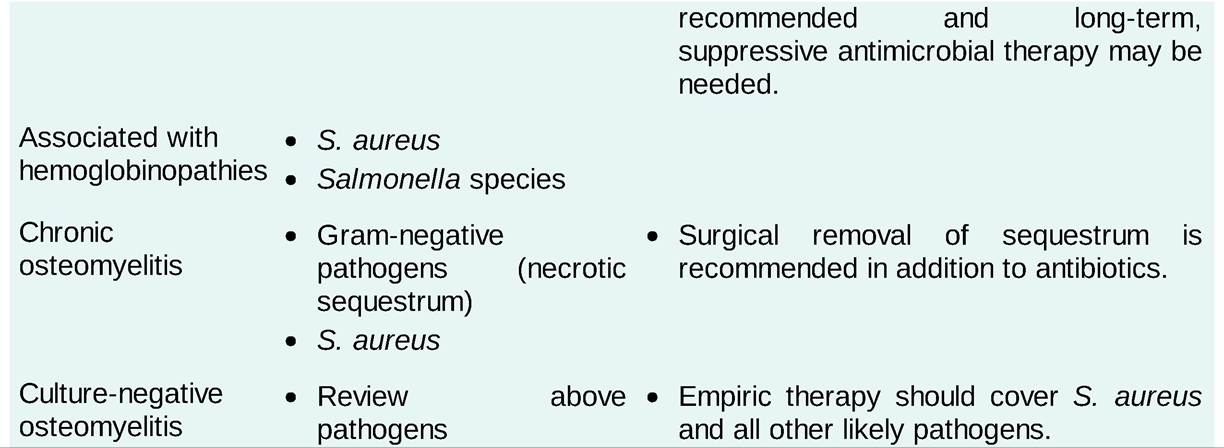
• Gram-negative osteomyelitis can be treated with parenteral or oral fluoroquinolones, which have excellent bone penetration and bioavailability, or with a third-generation cephalosporin.
• The optimal duration of antibiotic therapy is uncertain. Cure typically requires at least 4-6 weeks of high-dose antimicrobial therapy. Parenteral therapy should be given initially; oral regimens may be considered after 2-3 weeks if the pathogen is susceptible and adequate bactericidal levels can be achieved.
TABLE 14-2
TREATMENT OF OSTEOMYELITIS
More on the topic Skin, Soft-Tissue, and Bone Infections Purulent Skin and Soft-Tissue Infections (Furuncles, Carbuncles, Abscesses):
- Skin, Soft-Tissue, and Bone Infections Purulent Skin and Soft-Tissue Infections (Furuncles, Carbuncles, Abscesses)
- Hepatobiliary Infections
- BONE AND JOINT INFECTIONS
- Genitourinary Infections
- HERPETIC VIRAL INFECTIONS
- Infections
- INTRACRANIAL INFECTIONS
- Protozoal Infections
- BACTERIAL INFECTIONS
- ACTINOBACILLUS INFECTIONS