Maintaining continence and defecation
Continence and normal defecation relies on the complex interaction of the colon (motility and consistency of stools), rectum (sensation, compliance, and anatomy), and the anus (sensation, structure, and function).
The overriding complex neurological control is also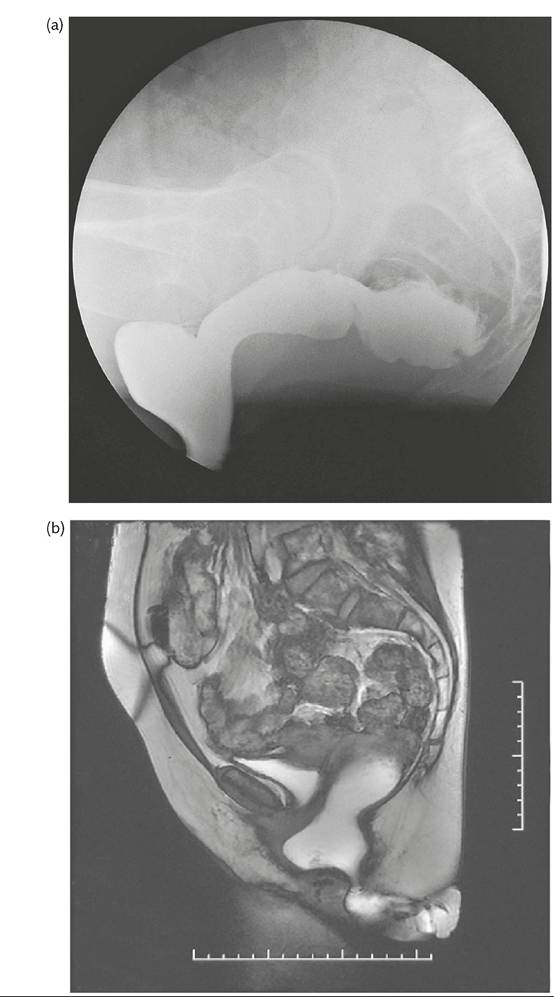
Figure 58.4 (a) Barium proctography, (b) Magnetic resonance proctography.
important. A disorder of any of these may lead to incontinence of faeces.
During the day, several mass movements of the colon occur— these are high-amplitude propagated contractions, which often occur after awakening or meals (7). As the rectum fills, if defecation is convenient, then anal relaxation and increased intrarectal pressure is required for normal defecation. A small amount of straining may be required to initiate defecation. However, excessive straining (particularly using the Valsalva manoeuvre) means pushing against a contracted pelvic floor and is counterproductive. If defecation is not convenient, the urge can be overridden. The rectal contractile response to distension will then subside as the rectum relaxes and the external sphincter contracts. During the day, as the rectum fills, the anus will relax and sample the contents to ascertain whether it is gas, liquid, or solid.