CONGESTIVE CARDIAC FAILURE
Congestive cardiac failure (CCF) is characterized by “Inability of the heart to maintain adequate cardiac output, at rest or during stress, necessary for the metabolic needs of bodyquot;.
Pathogenesis: Adequacy of cardiac output (COP) depends on three important factors—(a) adequate
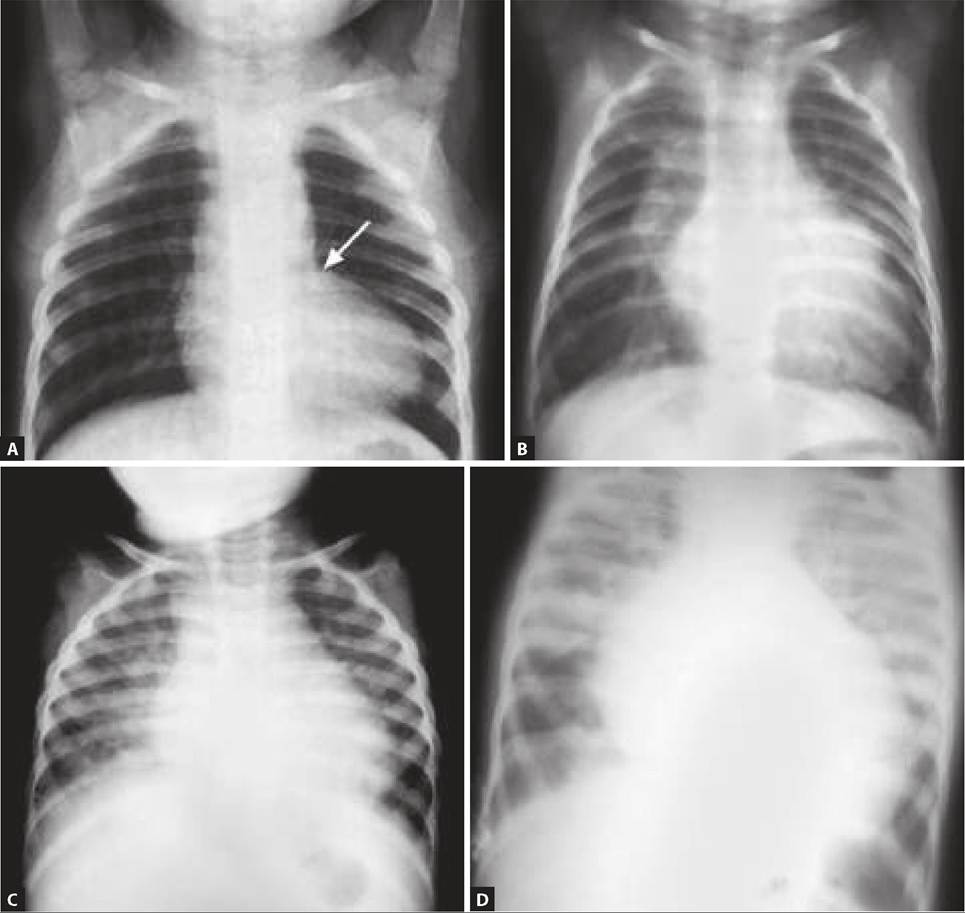
Fig. 17.13: Pathophysiology of CCF.
*renin-angiotensin#8725;aldosterone mediated
diastolic filling (pre-load), (b) adequate myocardial contractility, and (c) unhindered forward flow to systemic/pulmonary circulation (after-load).
Abnormality in any one or more of these COP regulatory factors, i.e. increased diastolic filling (volume overload), poor myocardial contractility or obstruction in ventricular outflow tracts (pressure overload) may progress to CCF, specially if compensatory mechanisms fail (Fig. 17.13).
Volume overload is usually caused by left to right shunts or regurgitant lesions, leading to overdistension of ventricular chambers. Since dilated ventricles fail to accommodate further venous return, these cases are also termed diastolic failure or backward failure. Although distended ventricles contract more forcefully (Frank- Sterling law) to maintain stroke volume, at one stage this Frank-Sterling relationship fails and ventricles dilate to precipitate CCF.
Pressure overload is usually caused ventricular outflow obstruction, e.g. in AS, PS, COA, etc., leading to increase in myocardial contractility as well as increase in heart rate to compensate falling cardiac output (COP = Stroke volume ? Heart rate). However, these compensatory mechanisms, when fail, also precipitate CCF due to-(a) increased myocardial oxygen demand and consequent myocardial hypoxia, and (b) Lower stroke volume, as tachycardia does not allow enough time for ventricular filling in diastole.
Since primary abnormality in these cases is poor systolic ejection despite adequate diastolic filling in early stages, it is also termed systolic failure or forward failure.Primary myocardial dysfunction due to hypoxia, sepsis, arrhythmia, etc. leads to: (a) decreased stroke volume due to impaired myocardial contractions, (b)
TABLE 17.9: Causes of CCF in children
Primary (Cardiac) causes
• Congenital heart diseases*
• Rheumatic fever/Rheumatic heart disease
• Constrictive pericarditis
• Myocarditis and cardiomyopathies
• Infective endocarditis
• Endocardial fibroelastosis
• Arrhythmia
• Systemic hypertension
Secondary (Extra-cardiac) causes
• Hypoxia: Birth asphyxia*, Cor-pulmonale
• Severe anemia*
• Septicemia*
• Metabolic: Hypoglycemia, hypocalcaemia
• Fluid overload—Iatrogenic*, acute glomerulonephrtitis
*Common causes in newborns
Compensatory tachycardia with further hypoxia and decreased diastolic filling time, and (c) Peripheral vasoconstriction with increase peripheral vascular resistance to maintain sufficient blood pressure and ensure adequate tissue perfusion. This compensation is also accompanied by redistribution of blood flow from nonvital (cutaneous/muscular) to vital (brain, myocardium and kidneys) organs. However, vasoconstriction further aggravates after-load to contribute in CCF pathology.
In some cases with poor oxygen carrying capacity, e.g. severe anemia or increased oxygen demand, e.g. fever, infection, thyrotoxicosis, etc., metabolic demands cannot be met despite normal or even high COP, leading to high output CCF.
Etiology: CCF may develop due to primary cardiac abnormalities or following secondary dysfunction of myocardium or peripheral vascular tone (Table
17.9). Relative frequency of etiological factors for CCF varies with age (Table 17.10) with some important considerations as follows:
• CCF in first few days of life is more likely due to the non-cardiac than cardiac causes.
Subsequently, CHD is the leading cause of CCF till 5 years of age and rheumatic fever or RHDs beyond this age• Among the structural heart lesions, those with more severe outflow obstruction or regurgitation present earlier than moderate or milder defects. Valvular atresia usually present in newborns.
• Left to right shunts usually do not present with CCF in first few weeks due to higher pulmonary resistance and right ventricular pressures, preventing significant shunting.
Clinical manifestations of CCF vary according to its severity, duration, predominant ventricular involvement and age of the child. Important clinical features include:
• Signs of RVfailure (systemic venous congestion)
± Edema, specially on dependent parts, e.g. sacrum in infants and feet in older children.
TABLE 17.10: Common causes of CCF at different ages
TABLE 17.11: Common indicators of CCF in infancy
lt; 1 week - Extracardiac: Hypoxia, sepsis
- Valvular atresia: TA, PA, AA, COA
- Lt/Rt hypoplastic heart syndrome
- PDA (in preterms)
1 week - 1 month All above, plus
- Severe obstructive lesions — PS, AS, CoA
- Large Lgt;R shunts — VSD, PDA
- Large Rgt;L shunts — TrA, TGA, SV
1 month - 1 year All above, plus
- Moderate Lgt;R shunts — VSD, PDA,
- Moderate Rgt;L shunts — TGA, TAPVR
- Endocardial fibroelastosis
- Myocarditis and cardiomyopathies
- Pericarditis
1-5 years All above, plus
- Infective endocarditis
gt;5 years - CHDs—smaller shunts/obstructive lesions
- Rheumatic fever/rheumatic heart disease
- Hypertension, e.g. acute glomerulonephritis
TA: Tricuspid atresia; PA: Pulmonary atresia; AA: Aortic atresia; CoA: Coarctation of aorta; PDA: Patent ductus arteriosus; TrA: Truncus arteriosus; TGA: Transposition of great arteries; SV: Single ventricle; TAPVR: Total anomalous pulmonary venous return.
- Hepatomegaly, often tender and soft
- Raised JVP, which may be difficult to appreciate in infants due to smaller neck.
• Signs of LVfailure (pulmonary congestion)
- Ill-sustained sucking (suck-rest-suck cycle)
- Dyspnea on exertion or rest
- Recurrent chest infections
- Tachypnea or dyspnea
- Basal crepitations on auscultation
• Signs of myocardial stress or dysfunction:
- Tachycardia, muffled heart sounds, gallop rhythm
- Cardiomegaly
• Signs of inadequate cardiac output:
- Hypotension
- Irritability/syncope (#936;CNS perfusion)
- Oliguria (#936;renal perfusion)
- Failure to thrive in chronic cases • Signs of compensatory sympathetic activity:
- Thready, low-volume pulse or pulsus alternans
- Cool, cyanosed extremities (peripheral vasoconstriction)
- Excessive perspiration over forehead, specially during feeding, is an important sign of CCF in infancy.
• Feeding difficulty (suck-rest-suck cycle)
• Failure to thrive
• Recurrent chest infections
• Persistent tachypnea and tachycardia
• Hepatomegaly
• Facial puffiness/sacral edema
• Excessive perspiration over forehead
• Cardiomegaly
• Signs of primary or causative disease:
In newborn and infants, typical features of CCF may not be as obvious as in older children, specially when cardiac lesion is not apparent (Table 17.11).
Diagnosis: Apart from the age of presentation, etiological diagnosis in CCF depends on clinical examination and relevant investigations, e.g. chest X-ray (cardiomegaly with/without pulmonary plethora), ECG (chamber hypertrophies) and Echocardiography. Cases without a known cause or structural lesion, also need detailed workup for possible etiologies, e.g. sepsis screen, metabolic and electrolyte abnormalities, Cardiac enzymes, e.g. troponin, CPK-MB, Viral panels for myocarditis, etc. Clinically severity of the CCF may be classified as per Modified Ross Classification, as follows:
• Class I : No symptoms/limitations;
• Class II: Tachypnea and dyspnea on exertion (sweating during feeds in infants) but no growth failure.
• Class III: Tachypnea and dyspnea on exertion (sweating during feeds in infants) with growth failure.
• Class IV: Symptoms at rest, e.g. tachypnoea, retractions, grunting and sweating, with growth failure.
Although rarely needed, severity of CCFor ventricular dysfunction may also be monitored on echocardiography by—(a) Fractional shortening of ventricles on echocardiography, normal being 28-40%, (b) Ejection fraction (end systolic volume - end diastolic volume/end diastolic volume) by Doppler studies or cardiac catheterization, normal being 55-65%, and (c) Pre-ejection time: Ejection time ratio on M-mode echocardiography, normal being lt;40%.
Management of CCF aims to—(a) reduce metabolic oxygen demands, (b) maximize oxygen supply, (c) decrease preload, (d) increase myocardial contractility, (e) decrease afterload, and (f) treat the primary cause. Important steps in management include:
• Supportive therapy mainly aims to reduce the oxygen and metabolic demands of body, by:
- Bed rest: Complete bed rest is rarely needed except in severe cases, though strenuous activity should be avoided.
- Positioning: Baby should be nursed in propped-up position to maximize lung expansion and reduce systemic venous return.
- Sedatives, e.g. chloral hydrate may be used in restless child, unless respiratory depression is present.
- Oxygen supplementation should be provided to maximize hemoglobin saturation. However, Oxygen may deteriorate Left to right shunts due to pulmonary vasodilatation.
- Diet: High-caloric (120-150 cal/kg), low-volume (100 ml/kg), low-sodium diet (max 1 gm/day) is advisable, though water restriction is rarely needed.
- Correction of high metabolic states: Fever, severe anemia, infections are common causes of refractory CCF and needs to be treated promptly. Blood transfusion is indicated only in cases with Hb lt; 7 gm/dl.
• Diuretics are first-line drugs in CCF, used to reduce the preload over ventricles. Choice of the diuretic and route of therapy depends on severity of CCF and pulmonary congestion.
IV/PO Furosemide (1-2 mg/kg/day) is the preferred choice in severe cases.
Hypokalemia is the most important complication of furosemide therapy, which may be prevented by oral potassium supplements (1-3 mEq/kg/day). Long-term use of furosemide may also cause volume depletion and contraction alkalosis.PO Chlorothiazide (20-50 mg/kg/day) alone or with a potassium-sparing diuretic, e.g. spironolactone (3 mg/kg/day) is preferred in mild/moderate CCF to avoid the risk of hypokalemia.
• Digoxin continues to be commonly used in management of CCF in children despite some controversies, except in high-output cardiac failure and pericardial temponade. It acts by—(a) improving the myocardial contractility (inotropic effect), and (b) reducing the heart rate, to improve ventricular filling
Therapeutic effect of Digoxin (Digi-effect) is apparent within 4-6 hours with-(a) reduction in heart rate, (b) clinical improvement in signs of CCF, and (c) ECG changes, e.g. prolongation of PR interval. However, sustained effect requires Digitalization with multiple doses either rapidly (24 hours) or slowly (7 days) depending on the urgency, followed by maintenance therapy (Table 17.12). Slow digitalization is safer but time-consuming and in most children, rapid digitalization is necessary either by IV or PO route.
Digoxin has a very narrow therapeutic range and toxicity is common in preterms, myocarditis, dyselectrolytemia and impaired renal functions (Table 17.13). Hypokalemia, due to concomitant furosemide therapy also aggravates digoxin toxicity. Following precautions are necessary in all cases on digoxin therapy:
- Loading dose should not be used in cases, who are already on digoxin therapy,
- IV dose should not exceed 2/3rd of the Oral dose.
- Lower doses should be used in Preterms and term newborns.
- Maintenance dose must be skipped once or twice a week to avoid cumulative toxicity (given only 5-6 days a week).
- HR lt;60#8725;minute is the earliest indicator of digoxin toxicity and calls for immediate discontinuation of drug. Serum digoxin levels gt;2 ng/ml, though not necessarily reliable in children, indicate potential risk of toxicity.
Management of digoxin toxicity includes-(a) Immediate discontinuation of drug, (b) Electrolyte estimations, (c) IV/PO potassium supplements (2-3 mEq/kg/day), (d) IV dilantin, 3-5 mg/kg every 10-15 minutes till HR returns to baseline, and (e) Calcium chelaters, e.g. IV EDTA infusion (15 mg/kg/ hr in DW5%) in hypercalcemic cases.
• Inotropic agents like ^-agonists (Dopamine, Dobuta- mine), phosphodiasterase inhibitors (milrinone, amrinone) or calcium sensitizers (Levosimendan) are being increasing used for initial control of CCF. Apart from inotropic effect, these drugs cause peripheral vasodilatation and reduce the afterload.
- Low-dose Dopamine (2-10 pg/kg/min) is the most frequently used inotrope, with added benefits of afterload reduction due to peripheral vasodilatation and diuresis following selective renal vasodilatation. However, higher doses (gt;10 pg/kg/min) may cause vasoconstriction with consequent rise in afterload and should be avoided.
TABLE 17.12: Digitalization in children
Rapid oral digitalization:
Total digitalizing dose (TDD) 0.04 mg/kg*
- First dose (frac12; TDD) 0.02 mg/kg
- Second dose (frac14; TDD) 0.01 mg/kg after 6-12 hrs
- Third dose (frac14; TDD) 0.01 mg/kg after 12-24 hrs
- Maintenance dose# 0.01 mg/kg/day
Rapid IV digitalization 2/3rd of oral dose
Slow digitalization 0.01 mg/kg/day from beginning
^Generally used, Higher TDD in 1 mo-1 yr age: 0.06-0.08 mg/kg #Start after 24 hours of Last (3rd) digitalizing dose
| TABLE 17.13: Signs of digoxin toxicity | |
| Cardiac Non-cardiac ECG | Bradycardia Arrhythmia Vomiting, diarrhea Visual hallucinations Prolonged PR interval ST segment elevation T wave inversion |
- IV Dobutamine (2-20 #956;g#8725;kg#8725;min), though less effective than dopamine as an inotrope, causes less tachycardia or peripheral vasoconstriction. It is generally used in cases not responding to upper limit doses of dopamine. Dobutamine is also the preferred choice for CCF due to cardiomyopathy and other myocardial dysfunctions.
- IV Milrinone (0.3-0.7 #956;g#8725;kg#8725;min) has powerful inotropic and peripheral as well as pulmonary vasodilatory effect, though adverse effects, e.g. thrombocytopenia and hypotension, limit its use only in select refractory cases.
- IV Levosimendan (6-12 #956;g#8725;kg Loading dose over 10 minutes followed by 0.05-0.2 #956;g#8725;kg#8725;min) is a potent inodilator with systemic as well as coronary vasodilation without side-effects of milrinone, emerging as preferred choice in many intensive care settings.
• Afterload reducing agents, e.g. ACE inhibitors (captopril, enalapril), arteriolar dilators, e.g. hydralazine and arterio-venous dilators, e.g. nitroprusside, act by reducing systemic vascular resistance (afterload). These drugs are indicated in refractory CCF with large Lt gt; Rt shunts, severe regurgitant lesions, e.g. MR/AR, cardiomyopathy and hypertension, while contraindicated in stenotic lesions, e.g. AS, COA, renal artery stenosis, etc. or in renal failure.
Enalapril is the preferred ACE inhibitor, (0.1-0.5 mg#8725;kg#8725;day q12hr) for long-term control of CCF. Sodium nitroprusside (0.5-0.8 #956;g#8725;kg#8725;min) is used only in critically sick cases, though has been largely been replaced by milrinone and levosimendan for the additional inotropic effect. Data regarding use of angiotensin receptor blockers, e.g. Losartan in CCF is limited in children.
• Beta-blockers, e.g. propranolol or atenolol, may be useful in selected cases of chronic CCF, e.g. cardiomyopathies, by—(a) increasing myocardial contractility, and (b) preventing the cardiotonic effects of catecholamines. However, their exact role in routine anti-CCF therapy is not established.
Carvedilol (0.1-0.8 mg#8725;kg#8725;d q8hr), a non-selective beta-blocker commonly used in adult CCF is useful in selected case of cardiomyopathy and for persistent ventricular dysfunction after cardiac surgery, (e.g. ALCAPA repair), though data is limited.
• Mechanical measures, e.g. extracorporeal membrane oxygenation, intra-aortic balloon pumping, biventricular pacing, etc. are reserved for selected cases of refractory CCF, awaiting cardiac surgery or transplant.
• Treatment of underlying cause: CCF, refractory to medical therapy needs re-evaluation and search for underlying cause (Table 17.14). Active rheumatic carditis and infective endocarditis are two leading causes of refractory CCF in children.
TABLE 17.14: Causes of resistant CCF
• Active rheumatic carditis
• Infective endocarditis
• Co-existing lung or other infections
• High-output states : Fever, exercise, anemia
• Dyselectrolytemia : Acidosis, hypokalemia, hyponatremia,
hypercalcemia
• Pulmonary embolism
Prostaglandin E1 infusion (0.05 #956;g#8725;kg#8725;min) may be very useful in ductal-dependent lesions, e.g. Left hypoplastic heart syndrome or TGA, till further interventions are possible.
17.5
More on the topic CONGESTIVE CARDIAC FAILURE:
- Sexually Transmitted Diseases
- Agrawal M.. Textbook of Pediatrics. 3rd ed. — CBS Publishers,2025. — 973 p., 2025