MUMPS
Mumps is a common vaccine preventable illness, characterized by acute, self-limiting, painful enlargement of parotids and other salivary glands, rarely associated with systemic complications.
Epidemiology: Mumps is a RNA virus (Paramyxovirus) of only one known serotype, with a clinical or subclinical infected human case as reservoir. A case is usually contagious from 24 hours before the swelling to 3 days after its disappearance and infection spreads by exchange of highly-infective saliva via direct contact, air-borne droplets or contaminated fomites.
It is most common in 5-9 year age group, though no age is immune except infants lt;6 months due to presence of maternal antibodies. Lifelong immunity develops after clinical/subclinical attack or immunization. Outbreaks are common in late winter or spring season.
Pathogenesis: After infection, virus multiplies in respiratory mucosa during incubation period, followed by viremia and localization of virus in salivary glands-the
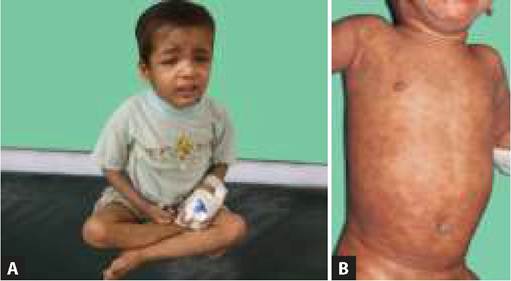
Fig. 10.10: Mumps: (A) Unilateral parotitis; (B) Bilateral parotitis
commonest site of clinical disease, and other tissues. About 40% of infections are subclinical.
Clinical manifestations: After an incubation period of ~17-18 days, mumps presents with:
• A brief prodromal phase (1-2 days), which is less prominent in younger children and includes moderate fever, malaise, pre-auricular pain and difficulty in chewing.
• Shiny, tender, parotid swelling after 24-48 hours, which gradually increases in size for next 2-3 days. Parotid enlargement is bilateral in 75% cases, though one side usually involve earlier than other side. Severity of parotid enlargement may vary from: (a) fullness of pre-auricular region, (b) lifting of ear pinna, (c) obvious parotid swelling, and (d) bull-neck appearance in bilateral parotitis (Fig.
10.10). Opening of the Stensen's duct, opposite upper second molar, is red and swollen. Submandibular and submaxillary glands may be mildly enlarged.• Convalescence begins after 3-4 days of swelling with complete recovery within 7-10 days.
Complications are rare (lt;1%), most important being aseptic meningitis, meningoencephalitis, orchitis and pancreatitis (Table 10.35).
Aseptic meningitis is the commonest complication of mumps in childhood in 8-10% cases, though ~90% of them are asymptomatic, except CSF pleocytosis. Symptomatic cases present with headache, photophobia and neck stiffness within few days of parotid swelling usually to recover spontaneously within a week.
Meningoencephalitis, is relatively less common and may develop either in acute phase due to direct viral invasion or after 2-3 weeks of disappearance of swelling due to post-infectious demyelination.
Orchitis is more common in adolescents or adults (~25%), presenting as sudden testicular pain and swelling during 2nd weeks of parotid swelling, which improves spontaneously in 3-4 days. Testicular atrophy may occur in ~30% cases, though sterility is uncommon except in bilateral orchitis.
Pancreatitis presents in ~4% cases, with acute abdominal pain during 2nd week, though sub-clinical pancreatitis with gt;3-4 fold rise in serum amylase level
TABLE 10.35: Complication of Mumps
Common
• CNS : Meningoencephalitis, aseptic meningitis
• Gonadal : Orchitis, epididymitis and oopheritis
• Pancreatitis
Uncommon
• CVS : Myocarditis, endocardial fibroelastosis
• CNS : Transverse myelitis, sensory-neural deafness
• Ocular : Dacroadenitis, uveokeratitis
• Others : Arthritis, nephritis, thyroiditis
Antenatal infection (mumps embryopathy)
• Abortion, stillbirth, low birth weight
• Endocardial fibroelastosis
• Aqueductal stenosis and hydrocephalus
is more common. Mumps virus has been proposed to infect pancreatic beta cells to trigger onset of juvenile diabetes mellitus.
Antenatal mumps infection may be associated with abortion, stillbirth or mump's embryopathy-characterized by intrauterine growth retardation, endocardial fibroelastosis and hydrocephalus.
Diagnosis is usually clinical, but may be confirmed by IgM-ELISA test, or viral cultures from saliva, CSF and urine. Serum amylase levels are raised in proportion to the size of swelling and normalize within 2-3 weeks.
D/D of mumps include other causes of parotitis like: (a) acute suppurative parotitis, usually due to staphylococci,
(b) salivary calculus, (c) parotitis due to other viruses, e.g. HIV, coxsackievirus etc., (d) recurrent allergic parotitis; or other causes of neck swelling, e.g. (e) pre-auricular lymphadinitis.
Treatment: There is no specific antiviral therapy and treatment is entirely symptomatic including antipyretics, e.g. paracetamol, bed rest, maintenance of oral hygiene with warm-saline oral washes and soft-liquid diet. Cases should avoid contact with others during infectivity period (~10 days after onset of swelling) to prevent the spread.
Prevention: Routine immunization with single-dose, live-attenuated, combination MMR vaccine at the age of 15-18 months has gt;97% protective value. MMR is not yet included in National Immunization Schedule due to lack of sufficient data on disease and severity burden of mumps. However, IAP recommends three doses of MMR at 9 months, 15-18 months and 5-6 years to all children, the last dose to prevent outbreaks in older age groups as antibody titers tend to decline over time. Only two doses of MMR, given 8 weeks apart, are enough if the first dose is given after 12 months of age.
10.21
More on the topic MUMPS:
- TONGUE DISORDERS
- Immunizations
- Appendix B Infection Control and Isolation Recommendations
- False Cause: Post Hoc Ergo Propter Hoc
- CARDIOMYOPATHIES
- CHAPTER 2 Smallpox
- Agrawal M.. Textbook of Pediatrics. 3rd ed. — CBS Publishers,2025. — 973 p., 2025