Barbering and Trichotillomania
Another form of abnormal repetitive behavior is impul- sive/compulsive behavior, which is frequently manifest among mice as hair plucking or barbering. It is also known as the Dalilah effect or trichotillomania.
The driving forces behind this abnormal behavior are highly complex, including dominance, genetic background, social learning, diet, and boredom. It is more common among females, but both sexes can be involved. B6 and A2G strains are especially prone to this disorder. Patterns of hair loss vary and seem to be dependent upon the “style” preferences of the barber, which is usually only a single mouse within a cage. A common manifestation is loss of vibrissae and facial hair (Fig. 1.97). Muzzle alopecia must be differentiated from hair loss due to abrasion on cage feeding devices. Hair plucking can be selfdirected, with hair loss on the ventral abdomen. Another common pattern is dorsal alopecia in B6 mice when the barber is conspecific (Fig. 1.98). In addition, cutaneous excoriation, inflammation, and terminal gangrene of the tail have been found to be manifestations of social interactions among weaning-age male and female C3H mice. As healing occurs, small pale scars are visible on the tails of the pigmented mice. This entity is related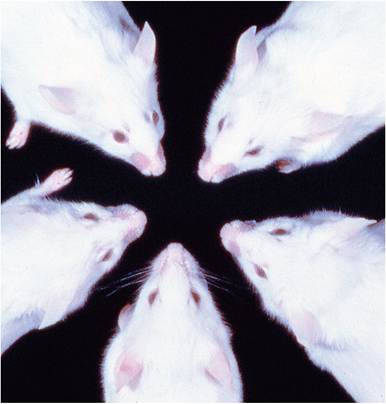
FIG. 1.97. Mice illustrating barbering of vibrissae. Note the culprit with the intact vibrissae (bottom center).
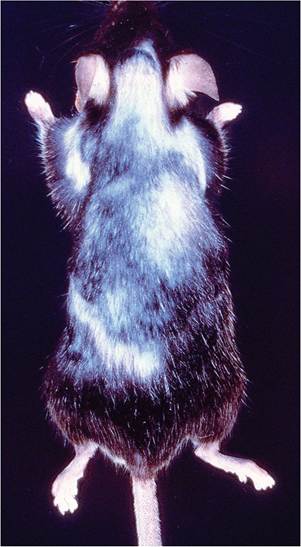
FIG. 1.98. Dorsal alopecia in a B6 mouse due to conspecific hair plucking.
to high cage population densities. Collectively, these behavioral vices are not only disfiguring to the pelage but are also a major initiator of ulcerative dermatitis (see Staphylococcus “Staphylococcus spp. infections”). Finally, barbering can also occur in which the hair is clipped rather than plucked. Typically, there is a well-defined, clipped edge to the affected fur.