Mucometra/Hydrometra
Mucometra has been observed in a variety of strains, including BALB/c, B6, and DBA. It is most commonly encountered among large groups of presumably pregnant mice in which a few never whelp.
The abdomen is often distended. One or both uterine horns are dilated (Fig. 1.123). Some mice have congenital imperforate lower reproductive tracts or persistent vaginal septa, while in others the cause cannot be determined. Mice with an imperforate vagina frequently present with bilobed distention in the perineal region, resembling a scrotum. Imperforate vagina with mucometra or hydro- metra appears to be inherited as a complex recessive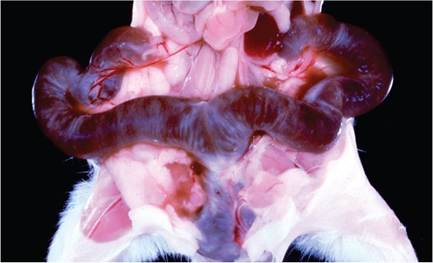
FIG. 1.123. Congenital mucometra in a young adult mouse. The uterine horns are distended with mucoid material.
genetic defect. Differential diagnoses include pyometra (which may occur secondary to mucometra), retained fetuses, and neoplasia. The uterus of mice (and rats) normally contains a small amount of fluid during certain stages of the estrous cycle.
Cystic Endometrial Hyperplasia
Cystic endometrial hyperplasia of endometrial glands is frequent in aged female mice. It may be associated with secondary bacterial pyometras (e.g., K. oxytoca).
Adenomyosis
Adenomyosis may be encountered as a relatively rare incidental finding in female mice. There is glandular invasion of the myometrium, often extending to the serosa (Fig. 1.124). It must be differentiated from neoplasia.
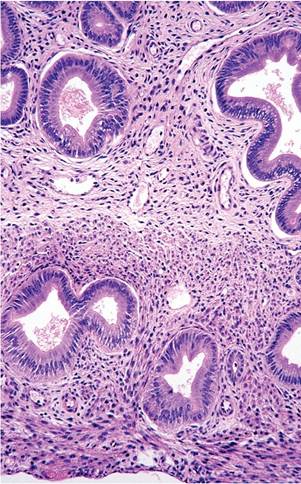
FIG. 1.124. Uterus of a mouse with adenomyosis. Note invasion of uterine glands into the myometrium.