Muscles of the head
Muscles of facial expression
The muscles of facial expression are intrinsic muscles (hat move the lips, cheeks, nostrils, eyelids and external ears. A number of muscles arc responsible for these movements, all of which are innervated by lhe facial nerve (cranial nerve VII).
The tone in lhe muscles of the jaw responsible for closure. i.e. the temporalis and lhe masseter, are what keeps the mouth closed when it is not in use.
Muscles of the eye (Fig. 4.5)
ular muscles, are
res
The extrinsic muscles of lhe eye. also called the extraocnsible for moving the eye
within its bony socket. These muscles are:
Four RECTUS muscles: dorsal rectus, ventral rectus, medial rectus, lateral rectus - these four muscles all insert on the sclera of lhe eyeball near the
BF
equator’, at the surface that corresponds to their name. i.e. lhe dorsal rectus muscle inserts on the upper part of the sclera. Their name also reflects
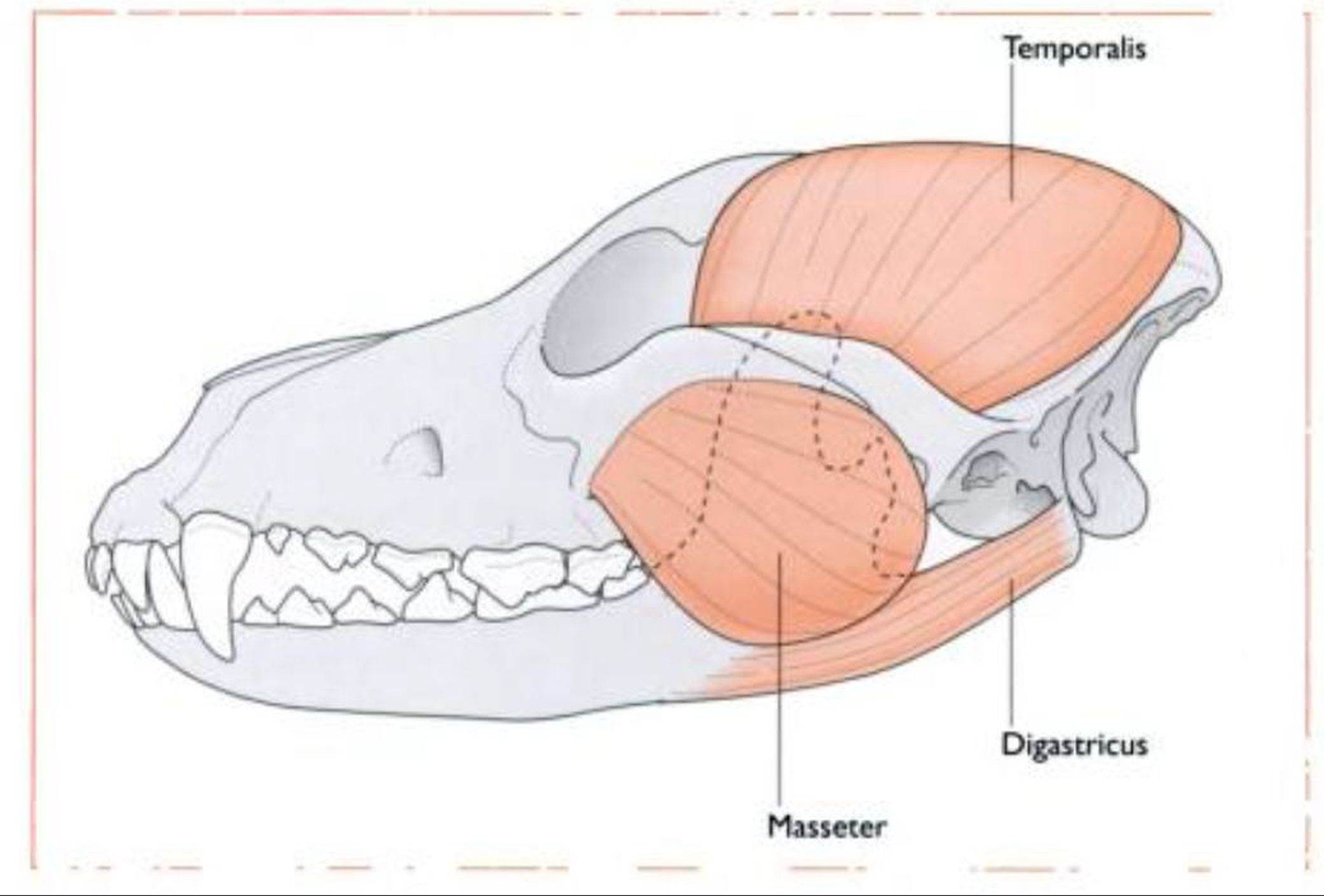
Fig. 4.4 The muscles of mastication
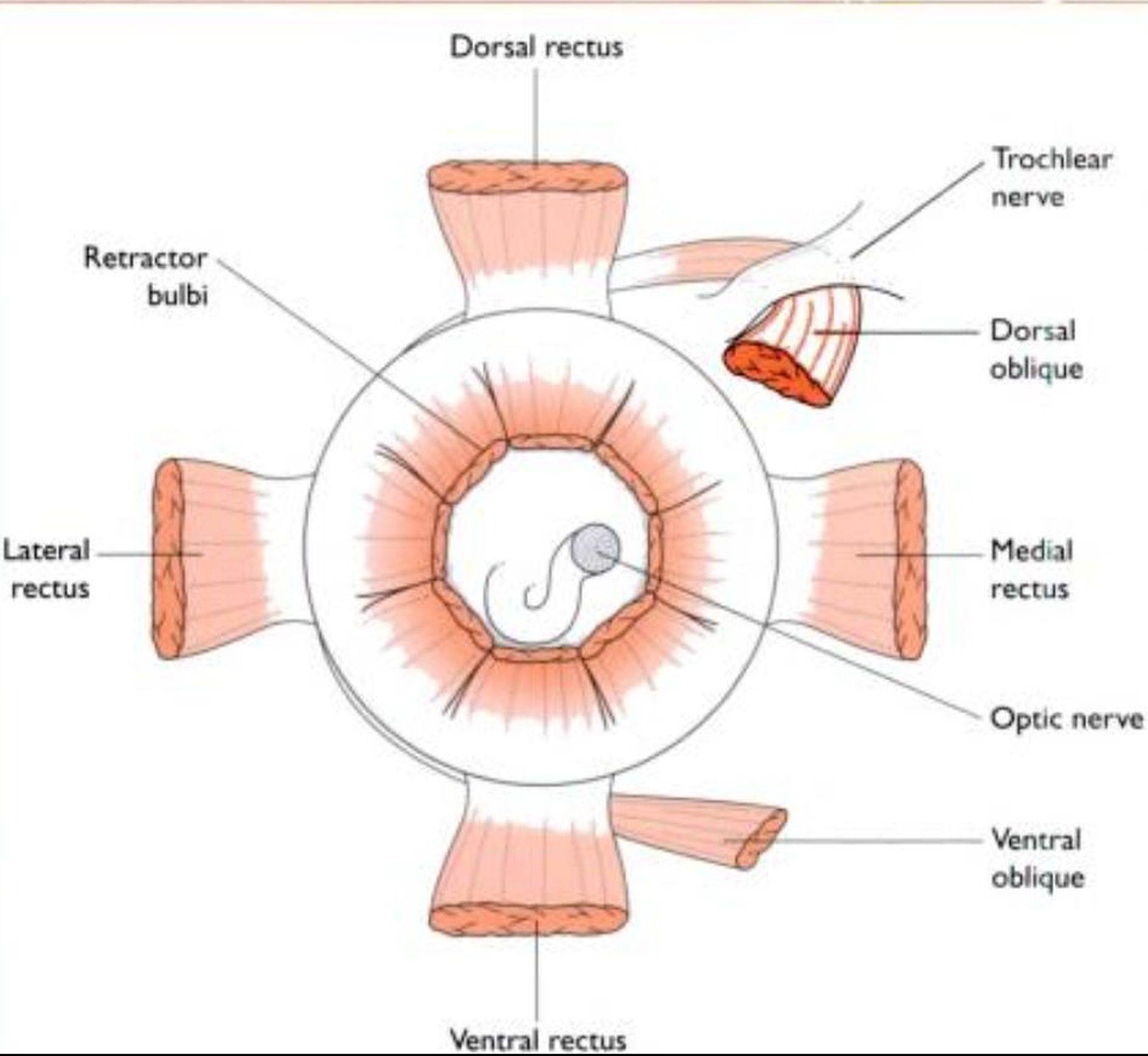
Fig. 4.5 ' he pc tιcxv; of the extraoouUr muscles, √∣ethis is a triangular sheet of muscle that originates from the dorsal midline from C2 to C9 and inserts on lhe spine of the scapula action - draws lhe leg forward and protracts the limb
Pectorals - these muscles run from the ribs and sternum and insert on the humerus λcπon - adduct the Iirnb and hold the forelimb against the body wall
Lnissiinus ιlorsi - this is a large fan shaped muscle, which has a very broad origin on the thoracic spine and inserts on the humerus action - retracts the Ibrelimb
Bnu IiiocTphuliciis - this muscle runs from the base of the skull to an insertion on the cranial aspect of the humerus
action - when the limb is on the ground, it Ilexes the neck and bends the neck laterally: when the limb is not taking weight, it draws the foreleg forwards or protracts the limb.
Intrinsic group
The intrinsic muscles of the forelimb all originate and insert on the forelimb. They include:
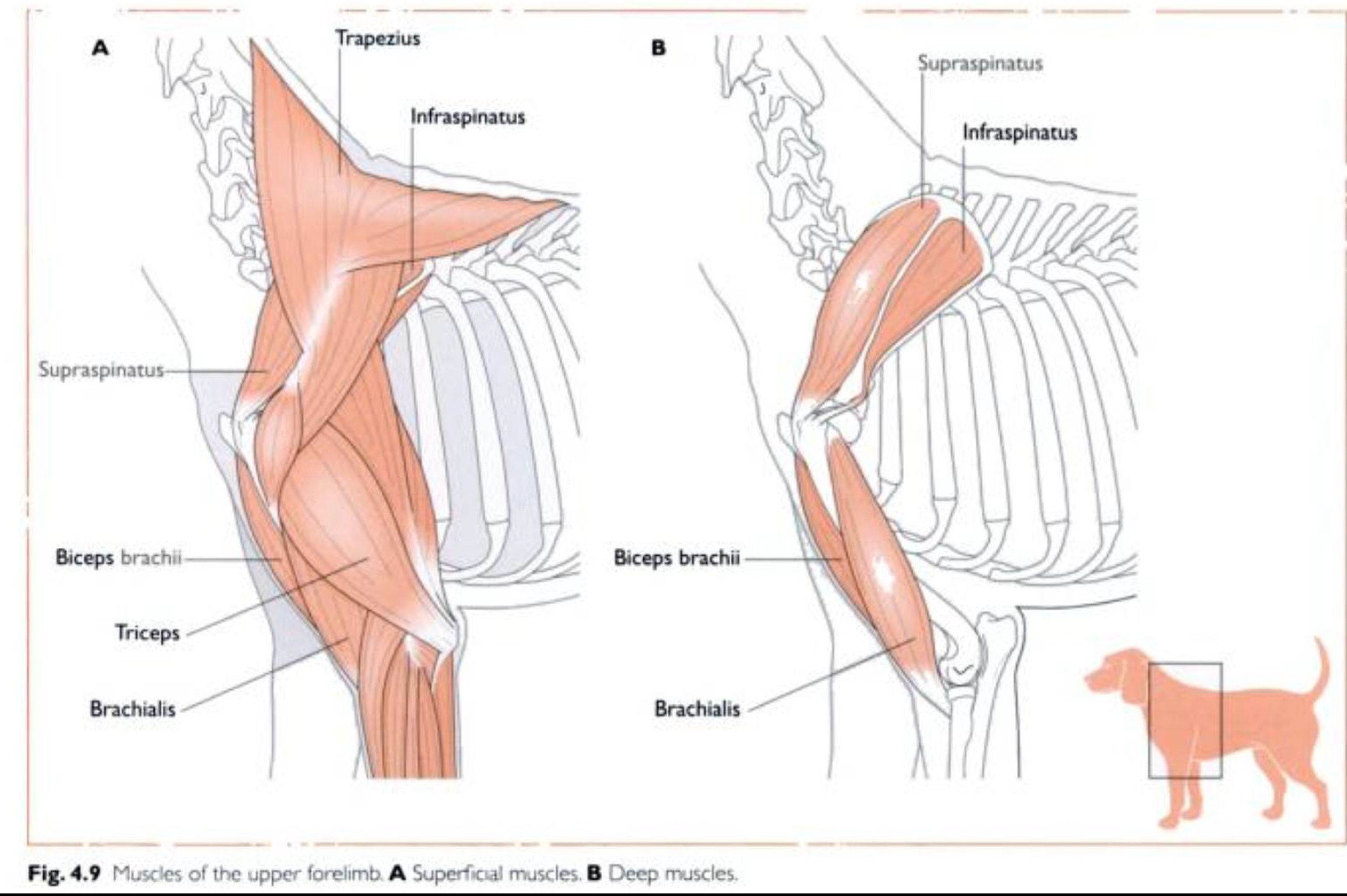
Suprdspiiiutus - arises from and tills the supraspinous fossa of the scapula and inserts on the greater tubercle of the humerus action - extends the shoulder and stabilises the shoulder joint
Inlraspinatns- arises from and tills the infraspinous fossa of the scapula and inserts on the greater tubercle of the humerus
action - helps to stabilise the shoulder joint and Ilexes the shoulder joint.
Elbow region tl∙,ig. 4.10).
Triceps brachii - this muscle has four heads with separate origins. Three of the heads originate from the proximal humerus and the fourth head originates from the scapula. However, they all share a common insertion on the olecranon of the ulna. Λ bursa lies between the bone and the tendon to prevent friction
ACTION - extends the elbow joint
Biceps brachii-originates from the supraglenoid tubercle of the scapula and inserts on the radius and ulna
action - Ilexes the elbow joint
Bruchiulis - this muscle originates from the humerus and inserts on the radius and ulna action - Ilexes the elbow joint
Corpus and digits
There are many muscles responsible for Hexing and extending the carpus and the digits. The muscle bellies arc grouped around the radius and ulna and communicate with the digits by means of long tendons.
The main Ilexors and extensors are:
Tuv carpal extensors - originating from the humerus and inserting on Ihecarpals: they run in front of the lower limb and fcκ>l
Tuv digital extensors - originating ITom the humerus and inserting on the third phalanx: they run in front of the lower limb and fl
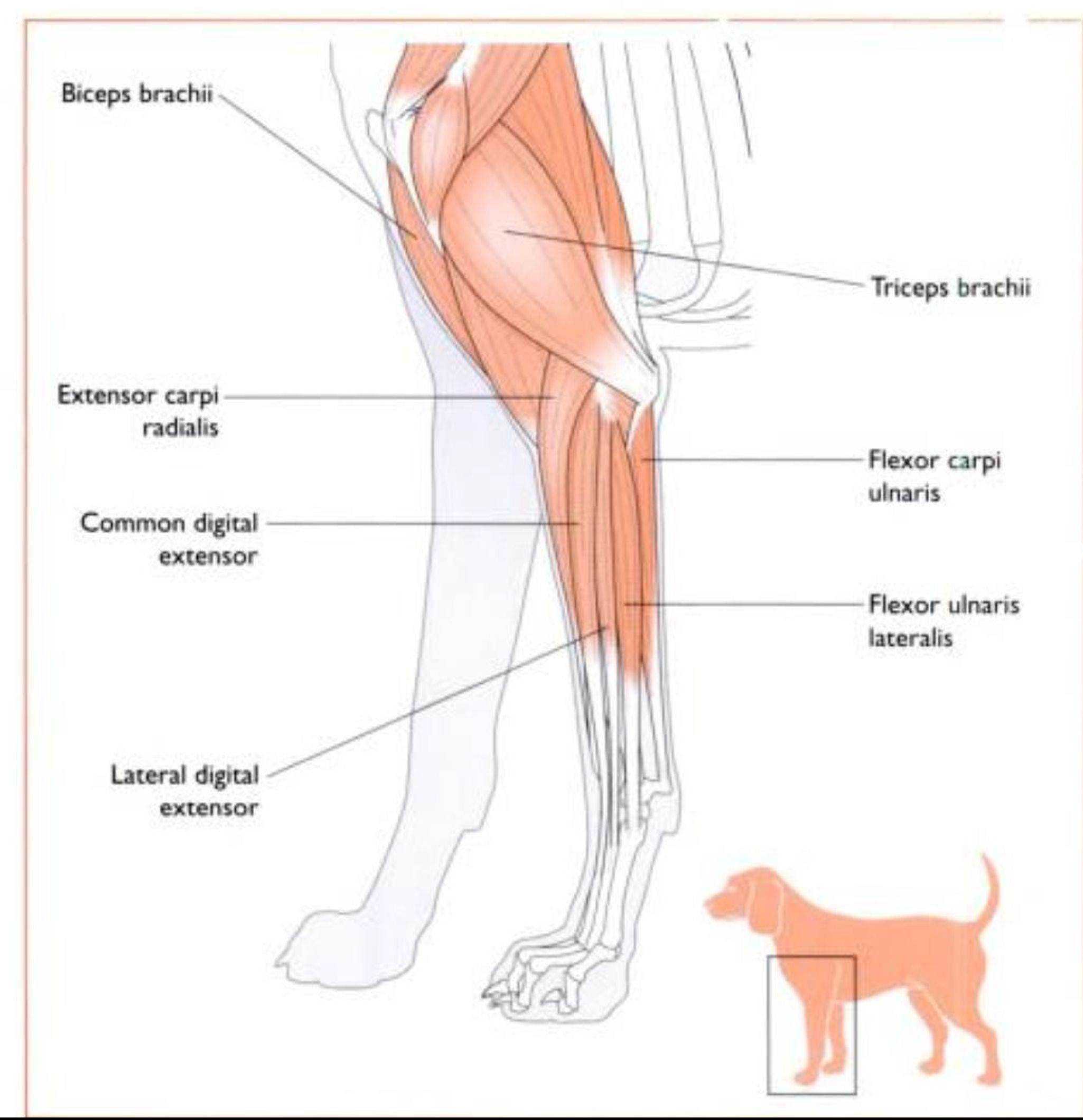
Fig. 4.10 Some of the muscles of the lower Corelimb
Two carpal flexors - run behind the carpus and fl Two ιliρi tillflexors t he superficial diyital flexor inserts on the second phalanx and the deepdiι∣ital flexor inserts on the third phalanx.