Pinnal Trauma
The most common causes of pinnal trauma are pruritus or fight wounds; they also may be related to common dog habits such as earth digging and chasing other animals (Figure 12-3).
Complications at the surgery site, including infection and tearing of the stitches, are common where ear cropping is still allowed. Pinnal trauma is usually associated with prolific bleeding. Routine wound cleaning and topical hemostatic application (peroxide, epinephrine, or collagen) are usually sufficient treatment. In severe cases, cauterization under anesthesia and/or compressive bandage might be necessary. Due to the thin edges of the pinna, laceration of the ear margin can be a permanent sequel.Dermatophytosis is another possible consequence, which is often associated with a history of cat fighting or soil digging. Both cat claws and soil can be a source of various dermatophytes. The trauma associated with contact facilitates the inoculation of the fungi. This may happen during a fight or if the pinna is scratched with a soil-covered paw during digging or shortly after.
Blood sampling from the ears of dogs and cats has been recently developed in order to monitor blood glucose. Pinnal lesions may result from frequent sampling. The local ischemia associated with the vascular problems commonly associated with diabetes mellitus probably predisposes diabetic patients to pinnal complications.
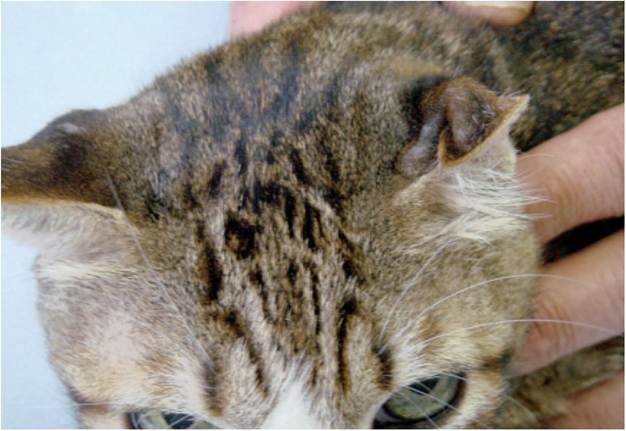
Figure 12-2
Fibrosis and folding of the pinna of a 13-year-old cat with a history of aural hematoma that was left untreated.
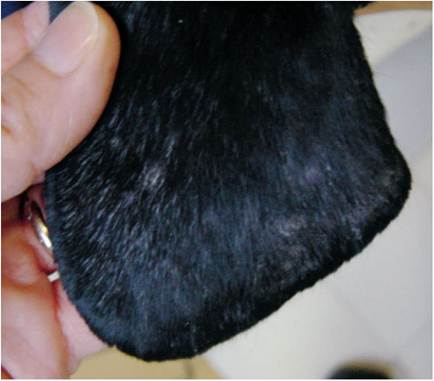
Figure 12-3
Hypothrichosis due to intense ear scratching caused by otitis externa.
More on the topic Pinnal Trauma:
- Symmetrical Pinnal Alopecia
- Trauma
- CHILDHOOD TRAUMA
- Head Trauma
- Concept of trauma
- Trauma
- Nonaccidental Trauma
- Literature and Art, Nostalgia and Trauma
- Quantifying Violence: Assessing the Prevalence of Trauma
- Diaphragmatic disorders are usually congenital, though acquireddefects due to direct trauma or neurological injury (diaphragmatic palsy) are not uncommon.
- In mental life nothing which had once been formed can perish - that everything is somehow preserved and that in suitable circumstances... it can once more be brought to light... on condition that the organ of the mind has remained intact and that its tissues have not been damaged by trauma or inflammation.
- Pruritic Dermatoses
- Most skin diseases may affect the pinna in dogs and cats, but other parts of the body can also be involved.