Segmented Filamentous Bacteria
Segmented filamentous bacteria (SFB) are Gram-positive spore-forming commensal organisms related to Clostridium spp. that typically populate the terminal small intestine of many species, including every species covered in this book.
They attach end-on to enterocytes (Fig. 1.64), typified by actin polymerization similar to pedicle formation of other attaching and invasive intestinal bacteria. It remains unclear if SFBs from various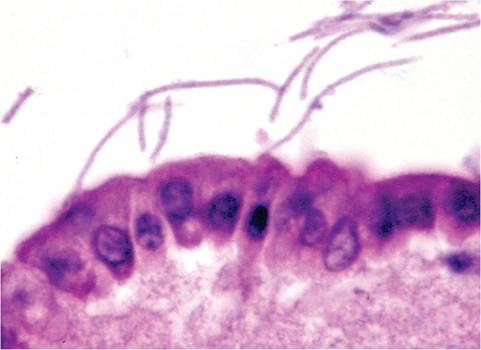
FIG. 1.64. Ileal mucosa of a normal mouse, featuring segmented filamentous bacteria, with characteristic end-on attachment to the brush border.
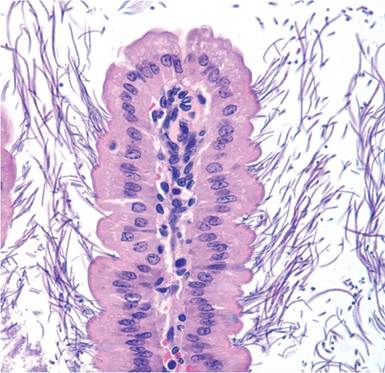
FIG. 1.65. Ileal villus of an immunodeficient mouse with overgrowth of segmented filamentous bacteria. Note absence of inflammation or hyperplasia. (Source: C. Brayton.)
hosts represent a single species, but cross-infection studies with ileal homogenates between mice and rats suggest host species specificity. In spite of the fact that SFB are members of the commensal gut microbiome, SFB are considered by some to be undesirable because they elicit physiological and immune responses. Normal maturation of intestinal mucosal proliferative kinetics and function is dependent upon acquisition of commensal gut microflora, including SFB. Overgrowth of SFB has been noted in some GEM (Fig. 1.65) without evidence of mucosal damage or inflammatory response.