Belgium
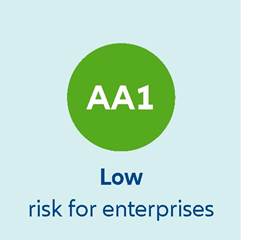
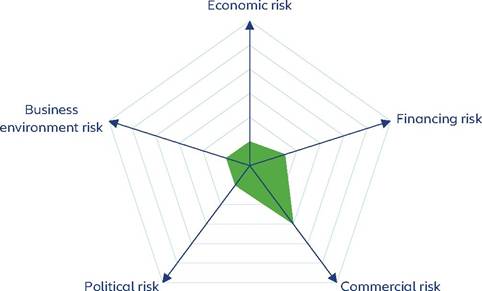
Growth to moderate further before resuming in 2025
| GDP | USD578.6bn (World ranking 25) |
| Population | 11.7mn (World ranking 80) |
| Form of state | Constitutional parliamentary monarchy |
| Head of government | Alexander De Croo (PM) |
| Next elections | 2024, Legislative |
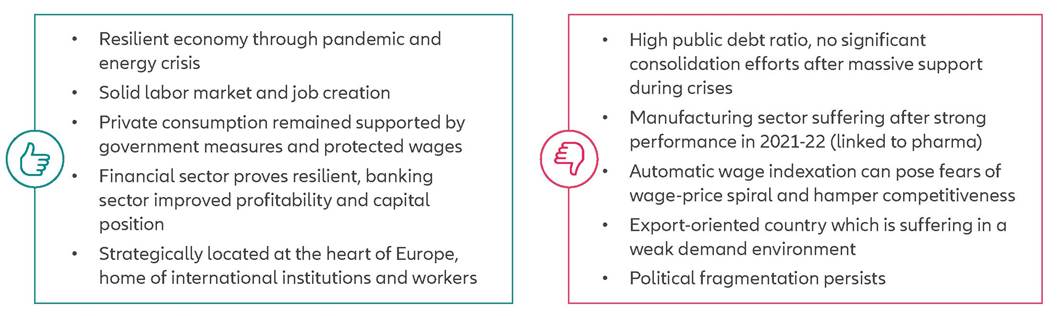
Strengths & weaknesses
Economic overview
Economic activity will continue to face headwinds in 2024
Belgium's economic activity expanded only slightly since H2 2022, after having recovered strongly from the pandemic in 2021 and early 2022 (after the plunge of -5.7% in 2020).
However, GDP proved quite resilient in 2023 while multiple challenges were affecting the Eurozone and grew above the bloc's average. Private consumption and investment were the main drivers of growth over the last quarters. Indeed, household spending remained solid thanks both to government support during the energy crisis and to the wage indexation which protected consumers' purchasing power. Despite being volatile over the recent quarters, investment also expanded and is now 4.3% above pre-pandemic levels.Inflation continued to ease after having touched its highest level (12.3% y/y) in October 2022 since August 1975. Downward price dynamics were still driven by strong energy base effects; inflation even dipped below zero in Autumn
2023. Some volatility linked to energy prices is expected to remain in H1 2024. Also, core inflation is decelerating but remains well above the ECB's target of 2%.
The declining trend of prices provides some relief to the ongoing fears of a wage-price spiral, as Belgium is one of the few Eurozone countries to have an automatic wage-indexation system for most incomes. Also, increasing savings rates and intentions should provide some support to ease the pace of wage growth.Looking forward, declining inflation and recovering consumer confidence should provide some support to private consumption and household investment, to resume in H2
2024. However, we expect the slowdown of trade to persist in H1 given weak global demand. Therefore, we see activity to be subdued in the first quarter of the year and then to gradually pick up. We expect GDP to expand +0.8% in 2024, after 1.4% in 2023.
The labor market remains very tight, the unemployment rate is low and is expected to stay around the current rate of 5.6%. Belgium's vacancies rate is still the second highest in Europe, still at 4.7 at the end of Q3 2023.
Fiscal outlook remains challenged in the medium term
The pandemic and energy crisis increased already-high public debt and structural fiscal deficits; Belgium's public finances remain a hurdle for the medium run outlook. The public deficit is expected to stay around 5.0% of GDP in the forecast horizon and public debt is expected to stay around 107% of GDP also in 2024-25. The increase in nontemporary current expenditure over 2022-2023 is driven by the automatic indexation of public sector wages and social benefits, but also by rising aging costs and by permanent measures taken by the government during the pandemic (i.e., increase in the minimum pension and health care sector wages).
The manufacturing sector will recover gradually from the setback in 2022 and 2023. Indeed, Belgium has many energyintensive companies which suffered from higher energy prices and labor. Also, the pharmaceuticals sector - which accounts for more than 20% of total production has been normalizing after the “artificially inflated” 2021 growth due to the massive production of Covid-19 vaccines.
But output also fell sharply in several other industrial sectors (the metal sector, which consumes a lot of energy, reduced its output by 15% y/y). We see industry to gradually in 2024 recover as demand improves and costs decline further.The NGEU funds could provide some cushion to the outlook in the coming quarters. The 35 related reforms are intended to address bottlenecks to lasting and sustainable growth, while the 105 identified investments are targeted to accelerate the transition towards a more sustainable, low-carbon and climate-resilient economy, to maximize the benefits of the digital transformation and to ensure social cohesion. The plan also intends to improve connectivity within the country, boost labor market performance, as well as the innovation capacity of the economy, and make public spending more efficient and sustainable. Allocated funds amount to EUR5.9bn in grants.
Belgium remains an extremely attractive place to invest; it ranks 21st among the most competitive nations in the world, according to the International Institute for Management Development classification. The country is strategically situated in Europe and is home to many EU institutions, NATO and numerous multinational company headquarters. It has an international rail, air and shipping infrastructure that make it one of the best locations for industry and logistics.
More on the topic Belgium:
- Belgium
- INTRODUCTION
- Bankruptcy
- Introduction
- Bibliographical Essay
- Landscape patterns affect ecological processes
- Introduction
- The striking display of power in the ‘scramble for Africa’ and the ‘scramble for Asia’ remains one of the most unusual chapters in world history.
- Introduction
- Korablev and the Vinnitsa NKVD