Malta
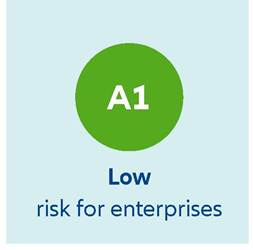
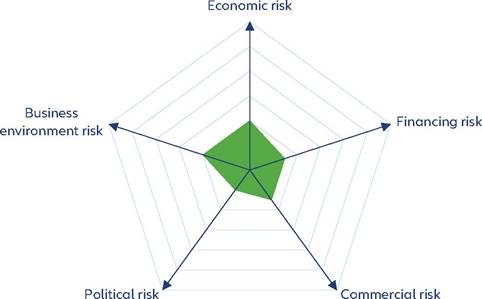
Outstanding growth will normalize, but still well above the Eurozone average
| GDP | USD17.8bn (World ranking 125) |
| Population | 0.5mn (World ranking 172) |
| Form of state | Republic |
| Head of government | Robert Abela (PM) |
| Next elections | 2024, General |
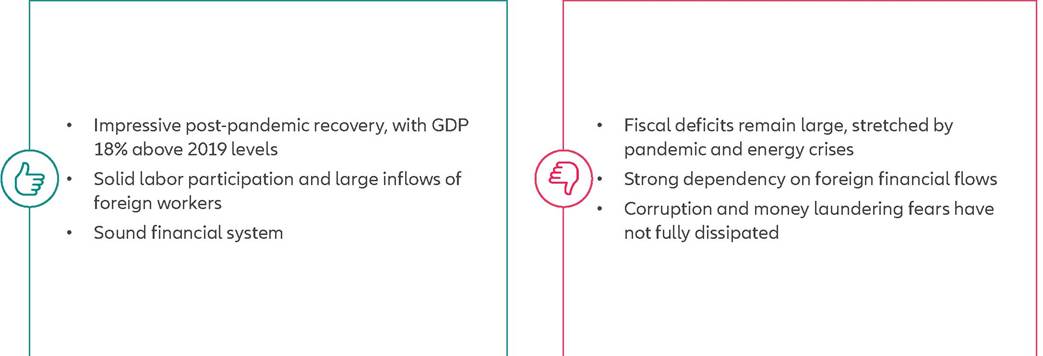
Strengths & weaknesses
Economic overview
The economy continues to recover, despite prolonged challenges
The post-Covid-19 GDP rebound was strong both in 2021 and 2022 (+12.4% and +8.2% respectively) and continued during 2023 (we forecast +6.1%) despite multiple challenges affecting the Eurozone.
The economy showed rapid growth in both private and public consumption, as well as in investment. Export of services quickly rebounded thanks to strong tourism activity, both in terms of the total number of visitors and tourism expenditures. However, GDP growth is expected to slow down in 2024 (despite remaining well above Eurozone average) to +2.5% and then to +1.6% in 2025. Inflation continues to decelerate after the 2022-2023 spike. Malta saw a dip in inflation at the end of 2023, but official statistics show it was still well above the Eurozone average. Declining energy prices are driving the downward trend but food prices continue to rise.The general government deficit-to-GDP ratio is estimated to have declined only slightly to around 5.0% of GDP in 2023. We also expect the government balance to narrow a bit further in 2024-2025.
Fiscal support to shield households and firms from higher energy prices reached almost 7% of GDP. The government has mandated Enemalta, the (67%) state-owned energy provider in the country, to freeze prices at their 2014 level while compensating the firm for the losses the price cap implied due to the increasing cost of energy imports.To ensure growth, structural reforms are needed
Malta's economy is oriented towards services (tourism and financial services) but also towards exports in the manufacturing sector, particularly in electronics and pharmaceuticals. The onslaught of the pandemic has severely underlined the need for structural reforms, notably (i) investment in research and development (R&D) and (ii) improvement of the governance framework. Increased investment in R&D is needed to boost productivity and attract human capital to fill the skills gap. The improvement of the governance framework is also essential to ensure the increase and maintenance of foreign investment flows and the stability of the country's financial situation.
Malta's Recovery and Resilience Plan (RRP) will help to address some of the structural policy challenges. The RRP had an initial value of EUR344.9mn, while its amended plan is worth EUR336.3mn. Under the EU's Recovery and Resilience Facility (RRF), at the core of the NGEU instrument, Malta's RRF grant allocation decreased from EUR316.4mn to EUR258.3mn. In April 2023, Malta submitted a request to amend its NRRP, to which it added a new REPowerEU chapter with an additional grant allocation of EUR30mn. It also requested to transfer a portion of its share of the
Brexit Adjustment Reserve to its plan (EUR40mn. The plan includes the measures to help the country's green transition, accelerate the digital transition (primarily focusing on the public sector), increase the resilience and sustainability of the health sector and address challenges in education, labor markets, pension systems and the judiciary system.
The implementation of the plan is underway and Malta requested the first payment in December 2022.Business environment and political developments
Malta was in the bottom of the first half of the 2020 World Bank Doing Business ranking: 88th out of 190 economies. The country achieved top rankings in enforcing contracts, trading across borders and protecting minority investors. In 2020, the country improved the reliability of its electricity supply by upgrading its grid and setting up a grid-operations control center. In June 2022, the Labor Party that has ruled the country since 2013 won the general election. In January 2020, prime minister Joseph Muscat stepped down as members of his government and staff were implicated in the murder of an investigative journalist. He has since been replaced by Robert Abela. The government will continue to face challenges including concerns over good governance, criticism over the “golden passport” scheme and the high cost of living.
More on the topic Malta:
- Malta
- Allianz Research. Country Risk Atlas 2024: Assessing non-payment risk in major economies. Allianz,2024. — 179 p., 2024