Paraguay
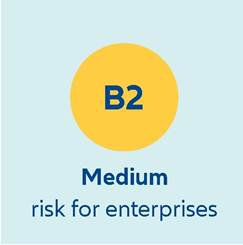
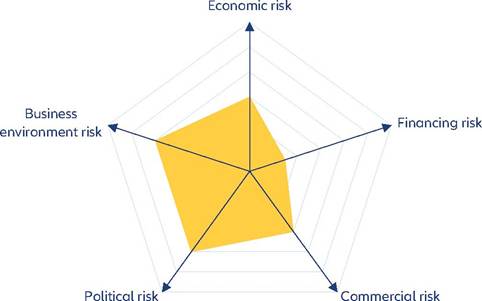
Right policies in place and growth path ahead
| GDP | USD41.7bn (World ranking 97) |
| Population | 6.8mn (World ranking 107) |
| Form of state | Constitutional Republic |
| Head of government | Santiago Pena (President) |
| Next elections | 2028, Presidential and legislative |
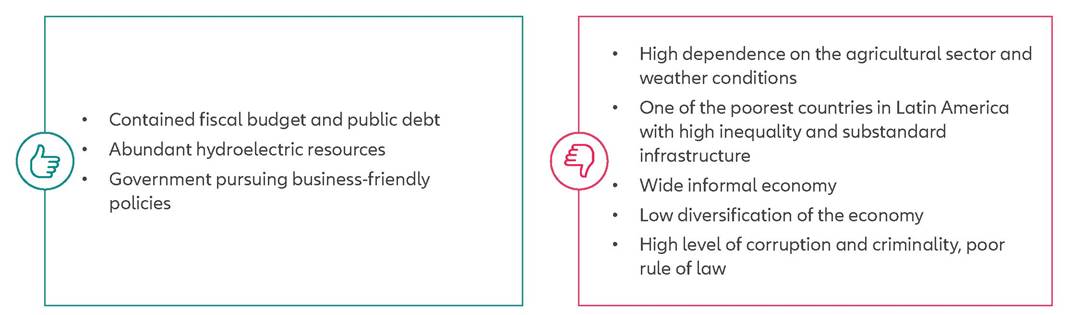
Strengths & weaknesses
Economic overview
Economic activity to pick up
Paraguay is a small South American economy, accounting for 0.67% of total Latin American and Caribbean GDP in 2019.
It recorded average economic growth of +2.8% from 2012 to 2022, compared to the +1.9% average for Latin American countries. Despite this growth and although the poverty rate has been falling almost continuously for the past 20 years, around a quarter of Paraguay's population is still considered poor, according to national standards. Indeed, Paraguayan society is marked by inequality: In 2008, 2.5% of the population owned 85% of the land in this highly agricultural economy.
Paraguay was fairly resilient during the Covid-19 pandemic. It entered a recession in 2019 (-0.4% GDP growth) and remained in recession in 2020, but with the lowest GDP contraction rate (-0.8%) of the region. It then rebounded in 2021 (+4.2%). However, a severe long-lasting drought in 2022 brought economic growth to a barely positive +0.2%. In 2023, the end of the water crisis should benefit agricultural production and enable the rebound of hydroelectrical energy - notably thanks to the Itaipu dam, shared with Brazil, which is the subject of renegotiations - and fluvial trade, which is crucial for a landlocked country like Paraguay.
We therefore expect real GDP to grow by +4.5% in 2023. In the medium to long term, Paraguay should benefit from a stronger tendency towards public investment and resilient private consumption driven by disinflation, though it will continue to face the risk of adverse weather events that could threaten the economy.Given its dependence on imports and vulnerability to weather conditions, Paraguay was one of the Latin American countries most affected by global inflation in 2022 (9.8% on average). But strict monetary policy prior to the Russia-Ukraine war, along with a rapid hike following the conflict - setting the policy rate at an all-time-high of 8.5% - is likely to push inflation down to 5.2% in 2023. An easing cycle started in August 2023, but the Banco Central del Paraguay (BCP) is expected to remain cautious as core inflation remains above target and as lowering the policy rate too quickly would narrow the interest rate differential with the US and its 5.5% policy rate, worsening the depreciation of the guarani (PYG).
Appropriate policies amid external risk
Since passing the Fiscal Responsibility Law in 2013, the government has shown restraint in public spending. President Santiago Pena is expected to promote orthodox economic policies, aiming at fiscal soundness through the better collection of taxes and the revision of the pension system, but supporting small businesses through tax incentives and encouraging infrastructure improvement thanks to publicprivate partnerships. Targeted cuts and policies, notably geared towards fighting tax evasion, will allow the public deficit to shrink to 1.5% of GDP by 2026, thus meeting the legal target set out in 2013. Along with the growth of GDP, this should allow Paraguay to reduce its public-debt-to- GDP ratio. This peaked at 40.9% in 2022 - compared to an average of 69.5% in the region - and should decrease from this point on. Ensuring longer term soundness would entail making investments in infrastructure, health and education, with efficient and targeted spending that could be financed by increasing the taxation level.
Paraguay is the third least- taxed country in the region, with a tax-to-GDP ratio of 13.4% in 2020, compared to the regional average of 21.9%.Paraguay is highly reliant on trade. From 2018 to 2022, volume imports accounted for 35.4% of GDP on average (versus 28.6% in Bolivia, 23.5% in Uruguay and 13.8% in Brazil). Its high export levels allowed its trade balance to be 3.2% of GDP on average in volume from 2010 to 2019. But the Paraguay's export profile makes the country vulnerable to several risks, particularly since it is impacted by the El Nino-Southern Oscillation climate phenomenon. In 2022, Paraguay suffered a severe drought, which impacted the water level of rivers, the electricity production of dams and its crops. As a result, soya seeds exports, which represented 28% of total exports in 2021, dropped by -59% in 2022. Despite this vulnerability, Paraguay's external position appears to be improving: higher commodity prices should prop up export gains in the medium term and the current-account deficit is predicted to decrease to about 1.5% of GDP by 2027, while the country sits on good international reserves.
Fragile business environment; results of the elections have ensured political stability
Paraguay's business environment remains weak. The 2022 Heritage Foundation's Index of Economic Freedom ranked Paraguay 73rd in the world and 17th in the region. It has an outstanding score for its low tax burden, but all the other indicators report ambiguous to deleterious situations. In particular, government integrity is particularly low, as well as judicial effectiveness and labor freedom. The World Bank's 2022 Worldwide Governance Indicators survey placed it 142nd with regards to rule of law and 175th in control of corruption, with its indicators significantly deteriorating. Paraguay seems more resilient when it comes to environmental challenges: our 2023 Environmental Sustainability Indicator placed it just below the first quartile in the list of countries.
It scored a perfect score regarding renewable electricity output, thanks to its broad production of hydroelectricity and emits less CO2 relative to its GDP. The consolidation of the fiscal position and the consistency of paraguay's policies should send positive signals to investors in the years to come.In April 2023, Paraguayans elected Santiago Pena to the presidency for a mandate lasting until 2028. Mr Pena of the Partido Colorado (PC) - which has ruled almost continuously since 1947 - intends to consolidate the country's fiscal position through orthodox economic reforms and cuts in public spending. The Partido Colorado also won a majority in both legislative houses, which will arguably allow the president to implement his reforms. But political instability will probably not vanish under Mr Pena's presidency. Tensions within the presidential party could emerge as ideological discrepancies exist. Moreover, trust in the political system has diminished by several events, including corruption scandals involving the former president and current head of the PC. Tensions could arise in case of a failure to renegotiate the Itaipu Treaty with Brazil as it is a sensitive topic for Paraguayans who hope for a more favorable deal - a probable outcome, considering President Lula's will to consolidate relations. With the next general elections to be held in 2028, political continuity in Paraguay is fairly assured in the medium term.