Panama
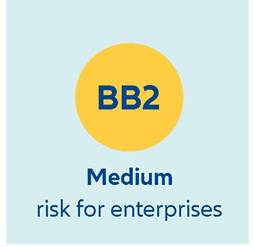
Challenging times
| GDP | USD76.5bn (World ranking 74) |
| Population | 4.4mn (World ranking 127) |
| Form of state | Constitutional Democracy |
| Head of government | Laurentino Cortizo (President) |
| Next elections | 2024, Presidential and legislative |
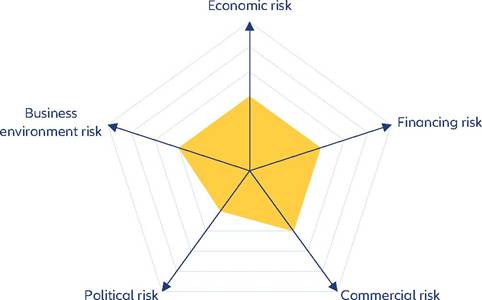
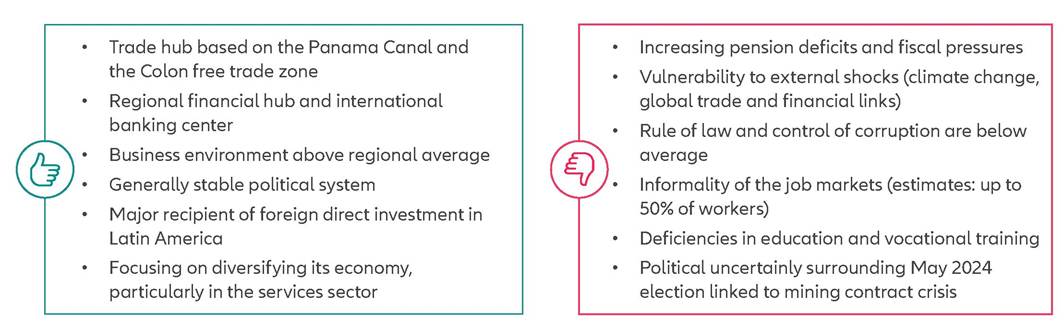
Strengths & weaknesses
Economic overview
Growth prospects hit by closure of huge copper mine
Panama is small open economy acting as a regional financial and logistical hub that benefits from the activity of the canal, the Colon free trade zone (CFZ) and a strong banking sector compared to peers.
Before the pandemic, it was the fastest-growing economy in Latin America, with average real GDP growth at +6%. Panama fully recovered from the 2020 recession in 2022, but we expect GDP growth will slow sharply in 2024 (to 3.0% from nearly 6% in 2023), as the closure of First Quantum Minerals (FQM), the Canadian operator of Cobre Panama (Central America's largest copper mine) will weigh on exports and investment. It is uncertain whether the government and First Quantum Minerals (FQM), the Canadian operator of Cobre Panama (Central America's largest copper mine) will strike a new deal over the coming months or whether FQM will pursue international arbitration.Panama's economy and exports will take a hit and mining royalties of USD375m per year (backdated to 2022) will not be paid. This will complicate the fiscal and financing outlook, although it was not explicitly included in the 2024 budget.
For the 2025-2028 outlook, we expect growth to exceed +4% as global trade recovers and the country's export-driven economy (driven by its trade logistics and financial services) significantly outperforms regional and global trends. At the same time, fixed investment is expected to rise, boosted by major infrastructure projects such as the USD4.4bn expansion of the Panama City metro, a USD1.5bn bridge over the Panama Canal and a USD1.2bn gas-fired power plant in Gatun. However, climate change looms as a long-term challenge, with the potential to disrupt the Panama Canal (a vital conduit for 6% of global trade) through increasingly unpredictable water levels affecting operations.Road blockades and supply-chain disruptions resulting from anti-mining protests in November lifted inflation to an estimated 3% at end-2023. Inflation will ease towards 2% over the 2024-28 forecast period, but there is a risk that an (increasingly likely) El Nino-related drought will hit local food supplies, driving up prices.
Pressure on the fiscal accounts
Panama's adherence to the Social and Fiscal Responsibility Law (SFRL) has helped stabilize its public finances postpandemic. However, increasing pension deficits and fiscal pressures pose challenges, potentially leading to missed deficit targets of 3%, 2% and 1.5% of GDP from 2023 to 2025. The government may need to raise taxes due to low tax revenue and the reluctance to cut public investment, especially during election times and amid economic deceleration. By September 2023, the fiscal deficit reached 4.8% of GDP. Public debt remained high at 57.5% of GDP in 2022, with a moderate expected decrease in the near future (around 50% in 2026).
Panama typically faces moderate current account deficits, which are anticipated to expand in 2023, largely due to rising oil prices, but are forecasted to narrow down to about 3% of GDP between 2024 and 2026. Despite the expected decline in copper exports in 2024 following the shutdown of the Cobre Panama mine, the long-term forecast for copper exports remains optimistic given the lack of clarity about the longer-term future of the mine.
Panama, a major recipient of foreign direct investment in Latin America, has been focusing on diversifying its economy, particularly in the services sector and continues to draw investment through its market-friendly policies and dollarized economy.Unusual period of political uncertainty could affect business environment
Panama's business environment is notably competitive, evidenced by its rankings in key international surveys. The Heritage Foundation's 2021 Index of Economic Freedom placed Panama 56th out of 185 countries, while the 2020 Doing Business Survey ranked it 86th. Despite this favorable status, the uncertainty surrounding the Cobre Panama issue has introduced a degree of political unpredictability, contrasting with Panama's reputation as a stable investment destination in Central America. The future of negotiations with First Quantum Minerals and potential new contract terms beneficial to the state remain uncertain, particularly in light of the upcoming general election and potential changes in administration.
Panama, traditionally stable by regional standards, is now grappling with political uncertainty ahead of a May 2024 general election. Recent opposition to a contract with First Quantum Minerals, concerning the significant Cobre Panama copper mine, has ignited social unrest and protests, particularly over issues of environmental impact and economic inclusion. A Supreme Court ruling deeming the contract unconstitutional has intensified this uncertainty, prompting President Laurentino Cortizo to order the mine's closure. While this move quelled immediate protests, the mine's long-term future remains in limbo. This turmoil underscores deeper issues of perceived government corruption and ineffective promises from the main political parties to combat it and enhance constitutional transparency. Despite President Cortizo's majority in the National Assembly, these compounding challenges suggest a complex political landscape and uncertainty as the next election approaches.
More on the topic Panama:
- Panama
- Security through Law and Order
- 48 Continents Divided, Oceans Conjoined
- Before They Were Brides
- Perseverance Versus the Quick Fix
- AppendixA: Data
- Imperial expansion and medical pessimism in the nineteenth century
- Changes Needed in the Law
- What is Collective Responsibility?
- Transboundary Issues