Art and diplomacy
Napoleon’s invasion of Egypt and the ambitious scholarly project that resulted from it— the Description de I’Egypte—ushered in, as Said has famously argued, the age of modern Orientalism in Western Europe.7 In the face of Western European imperial ascendancy, the Ottoman state ended its long-standing policy of isolationism.8 The late eighteenth century heralded a new age of intensive diplomatic engagement with Europe alongside modernising reforms in an effort to ensure the Ottoman Empire’s survival.
As M. fjukru Hanioglu has argued, in the face of declining Ottoman strength and recognition of the superior force of European powers, the art of diplomacy and the shoring up of strategic alliances became a crucial tool for securing the empire’s future. Napoleon’s attack on Egypt in 1798, for example, which destroyed Ottoman Sultan Selim Ill’s efforts to conclude a Franco-Ottoman alliance, instead necessitated temporary alliances with Russia and Great Britain. This event, as Hanioglu argues, underscored that ‘in order to survive [the Ottoman state] would have to harness European power and turn it against any potential attacker’.9 Just as visual culture played a role in articulating modern Orientalism in Western Europe throughout this period, it also played a key role for the Ottomans in an era of diplomatic engagement. Ottoman regal portraiture was the first artistic genre to be mobilised for these purposes.A key step within Selim III’s broader initiatives to open up the channels of communication with Europe was establishing permanent Ottoman embassies abroad, with the first opened in London in 1793.10 Ottoman royal portraiture was integrated within these new diplomatic initiatives. Although by no means the first Ottoman sultan to present his portrait to a European ruler, Selim III (r. 1789—1807) was the first to integrate the European convention of the diplomatic exchange of portraits with an extensive programme of reform and a new foreign policy of sustained engagement with the major European powers.
The first of his portraits intended for this purpose was painted by the Ottoman-Greek artist, Kostantin Kapidagli, and engraved in London by Luigi Schiavonetti. Within the vignette beneath the sultan’s portrait is a view of the Tophane Barracks that symbolise his military reforms of 1791—1792. This format was made with the intention of presenting the prints to Ottoman statesmen, European ambassadors and monarchs.11 The version of this print presented by Kapidagli to the sultan himself and now held in the Topkapi Palace archives is encased in a binding decorated with the empire’s holy cities, Mecca, Medina and Jerusalem, and its former and present capitals, Bursa, Edirne and Istanbul. Thus, through this format the sultan’s agenda of military reform, designed to ensure the maintenance of the empire’s territorial integrity, is framed and authorised by geographic signifiers of his dual political and religious roles as sultan and caliph.Selim III’s initiatives in the sphere of foreign relations set a pattern for the century ahead, one that can be characterised by intense processes of diplomatic manoeuvre and counter-manoeuvre. Diplomacy, with its emphasis on negotiation, move and countermove, also offers an important model for the role of Ottoman visual culture in this context. Such images became tools in what Richard Sennett has referred to as the ‘soft power’ of international diplomacy.12 This is particularly applicable to the sultans’ portraits in a period when the Ottomans deployed them within the political sphere. The years 1806—1807, for example, constituted a particularly energetic period for such portrait exchanges between the Ottoman Empire and France, as the two countries re-forged alliances.13 Engagement in diplomatic unions assumes some mutual ground that makes negotiation possible, a playing field on which the parties involved are seeking to gain strategic advantage and/or a willingness to find mutually accepted solutions to a common challenge.
In the case of the Ottomans throughout the nineteenth century, coalitions, primarily with Britain and France, shifted dramatically as the balance of power was renegotiated. Such relationships were underpinned by a shared interest in maintaining the Ottoman Empire, albeit prompted by very different motivations for each of the parties. For the Ottomans such strategic alliances often came with conditions attached in the shape of ‘demand[s] for administrative reform, often with the aim of improving the status of the Empire’s Christian subjects’.14The Young Album, the second project in which Selim III used prints to disseminate his representation abroad, proved to be the most enduring.15 As a reformer who relied on traditional solutions to strengthen the central power of the Ottoman state, Selim III’s approach was characteristic of the reform agendas of various sultans since the midseventeenth century. And yet he was also a transitional figure, a precursor to the major period of modernising administrative, legal and social reform from 1839 to 1876 called the Tanzimat, because of his willingness to engage with European practices and to consult with European advisers about these reforms.16
The Young Album is itself a transitional form. This album of deluxe mezzotint prints, a commission originally intended to contain portraits of the Ottoman Dynasty from its foundation up to the reigning Sultan Selim III, was based on paintings by Kostantin Kapidagli that were printed in London by John Young. It celebrates the Ottoman Dynasty with iconography that draws on earlier Ottoman precedents: for instance, the physiognomy and clothing particularly of the earlier sultans relies on eighteenth-century miniature precedents.17 Yet, as Günsel Renda has demonstrated, Kapidagli introduces European portrait conventions in features such as the standing, rather than traditional seated, enthroned, pose.18 He also introduces vignettes beneath each portrait, which signal the prestige of the respective sultans through symbolic reference to their achievements, either great military victories or contributions to public life. This was a diplomatic gift with a message via the historical narrative of the Ottoman Empire presented in these vignettes.
The first group of portraits represent the consolidation of the dynasty through military triumphs in the empire’s expansionary stage. Vignettes beneath each sultan’s portrait reference his martial victories and territorial gains.The history of the Young Album, however, speaks as much about the failures of the process of Ottoman diplomatic negotiation as it does about the efforts towards its success. As it turned out, the British printmaker was by no means simply a hired hand for the articulation of the Ottoman sultans’ history. The Album’s production became caught up in both internal and external political machinations. Because it was unfinished at the time of Selim Ill’s deposition in 1807, the printmaker sought permission from the Ottoman palace to recoup his costs by commercially releasing the Album in Britain. In a canny bit of marketing, Young realised the vicissitudes of the commission, which involved complex negotiations with the famed Ottoman palace, would make it more saleable in Britain so he included a preface about the secrecy and opaque network of access to his Ottoman patron, Selim III. He also added a dedication to his British patron, the Prince of Wales. Young appended histories of each sultan to their portraits. The individual histories of the last three sultans in particular are revealing in terms of a British historiography of the Ottoman Empire, confirming a trajectory of decline premised on inept, corrupt or thwarted leadership.
The vignettes, which were approved by Selim III, construct a visual history celebrating each sultan’s achievements, whereas Young’s written accounts reflect a contemporary British approach to Ottoman history. For instance, the vignette for Mustafa III’s portrait (Figure 24.2) celebrates his founding of an engineering school and commission of the Laleli Mosque (constructed in the new Ottoman Baroque style), whereas Young’s text accompanying the portrait states:
There is little to remark in the character of Mustafa.
The misfortunes of the empire appear to have been accelerated, not more by the inefficiency of the government, than from the indolence and inability of the Sultan; who seems to have been totally destitute of political talents.19Here the British author inscribed Ottoman history for a British audience creating an historical narrative about the Ottoman Empire that served British rather than Ottoman imperial interests.
This history of the physical and semantic mobility of this portrait series did not, however, end with its London publication in 1815. When it was commercially released, eighty albums without the accompanying text were delivered to Sultan Mahmud II (r. 1808— 1839). They remained in the Topkapi Palace and were used as a model for later paintings of the dynasty, thus ensuring the continuing Ottoman legacy of the Young Album. One of the most remarkable chapters in this album’s history of historiographical appropriation and reappropriation was its reproduction as cartes-de-visite that were sold in Istanbul in 1862 by the Ottoman-Armenian photographers, the Abdullah Freres (Figure 24.3). Here the Young Album entered yet another image economy. Divested of their text, miniaturised and reproduced in the photographic medium they were within the reach of a much wider local audience than either the deluxe mezzotint albums sold in Britain or those secluded in the sultan’s collection. These portable, scaled-down photographic reproductions offered an Ottoman audience intimate access to their imperial history.
The regular shuttling of portrait gifts between the Ottoman Empire and Europe in this century of Ottoman diplomacy can be seen as part of a process of response and counter-response, achievement and setback. The assumed mutual ground here was the language of honorific portraiture, a genre of representation through which each of the respective rulers was aggrandised. The initial purpose of the Young Album lent an historical dimension to this aggrandisement, enshrining the legitimacy of the reigning sultan by asserting the longevity of this powerful dynasty.
So, too, the reform agenda, represented in the vignettes accompanying the portraits of the most recent Ottoman sultans, presented a clear statement that the Ottoman state embraced the need to modernise by adopting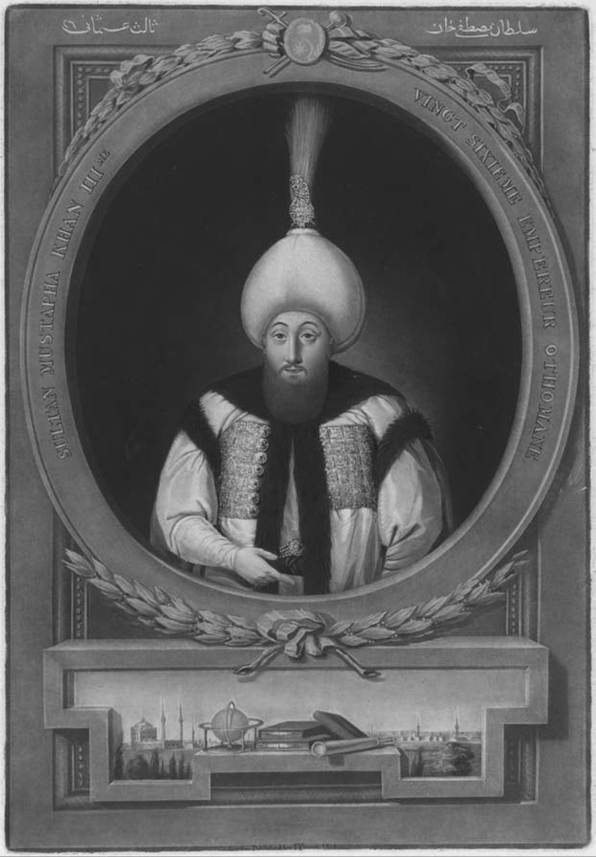
Figure 24.2 John Young (1755-1825), Sultan Mustapha Khan III. Twenty Sixth Ottoman Emperor (Sultan Mustapha Khan III. Vingt sixieme empereur othoman), plate 27 from A Series of Portraits of the Emperors of Turkey, from the Foundation of the Monarchy to the Year 1808. With a Biographical Account of Each of the Emperors (London, W. Bulmer and Co., 1815). Hand coloured mezzotint. Collection: Yale Center for British Art, Paul Mellon Collection.
Western innovations. Thus they asserted a common purpose with the European states. Thinking about these portraits in terms of the dynamics of diplomacy highlights their role in rituals associated with international politics. It also makes us aware of the ways their meanings were generated and renegotiated as they moved between Britain and the Ottoman Empire.
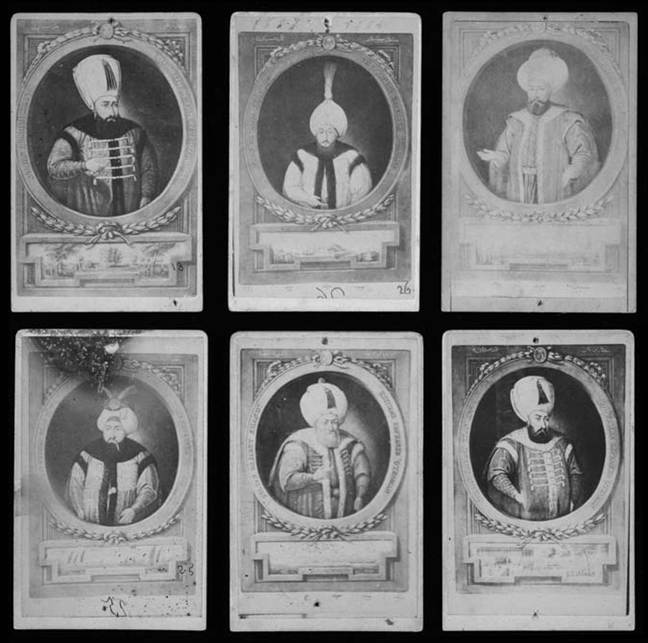
Figure 24.3 Abdullah Freres, Young Album cartes de visite, undated, Pierre de Gigord collection of photographs of the Ottoman Empire and the Republic of Turkey, The Getty Research Institute, Los Angeles (96.R.14).