Cultural patrimony
Portraits of the sultans were commissioned and circulated in Europe throughout the nineteenth century, continuing the honorific and diplomatic functions for these works of art that had been initiated during the reign of Selim III.
Successive sultans extended their patronage of easel painting to other artistic genres as the century progressed. In the Tanzimat era of modernising reform within the Ottoman Empire, there was an increased openness to the culture of Western Europe particularly in the upper echelons of Ottoman society. The alliance formed between Ottoman, French and British troops during the Crimean War (1853—1856), for instance, had a significant social impact among the civil and military elites in the Ottoman capital, Istanbul.Visual culture, from archaeology to easel painting, along with literature and history writing, became increasingly important to the processes of articulating the distinctiveness of modern Ottoman identity in the second half of the nineteenth century, particularly in Istanbul.20 Architecture, urban planning and public ceremony were particularly important forms through which Ottoman state ideology was articulated to broad local audiences
across the empire. Such forms of visual culture were deeply embedded within the state’s efforts to implement reforms that would secure the Ottomans’ place on the world stage.21 They took on particular importance throughout the nineteenth century with the increasing instability of the imperium. The Ottoman Empire was vulnerable to external pressures exerted by the major European powers, in particular the greater economic and military strength of Britain and France. So too the Ottoman state had to respond to the internal pressures of emergent proto-nationalist movements (often supported by the European powers) that threatened the empire’s political and territorial integrity on many fronts.22
Crafting the image of the modern Ottoman state was accompanied by a renewed interest in Ottoman history.
Adopting and adapting the visual language of Western art to represent the empire’s cultural heritage and its military history proved an ideal means of articulating Ottoman cultural progress. Like his forebears, Sultan Abdülaziz (r. 1861—1876) recognised the value of engagement with visual culture as part of Ottoman statecraft. In the 1860s and early 1870s he utilised painting and photography in concert to fashion a triumphant historical image of the Ottoman Dynasty and its modernising contemporary state. Abdülaziz was the first sultan to authorise the production of his photographic portrait. Contemporary military dress uniform and the choice to engage with the medium of photography signified the modernity of this Ottoman head of state. While Abdülaziz’s photographic portraits presented a modern image of the Ottoman ruler, the historic battle painting cycle he commissioned for his palaces on the Bosporus represented triumphant Ottoman military history as a bulwark for the contemporary empire. Between 1865 and 1872, the sultan worked with Polish artist Stanislaw Chlebowski to create the series. The vast number of sketches of battle scenes that Abdülaziz drew as a guide to his court painter (they are now housed in the National Museum in Krakow) are a testimony to the Ottoman ruler’s personal commitment to this project of creating a visual military history.The sultan’s battle painting series adapted the language of Western history painting to represent an historical narrative of the empire’s growth and consolidation. It places particular emphasis on the expansion and defence of the empire’s borders in central and south-eastern Europe. Ottoman history in this region was particularly resonant for the empire in the second half of the nineteenth century, when the south-eastern European borders were again under dispute as the Ottoman state strove to prevent further territorial losses. At the height of its powers the Ottoman Empire expanded into Hungary, and under the reign of Sultan Süleyman I (r.
1520—1566), the Ottoman forces even threatened Vienna. From the late seventeenth century onwards the European borders of the empire progressively contracted.23 Abdulaziz’s series continues the legacy of a long tradition of visually representing Ottoman military history, but it is now rendered in the medium of easel painting instead of illustrated manuscripts.24 The sultan not only asserted his compositional preferences for these paintings; he also specified the inclusion of Ottoman inscriptions on the top right of six of them. Their inclusion created a hybrid visual language that references the word and image relationship of the earlier Ottoman miniature tradition, while relocating it into the Western mode of easel painting.25 Each inscription on the paintings identifies the represented battle and its main protagonist, thus clarifying and prescribing the Ottoman viewer’s interpretation. The three-line inscription on the Egri battle of Sultan Mehmed III (Figure 24.4), for example, specifies this Ottoman victory of 1596. In the foreground of the image the vanquished Austrian commanders and their standards are being brought before Sultan Mehmed III (r. 1595—1603). The inscription augments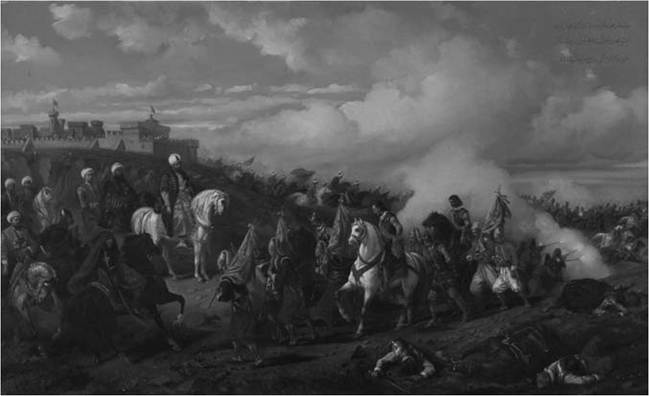
Figure 24.4 Stanislaw Chlebowski, Egri battle of Sultan Mehmed III, c. 1865-1872, oil on canvas, 75.5 x
124.2 cm. Collection: Dolmabah^e Palace Museum, Inv. No. 11/1494.
this triumphant visual narrative by specifying some of the practical military achievements of the struggle, specifically the seizure of ninety cannon and other military hardware.
The production of this history painting cycle, which invites an imaginative affinity with the empire’s history through triumphant combat on the battlefield, coincided with new approaches to history writing by Ottoman intellectuals adapted from Western methods.26 The series represents the mobile and contested history of the empire’s European borders emphasising the heroic Ottoman struggle, the warrior tradition and the elastic boundaries of Ottoman territory in central and south-eastern Europe, a narrative that served the contemporary state’s regenerative aspirations.
Such historical narratives were undoubtedly inspirational for Abdulaziz, who invested heavily in enlarging and retraining his armed forces in order to regain something of the empire’s former military stature on the world stage. The paintings also played a role in the visual culture of Ottoman diplomacy. Installed in Abdulaziz’s new palaces on the Bosporus, where he hosted visiting foreign royalty and heads of state, military history paintings impressed upon foreign visitors the cultural sophistication of the reigning sultan as well as the proud historical legacy of the empire.The notion that the empire’s past served as an assertion of its great-power status, and that it was thus a resource from which to negotiate the contemporary position and to imagine its future, was also expressed in contemporary state-sponsored cultural initiatives for the preservation of Ottoman Islamic architectural heritage. In particular the restoration of the empire’s historic mosques and tombs created under the patronage of earlier sultans in the former Ottoman capital Bursa was linked to emergent notions of cultural patrimony.27 Bursa’s Green Mosque (Yesil Camii) developed during the reign of Mehmed I (r. 1413—1421) and the Green Tomb (Yesil Turbe), commissioned to commemorate Mehmed I by his son and successor Murad II (r. 1421—1451), were centrepieces in the first Ottoman history of Ottoman architecture, published in 1873 on the occasion of the
Universal Exposition in Vienna.28 These two historic structures were regarded by the authors of this volume as the pinnacle of an artistic synthesis in pre-classical Ottoman architecture. Of particular interest were their superb ceramic tiles, a crucial precedent for the nineteenth-century Ottoman craft revival. These historic religious monuments were also a popular subject for Osman Hamdi Bey, the most renowned of the first generation of Ottoman artists who trained in Paris in the 1860s in the studios of the academic Orientalists, Jean-Leon Gerome and Gustave Boulanger.29
In a series of paintings depicting worshippers in the historic interiors of the Bursa mosques and tombs, Osman Hamdi Bey delicately rendered their splendid tile-work, metalwork and other Ottoman cultural treasures using the visual language of academic realism that he had learnt in Paris.
Abdullah Kamil’s review of Osman Hamdi Bey’s painting, Prayer in the Green Tomb (Te$il Tiirbe’de Dua) (Figure 24.5), published in Istanbul’s French-language newspaper in 1880, demonstrates how the artist’s rendition of this tomb and its artistic treasures was interpreted as an aesthetic expression of religious devotion and patriotic sentiment. This critic’s extensive appraisal reveals a distinctive affective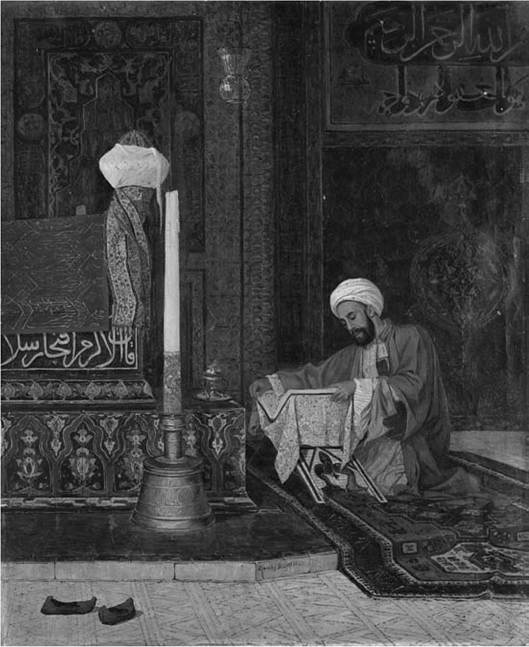
Figure 24.5 Osman Hamdi Bey, Prayer in the Green Tomb (Ye§il Tiirbe’de Dua), 1881, oil on canvas. © Christie’s Images Limited (1995).
engagement with the language of academic art, commending Osman Hamdi’s austere religious painting for its ‘noble simplicity’, ‘pure and gentle tone’ and the ‘complete truth of all its detail’.30 Abdullah Kamil asserted: ‘All these impressive qualities produce upon the soul of the viewer exactly the same profound and grave emotion... the artist himself... experienced, in contemplating... [this] sacred place’. The critic contrasted the profound aesthetic, historical and religious significance of the site for an Ottoman audience with the superficial interest of Western Orientalists who collected Ottoman decorative arts solely for their aesthetic value. He articulates with great clarity the importance of Ottoman art as cultural patrimony:
All these wonders of art and industry brought together by Sultan Mohammed Chelebi [Sultan Mehmed I] in his own [tomb], his greatest and final work, are not magical objects of art and curiosities to make all the amateurs crazy; but rather they are august witnesses of our beginnings, of the glory of our ancestors, which invite us to remember their great history so that we might be like them.31
The Ottoman critic’s interpretation of Osman Hamdi’s painting articulates a clear sense of belonging to the Ottoman Empire via a shared devotion to its cultural and political heritage. This is an invocation of the Ottoman past as a model for the future, articulated through an aesthetic response that can be termed a ‘devotional effect’.
More on the topic Cultural patrimony:
- Cultural patrimony
- CHAPTER FOUR Maksymovych and the National Awakening
- 4 National Parks
- Nationalism as National Solidarity
- The Administrative and Social Structure of Ukrainian Lands in the Austrian Empire before 1848
- Impact of Stambheswari on Other Cultures
- The Great Ukrainian People
- The Administrative and Socioeconomic Structure of Ukrainian Lands in the Austrian Empire, 1849-1914
- Aldrich Robert, McKenzie Kirsten (eds.). The Routledge History of Western Empires. Routledge,2014. — 542 p., 2014