Gender and Orientalism
The social changes occurring within Ottoman society in the nineteenth century also had an effect within the private world of Ottoman women, especially among elite households in Istanbul and Cairo.
(Many of these women were the wives, sisters and daughters of the Ottoman and Ottoman-Egyptian reformers.32) As Leslie Peirce has shown, historically the more senior women of the sultans’ harems had played an important role in dynastic image-making through religious endowments, imperial ceremonies and cultural patronage, and they continued to do so in the nineteenth century.33In Western Europe, no more potent symbol of the exotic East existed than the harem, yet this pervasive Western fantasy was antithetical to the respectable domain of elite harem life, governed by strict protocol and social hierarchy. European men remained outsiders to this domain of Ottoman culture, prohibited access to the haremlik or private quarters of Ottoman palaces and homes. For European women it was a different matter. With the right contacts within the Ottoman community or European diplomatic circles in the empire’s capital, women travellers could access these harems. For Ottoman women, inviting European women into their homes provided their most direct means of engagement with Western European culture that they had come to know about through newspapers, fashion journals and photographs. These were not the acquiescent odalisques of Western myth, but powerful elite women for whom visiting rituals facilitated an extension of influence beyond the confines of the harems in which they lived.
Henriette Browne’s painting Une visite (interieur de harem, Constantinople, 1860) (1861) (Figure 24.6) represented this theme of the visit between harem women. The centripetal composition of figures, augmented by an intensity of light in the painting’s centre, draws attention to a customary salutation being exchanged between two senior harem women: visitor and host.
The visitors are still veiled and have not yet removed their feraces (the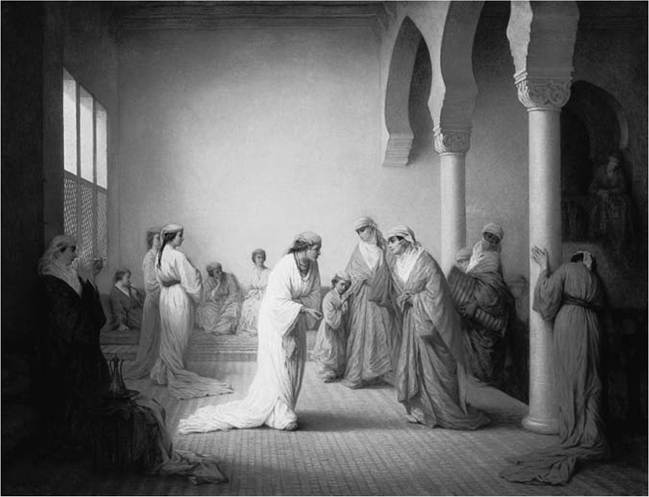
Figure 24.6 Henriette Browne, Une visite (interieur de harem, Constantinople, 1860), 1861, oil on canvas, 89 x 114 cm. © Christie’s Images Limited.
voluminous cloaks Ottoman women wore outdoors), signalling that they have just crossed the threshold into the reception room of the household. The theme of feminine sociability, the modesty of dress, the presence within the central group of a young girl who clings timidly to her mother, even the soft pastel colours of the painting, underscore the respectable domesticity of these families. The spotlighting effect and shadowy framing of the lower edges of the painting create a somewhat theatrical distancing of the viewer from a scene of Ottoman feminine sociability. The bare walls and pared back decoration render the harem setting without the luxury, sumptuousness and decorative profusion that European audiences had come to expect from paintings of the exotic harem. As Reina Lewis has demonstrated, it was precisely this aspect of the work that caused such consternation when the painting was exhibited at the Paris Salon in 1861.34
Browne’s painting was a radical revision of the image of the harem for a French audience, its authority premised upon her eyewitness experience of elite Ottoman harems. It is notable, however, that Browne chose not to represent the Western influences that she had witnessed when visiting elite harems on the Bosporus with her friend, the expatriate and long-term resident of Istanbul, a British artist named Mary Adelaide Walker. Walker wrote extensively about harem life in her numerous travelogues, noting that many of the women were selectively adopting Western fashions and introducing elements of European furnishings into their homes.35 A number of these women from the highest echelons of Ottoman society were educated in European languages, some by British or French governesses.
Walker’s text is a particularly valuable historical document because it indicates that a number of these women, including Sultan Abdulmecid’s (r. 1839—1861) daughter Fatma Sultan, commissioned Mary Walker to paint their portraits.36 Her extensive account of these portrait sittings signals the distinctive aesthetic preferences of her sitters. It profoundly challenges a notion of the silent or subaltern status of Ottoman women by revealing the complex ways in which Ottoman women of elevated social position negotiated a new self-image through sartorially and aesthetically hybrid portraits.Walker’s first harem portrait was commissioned soon after the Crimean War, and she continued to secure such commissions throughout the fifty years she resided in Istanbul. Respectable Muslim women would not pose for European male painters and in Walker’s account her harem patrons rigorously controlled how they would be represented and where their portraits would be seen. Some even intervened in the process of painting, ensuring the work was modified to reflect the influence of the Ottoman miniature tradition.37 Most of them chose to be represented in a fusion of Ottoman and Parisian fashions. These sartorial preferences, like the choice to commission their portraits, reflect a desire to project a modern self-image. With their hybrid mix of Eastern and Western fashion and conventions of picture-making, these harem portraits bore little resemblance to harem paintings in the Western Orientalist tradition.
Such alternate harem representations, most of which remained exclusively within the private realm of the Ottoman family, bring to light a different visual economy from the familiar Western paintings of the seraglio. The shift from the anonymous harem scene to the individualising genre of portraiture involves an inversion of power relations because it is the harem women who exercise control over their representations and it is their aesthetic and cultural concerns that come to the fore.
As a consequence, their inclusion within the history of nineteenth-century harem imagery expands the genre and challenges its hierarchies. While the sultans’ portraits were on public display inside the Ottoman palaces and were disseminated across the empire and into Europe, portraits of the women of the sultan’s harem were another matter altogether; they had no such public function. The fact that they remained hidden for so long, with many continuing to elude our gaze, is a testament to the power of the Ottoman women who commissioned them and their effectiveness in quarantining their representations from circulating among foreign dealers, collectors and audiences.The Ottoman-Egyptian Princess Nazli Hanim took quite a different approach to her portraits. Nazli was a member of the powerful Ottoman-Egyptian Muhammad Ali Dynasty; her father, Mustafa Fazil Pasa, was the disaffected brother of Khedive Ismail living in exile in Istanbul. As a young woman growing up in Istanbul she was well-known for her soirees, at which she entertained elite local and foreign women within her suite of rooms within her father’s harem, and later in her life when Nazli moved to Cairo she conducted a distinguished salon.38 She commissioned numerous photographic portraits from the late 1860s onwards and gave them to the European women who visited her.
The most intriguing of her photographs is a pair of portraits in an anonymous album that is now held in the Sutherland Papers at the Staffordshire Record Office (Figure 24.7). Against a conventional studio backdrop of pyramid and palm trees, the Ottoman-Egyptian princess has choreographed two distinct representations: on the left, an honorific portrait in contemporary European dress; on the right, a cross-dressed parody of the Western harem stereotype. The photograph on the left conforms to familiar codes of honorific portraiture. The cut of Nazli’s bodice and skirt are in the fashionable European bustlestyle. Her erect posture and the contours of her tight-waisted figure are formed by the corset, a notable contrast to the soft lines of traditional Ottoman dress.
Nazli’s upright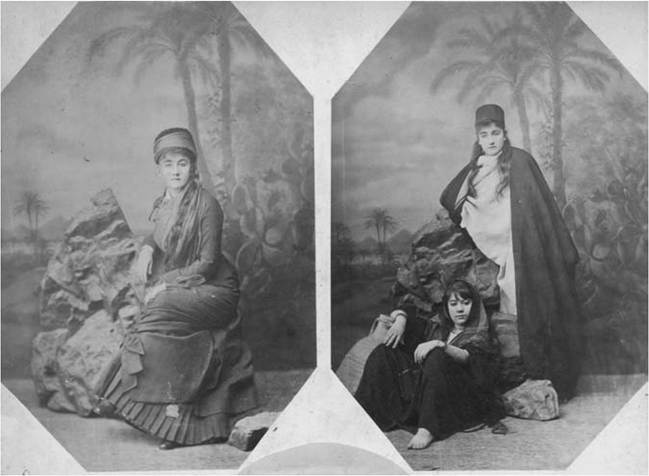
Figure 24.7 Photographer unknown, Princess.Nazli Hanim, undated, photograph, Staffordshire Record Office, Stafford.
bearing and direct look at the camera convey an ease and confidence indicating that she has taken command of this portrait sitting. Here is a self-assured woman addressing her viewer as an equal.
Nazli’s portrait is exemplary of the way photographic technologies were harnessed by the Ottoman elites in the nineteenth century to present a new self-image. With the advent of the medium, portrait photography quickly became an instrument for the expression of bourgeois subjectivity in Britain and France.39 In the same period it was just as enthusiastically embraced as a means of self-fashioning by Ottoman elites. Extant honorific portraits produced by local photographic studios are, however, mostly of men, while portraits of Ottoman Muslim women remain rare.40 For women such as Nazli, their honorific portraits had an inverse representation in the anonymous cliched harem scenes produced by local studios and sold to the passing tourist trade. The images that tourists bought as photographs of harem women in fact had been made using non-Muslim women or women from the margins of respectable society.41 Nazli’s honorific portrait entreats her viewer to acknowledge a more complex view of harem life through its emphasis on feminine respectability. And it is precisely the Western stereotype of the harem that Nazli’s second photograph is parodying.
In this photograph Nazli is cross-dressed as an Ottoman gentleman, with her female companion dressed as an Egyptian pottery seller, posed as though she is part of Nazli’s imaginary harem. These two masquerading women appear to rally in defiance of the spectator. Nazli has an imposing presence because of her commanding upright posture; her costume closes her body from the viewer and her look is impassive.
The gazes of these two women confront the viewer, allying them in their separation from us. The humour here is premised upon a recognition that this is an elite, culturally sophisticated Ottoman-Egyptian woman occupying the position of the harem master in a travesty of Western fantasy.The context for the production of these two photographs remains a mystery; however, they invite us to speculate. Perhaps Nazli visited the photographer’s studio to commission the honorific portrait on the left and decided to play with the props that she found there. One can imagine her in the studio cognisant of the degraded stereotypes of the harem that were on sale, parodying such representations by playfully cross-dressing and posing with mock solemnity while the photographer shot her second image. In this photograph Nazli has made no effort to disguise her long hair and the heavy cloak has been hastily drawn across the front of her body (one assumes this was done to cover the dress which we see her wearing in the photograph on the left). The effect plays up the theatricality of the performance and reminds us that underneath she remains the modern Ottoman-Egyptian woman, the sophisticated instigator of this parody. By emphasising the process of dressing up, Nazli’s photograph underscores the notion of identity as performance. This irreverent performativity is a powerful testament to the agency of Princess Nazli and profoundly challenges a notion of the silent or subaltern status of Ottoman women. By gifting her photograph, Nazli sent a satiric missive to England parodying the Western fascination with the seraglio.
Introducing photographs and paintings produced and commissioned by upper-class Ottoman and Ottoman-Egyptian women into the analysis of nineteenth-century Orientalism and empire shifts our understanding by revealing the harem as a context in which Ottoman women’s identity and sociality was renegotiated via image-making. Examining the power of elite Ottoman women to commission and create representations of themselves presents a profound revision of prevailing accounts of nineteenth-century harem imagery as exclusively an expression of the Western power to fantasise about the seraglio and consolidate a European identity.
More on the topic Gender and Orientalism:
- Gender and Orientalism
- Geographies of Enmity: The New Orientalism
- Introduction
- Chapter 6 Roxolana’s Memoirs as a Garden of Intertextual Delight
- References
- Ottoman Empire, Seljuks, Turkey
- WHY COLONIALISM?
- Conclusion
- Index