Atlantic historians have a habit of characterising the study of the Pacific Ocean as belated, a field that took shape after Annales-based Mediterranean scholarship, and after Braudel-inspired analysis of the Atlantic world.
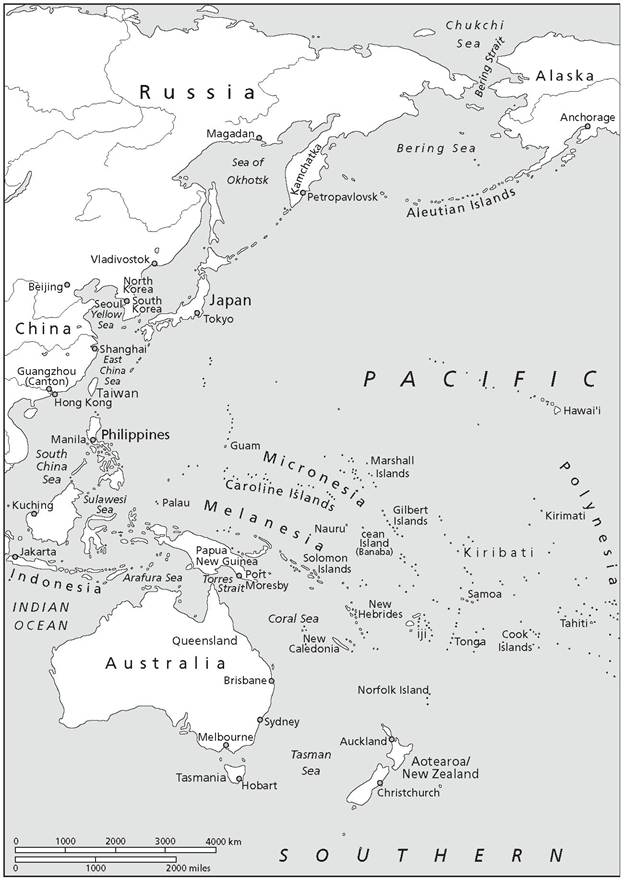
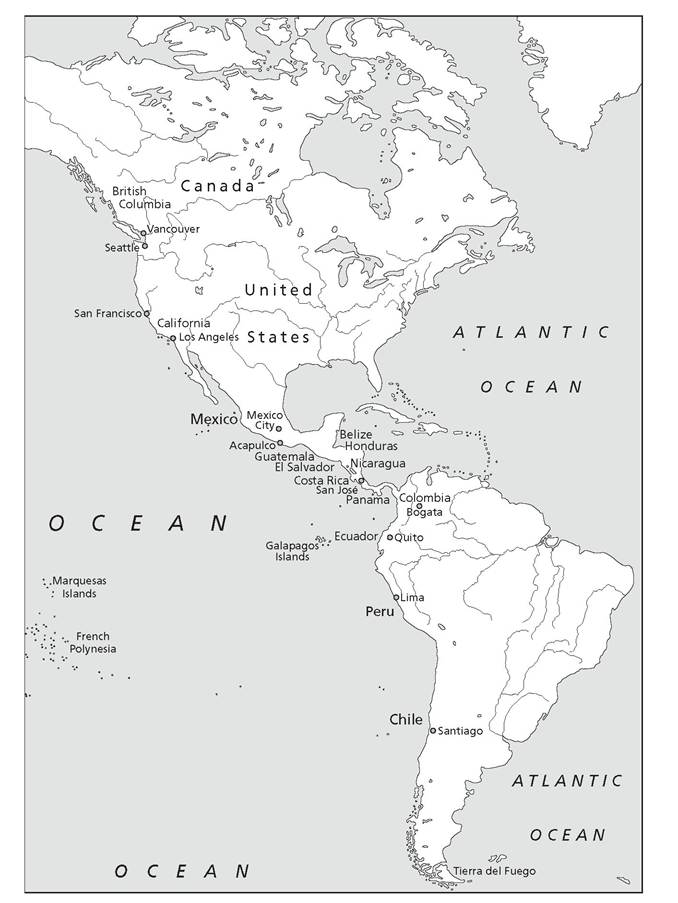
Yet this historiographical sequence is inaccurate and usually signals historians’ own belated reading in, around and about the Pacific. On one measure, the Pacific was historicised within late nineteenth- and early twentieth-century geopolitics by Japanese, German, and Anglophone scholars alike.1 Latin American histories of the Pacific were also available in the early twentieth century, some in translation and taken up by North American scholars.[193] [194] On another measure, from the 1920s the Pacific emerged as central to the professionalisation of history departments within the region itself. Ralph S. Kuykendall published extensively on Hawai’i and the Pacific North West, for example, from his base in Manoa.[195] And New Zealand-based John Beaglehole wrote Exploration of the Pacific (1934) which detailed Spanish, Dutch, French, and British expeditions, from Magellan’s to Cook’s circumnavigations.[196] Beaglehole’s book was reviewed at the time (ironically by a Hawaiian-based antiquarian) as comprehensive in its 400-plus pages, but insufficiently interested in the Polynesian perspective.[197] This is as we might expect, but such histories are not to be sidelined. In the same way that we read early Annales historical geographies as both period pieces and. still-useful secondary scholarship, many of the Pacific geographical histories of the 1920s and 1930s repay close reading.[198] Thus, to understand Pacific oceanic history as a latecomer, or as derivative of the Annales school is to fail to understand that the Annales tradition was part of a much wider historical geography, inclusive of oceans. In short, the Pacific Ocean was being historicised as part of the same early twentieth-century geographical trend as Braudel’s Mediterranean. Yet there was a tenor to Pacific scholarship that was quite particular. Map 2.1 (cont.) spaces implied transfer of culture over changing times, over generations. And historical work based on thousands of seventeenth-, eighteenth- and nineteenth-century accounts of maritime expeditions was often anthropologically oriented because the sources themselves were: more than anything else they detailed relations between European outsiders and Pacific people across the ocean. This early scholarly corpus tuned Pacific history-writing in a particular key, deeply inflected by geography on the one hand and anthropology on the other. It is no coincidence that so many of the great historians of Oceania were (and perhaps still are) trained and practised in adjacent disciplines: in the 1960s, art historian Bernard Smith, in the 1970s, geographer O. H. K. Spate, in the 1980s, ethnohistorian Greg Dening, and from 1990s onwards, any number of distinguished anthropologists trained in these schools, and their work still makes up a large part of the field. Historical work on Oceania is hardly belated, then, and we can scarcely see this rich tradition as anything but the core of wider Pacific history that includes the continental rim. Far from being a follow-on, Pacific historiography should be considered an original model for the historicising of oceans.
More on the topic Atlantic historians have a habit of characterising the study of the Pacific Ocean as belated, a field that took shape after Annales-based Mediterranean scholarship, and after Braudel-inspired analysis of the Atlantic world.:
- This chapter examines from a comparative perspective the experience of European empire by indigenous peoples of the Atlantic and Pacific Ocean worlds.
- The Extension of the Spanish Empire and Dominion in the South Atlantic and Pacific
- The Atlantic Ocean
- PART THREE The Young Ocean: The Atlantic, 22,000 BC-AD 1500
- Extra-Atlantic History
- There was a time before Atlantic history.
- Three (More) Concepts of Atlantic History
- Analysis ofrelationship between job satisfaction and performance of field employee: A case study in PT. Trisna Naga Asih
- Atlantic History’s Hundred Horizons
- Sub-Atlantic History
- 32 A New Atlantic
- The Eighteenth-Century Atlantic Empire
- Britain’s Atlantic Empire in an Age of Revolution
- Atlantic Empire and the Peoples of the British Monarchy (1603-1815)