EPILOGUE
More than three and a half thousand years have passed since that imagined dawn over the Aegean with which this story began. In all that time, speakers of the Greek language have never ceased to reinvent themselves.
There is every reason to suppose that they will go on doing so, in ways that we cannot imagine or predict, for long into the future.Today, Greeks live and flourish on every inhabited continent. In 2011, Greece itself, according to the most recent census, was home to just under eleven million. The population of the Greek-speaking Republic of Cyprus at the same time was just over eight hundred thousand. No one knows for certain how many more people around the world speak Greek as a first or a heritage language or consider themselves to be of Greek descent. Communities of more than one hundred thousand can be found in the United States, Australia, South Africa, Argentina, Brazil, spread across several republics of the former Soviet Union, and (largely originating from Cyprus) Great Britain. A total figure of seven million, settled in 141 countries, has been hazarded. Even if these numbers are inflated, it is quite probable that up to half as many Greeks again live outside the Hellenic Republic as within its borders.1 That is a very different ratio from the three-to-one that existed at the time when the Greek state was first created. But it is still an important reminder that the story of the Greeks is not just the story of Greece. And, since the nineteenth century, the dispersed Greek-speaking world once again has a geographical and emotional centre that most, if not all Greeks, irrespective of where they live, can identify with.
Constantinople as the centre of a world empire (once) and a universal church (still) retains its hold on the imagination and the loyalty of a majority of Greeks who maintain their links to the Orthodox branch of Christianity.
But the political centre of the Greek-speaking world since the 1920s has been the national capital, Athens—which is also home to almost half the population of Greece. Greek communities around the world regularly lobby their own governments to support Greek interests in matters of foreign policy (and usually irrespective of whichever party is in power in Greece at the time). This has been most evident with the Greek American lobby in the United States, which scored notable successes particularly in the 1970s and 1980s. But it is a stance that has repeatedly been echoed around the world, to the extent that governments in both Greece and the Republic of Cyprus have come to rely on support from expatriate communities abroad.2For these reasons, it does make sense, today, to talk of a Greek diaspora—meaning specifically the descendants of people who emigrated from the ‘old’ Greek-speaking world, as it was in the eighteenth century, to create new communities around the world in the nineteenth, twentieth, and—who knows?—perhaps also the twenty-first. Wherever these people are to be found, and regardless of the citizenship they hold, overwhelmingly they continue to think of themselves as Greek and to identify, to varying extents, with their idea of a Greek state to which they feel that they, too, belong. However divided Greece has been within itself at various times in its two-hundred-year history, no organised political alternative or rival to that state has ever emerged from the Greek diaspora—or, surely, is likely to. And although the old term of self-designation, Romios, can still be heard in certain contexts, every Greek, everywhere in the world, is today a Hellene in his or her own language.
Today, Astoria in the New York Borough of Queens is perhaps the biggest Greek village in the world. But Greek Americans who may now be of the fifth or sixth generation do not necessarily speak Greek well, or even at all. In the Australian states of New South Wales and Victoria during the 1970s and 1980s, government policy encouraged education in heritage languages.
The children of Greek immigrants could take their lessons and exams at school in Greek; university courses in Modern Greek studies were full. But after changes in policy during the 1990s, these possibilities no longer exist. Third-generation Greek Australians are less likely to speak the language of their parents and grandparents, or to want to learn it.It was ever thus. In centuries past, individuals and whole communities whose mother tongue was Greek might lose their language in favour of Latin, Arabic, Slavonic, Turkish, or French. English is only the most recent of these. But in every generation, at least as many kept faith with the language of their earliest years. And the centuries-old process of ‘becoming Greek’ has never quite ended either. For at least some of those who have arrived, fleeing persecution or hardship at home, landfall on a Greek island has been something more than a transitory step on a desperate, possibly unending journey. Hiva Panahi is a refugee from Iran who has made her home in Greece since 2000. A decade later, she was writing and publishing poems in Greek, as well as in her native Kurdish. This poem is called ‘The Breath of the Olive Tree’:
We the wandering
We the barefoot
We without space or country
We the burnt and fiery winds
We saw you, with those final breaths
That burned a piece of the sea.3
In these lines, a twenty-first-century refugee captures her first encounter with an Aegean landscape that has been celebrated by travellers, poets, and artists ever since Homer sang of the ‘wine-dark sea’ some thirty centuries ago—how else but in her newly adopted language, Greek.
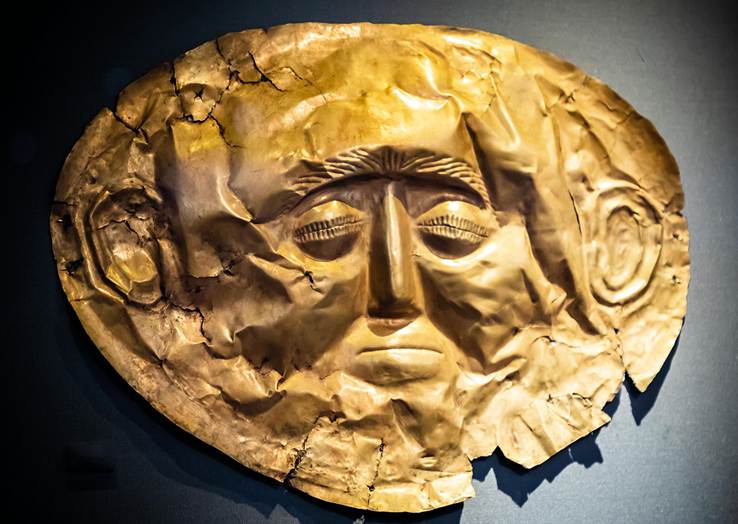
1. Gold funerary mask from Grave IV (Grave Circle A) at Mycenae, 16th century BCE, discovered by Heinrich Schliemann in the 1870s.
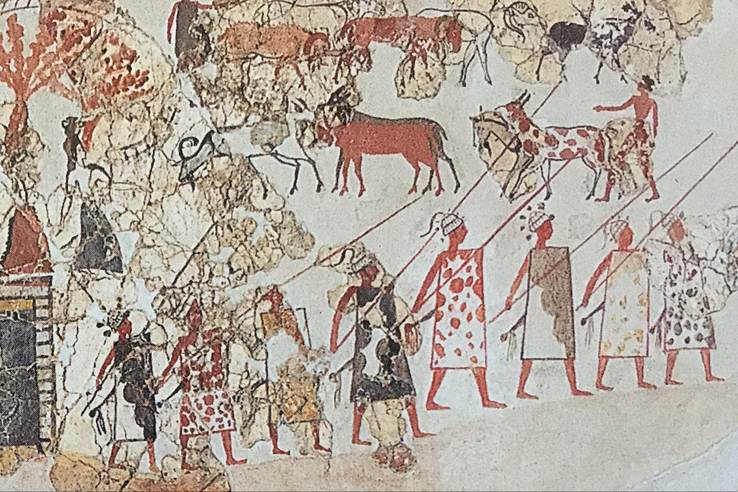
2.
Detail from a fresco found at Akrotiri, Thera (Santorini), dating from before 1540 BCE (including conjectural restorations on the right). The warriors forming a line in the foreground have been identified as Mycenaeans.
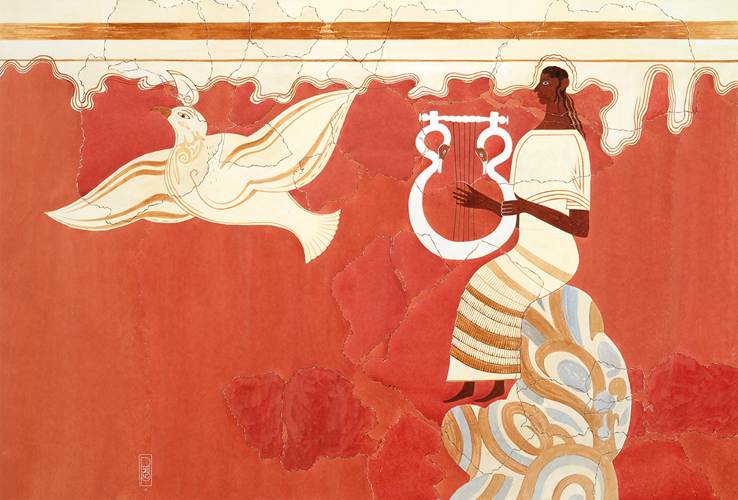
3. Lyre Player and Bird Fresco from the Throne Room of Nestor’s palace, Pylos, c. 1300 BCE. Watercolour reconstruction by Piet de Jong.
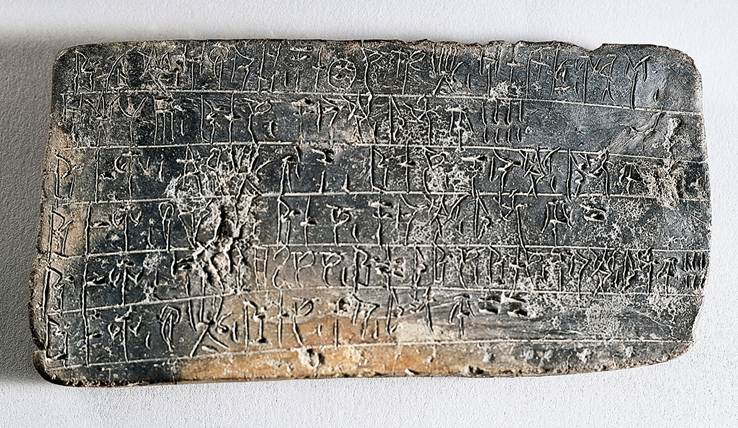
4. Clay tablet inscribed in Linear B from the palace of Pylos, c.1200–1180 BCE. The text describes a tour of inspection made by an official named Alxoitas to check plots of agricultural land not far from the capital.
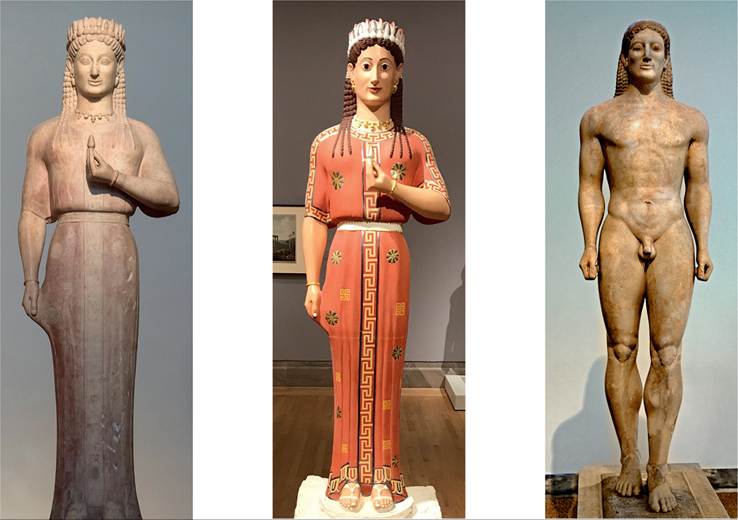
5–7. Kore (Phrasikleia) c. 550–540 BCE, with conjectural restoration (centre), and kouros from Anavyssos, Attica, c. 530 BCE.
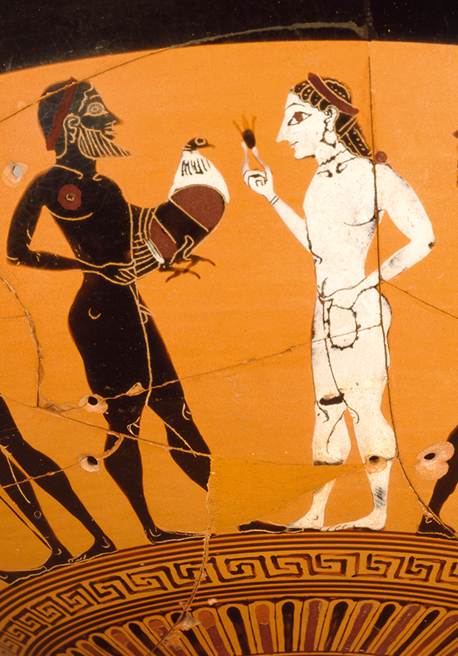
8. Scene of courtship painted on a vase by the Amasis Painter, c. 540 BCE.
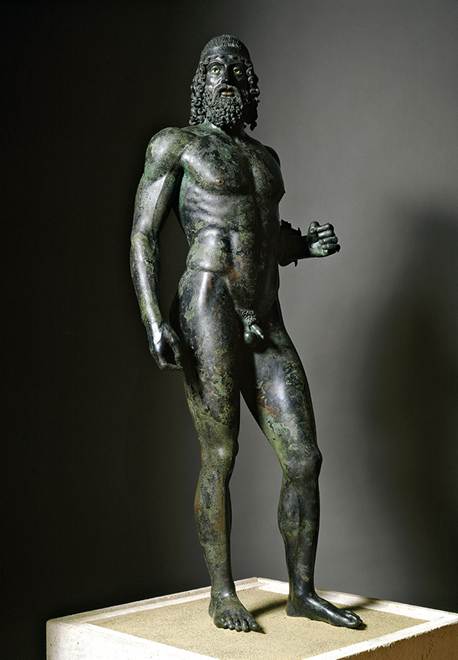
9. Bronze statue, c. 460 BCE, found on the seabed off Riace, Calabria, Italy, in 1972.
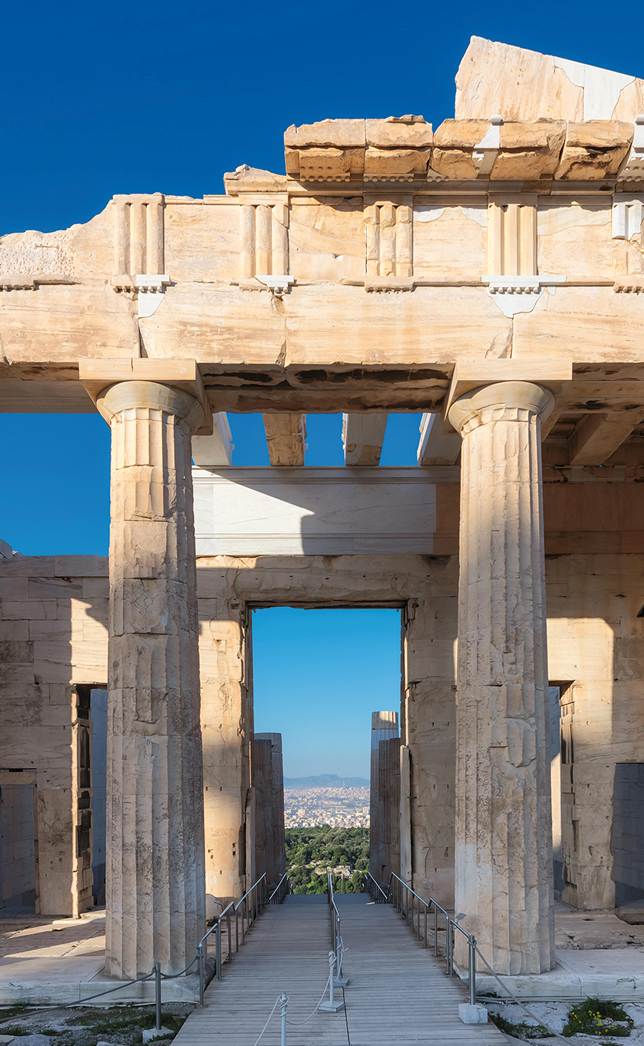
10. The monumental gateway to the Acropolis of Athens (the Propylaea) frames the distant view of the island of Salamis, where the Greeks defeated the Persians in the naval battle of 480 BCE.
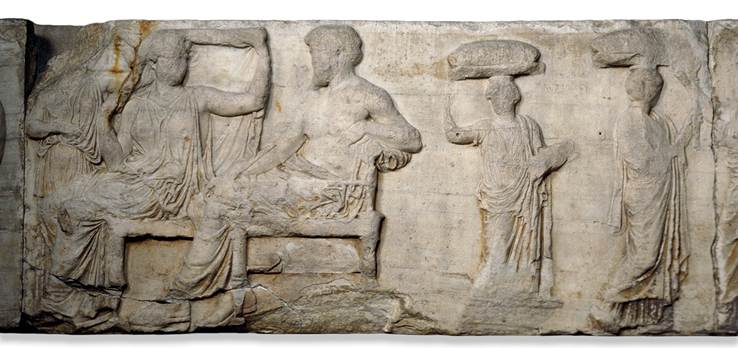
11. Marble relief (Block V) from the East Frieze of the Parthenon. Seated deities receive offerings from mortals depicted to a smaller scale.
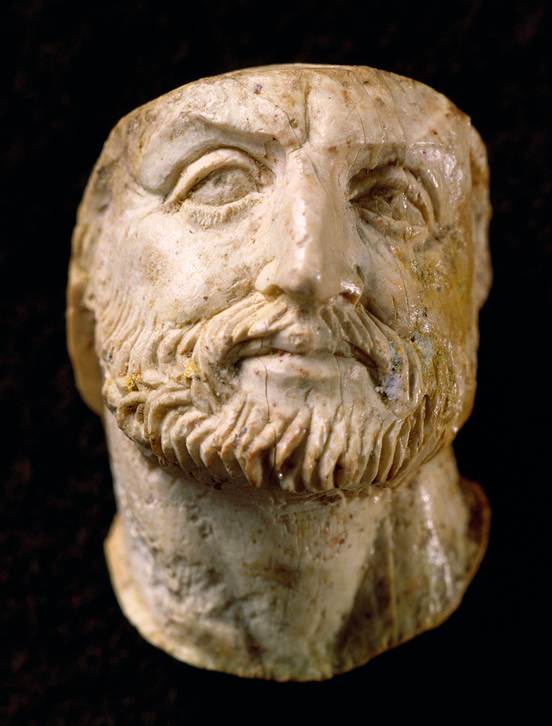
12. Head of Philip II, King of the Macedonians. Portrait in ivory from the Royal Tomb, Vergina.
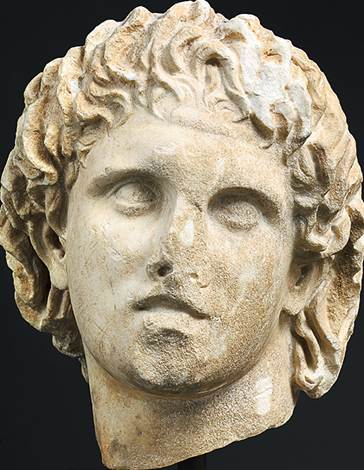
13. Head of Alexander III (‘the Great’, 356–323 BCE), found at Giannitsa (c. 325–300 BCE).
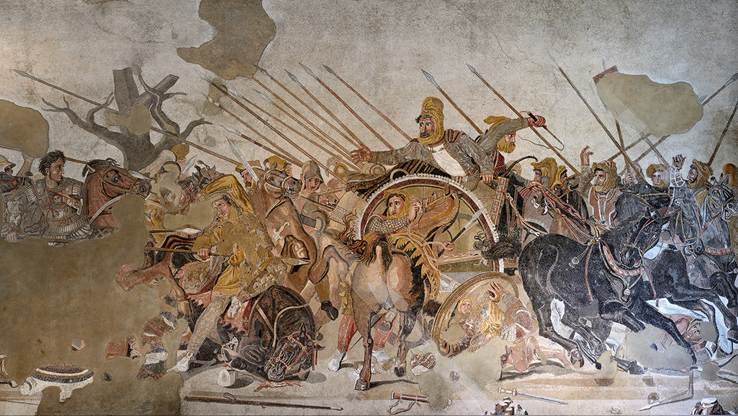
14. Alexander (on horseback, left) confronts Darius III in his chariot (centre) at the Battle of Issus in 333 BCE (mosaic from Pompeii, 1st century CE).
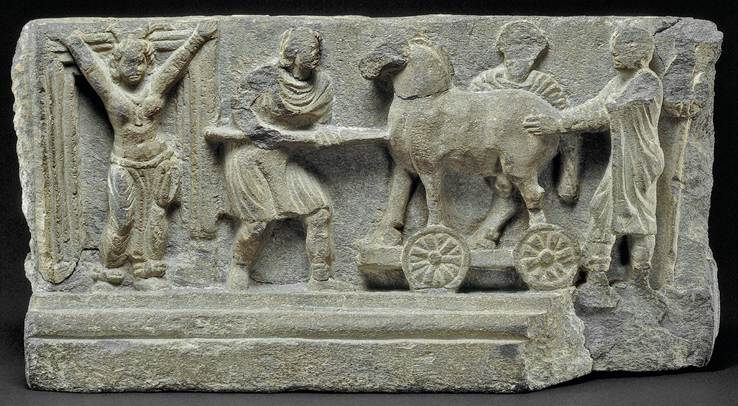
15. Gandharan art from Pakistan, dating from about 500 years after Alexander’s conquest: the princess Cassandra tries to prevent the Wooden Horse from entering Troy.
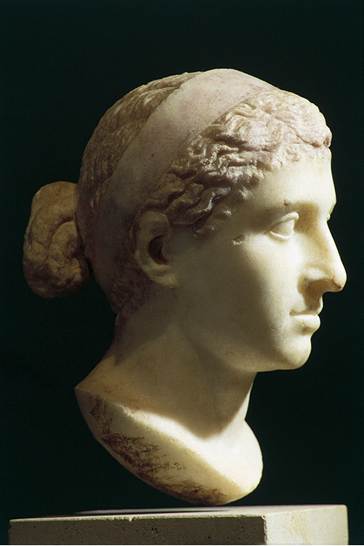
16. Portrait bust of Cleopatra VII of Egypt (c. 40–30 BCE)
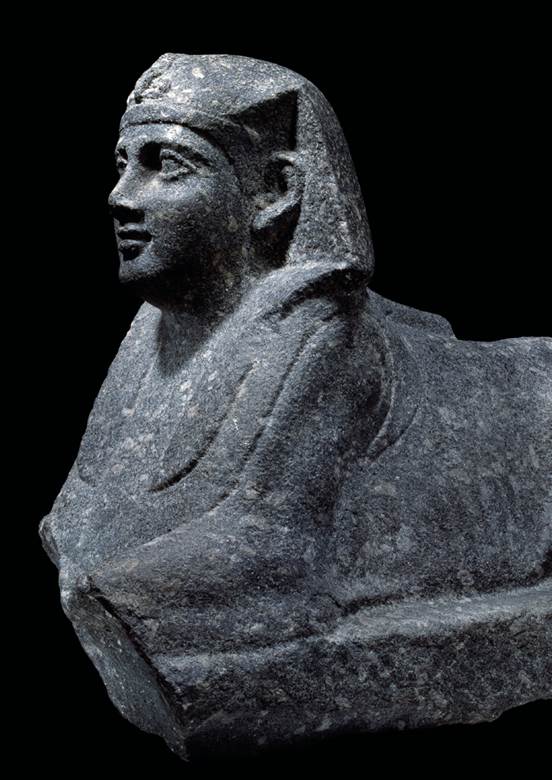
17. Sphinx discovered in the submerged palace of Alexandria, believed to represent her father, Ptolemy XII.
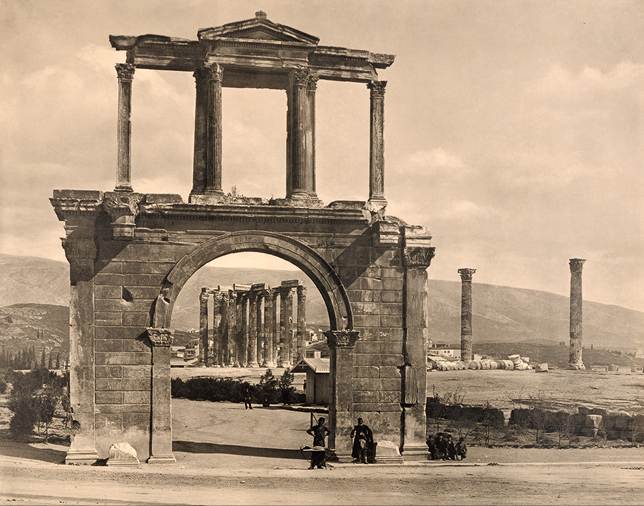
18. Athens: The Temple of Olympian Zeus, completed by the emperor Hadrian (reigned 117–138 CE), with ‘Hadrian’s Arch’, photographed c. 1869.
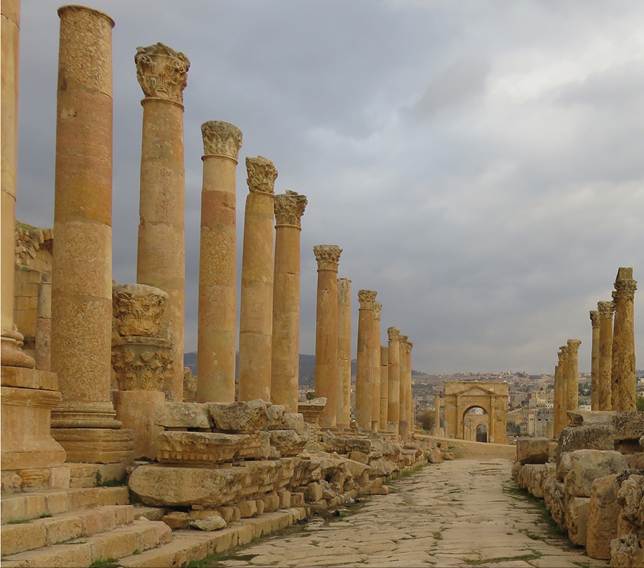
19. A street in Jerash (Jordan).
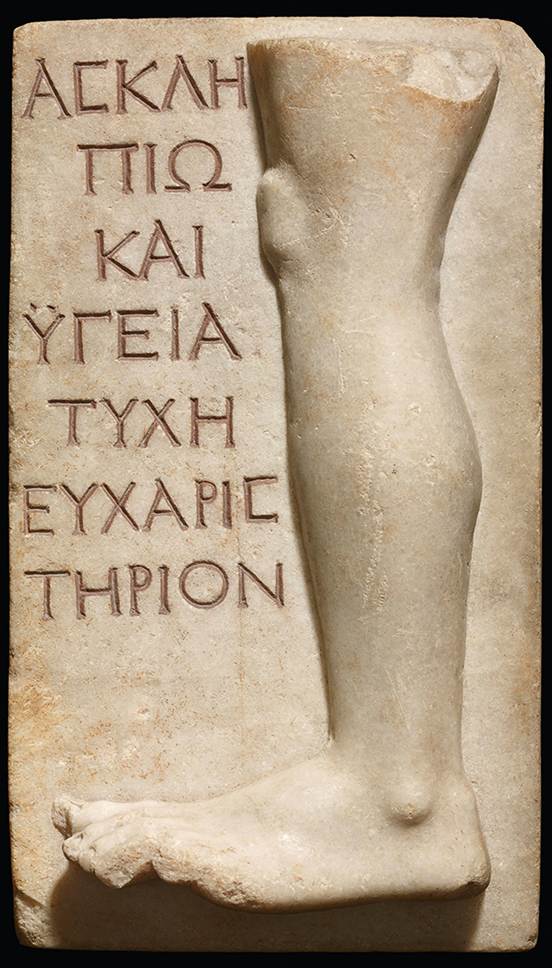
20. Marble relief with an inscription dedicating it to Asclepius and Hygieia (Health) as a thank offering for a cure.
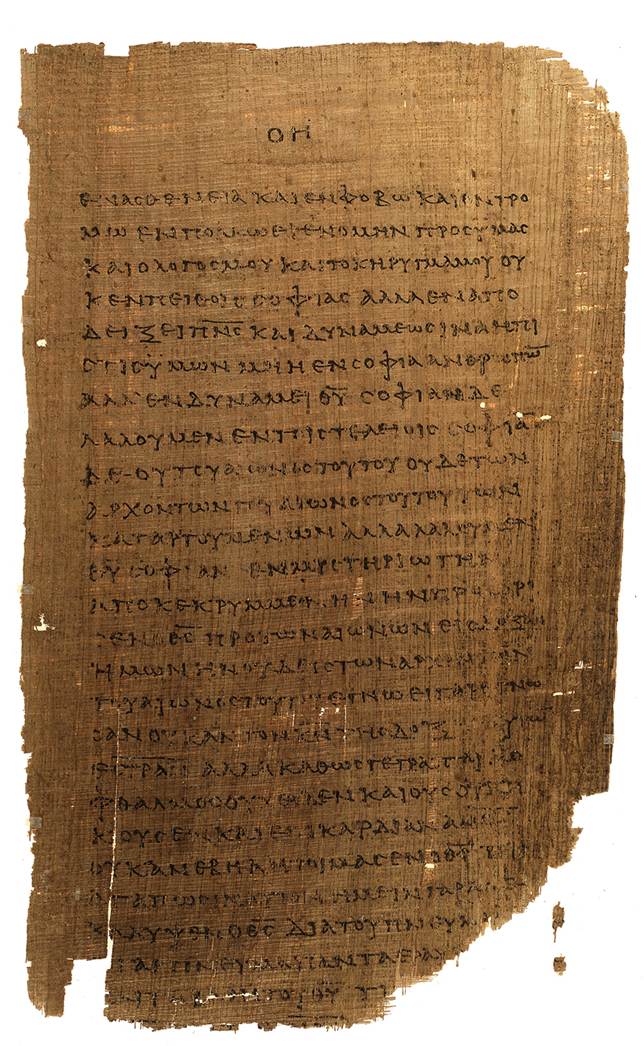
21. An early papyrus (c. 175–225 CE) containing part of Saint Paul’s First Letter to the Corinthians.
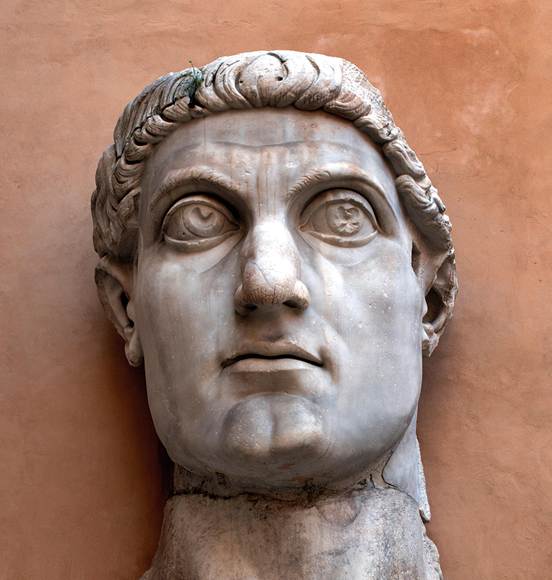
22. Monumental head of Constantine, the first Christian emperor (reigned 306–337 CE).
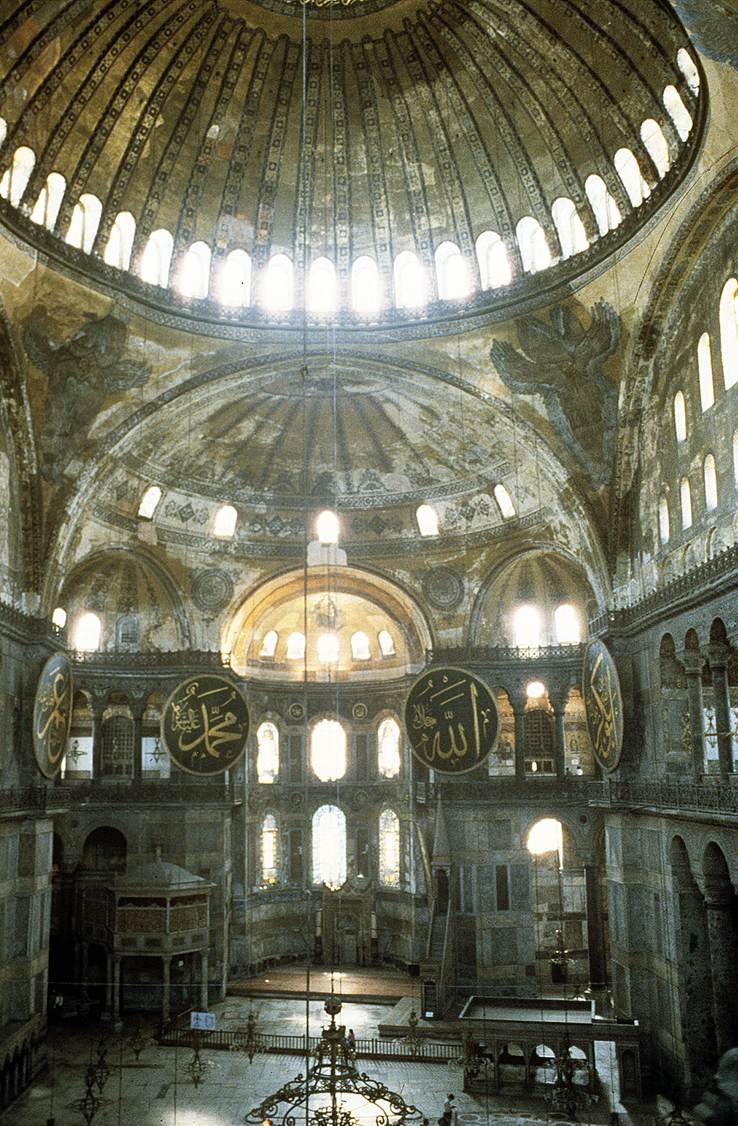
23. The interior of Hagia Sophia, Constantinople, completed on the orders of Justinian in 537.
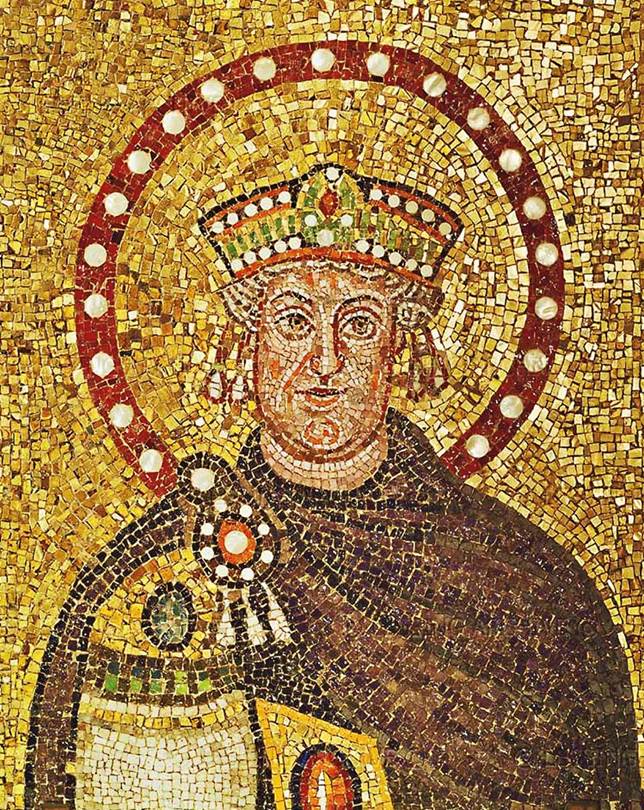
24. Mosaic portrait of Justinian (S. Apollinare Nuovo, Ravenna).
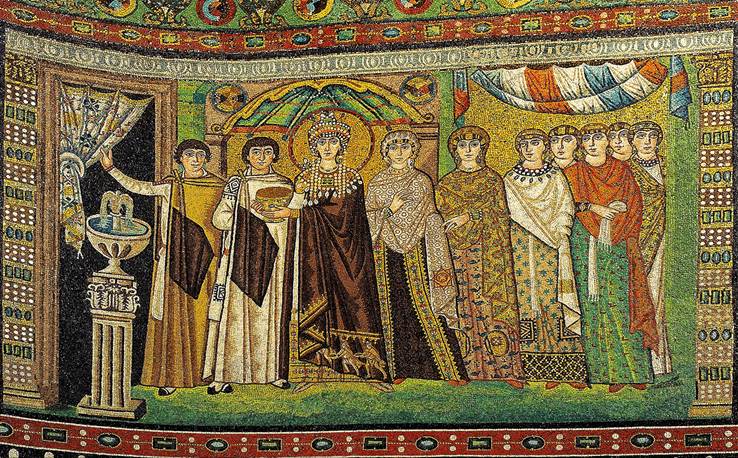
25. Mosaic panel depicting the Empress Theodora and her retinue (S. Vitale, Ravenna, 547).
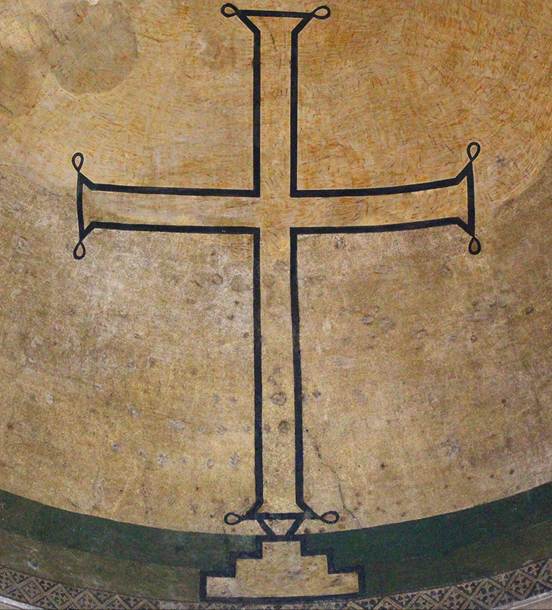
26. Mosaic cross from the period of iconoclasm, apse of the Church of St Irene, Constantinople.
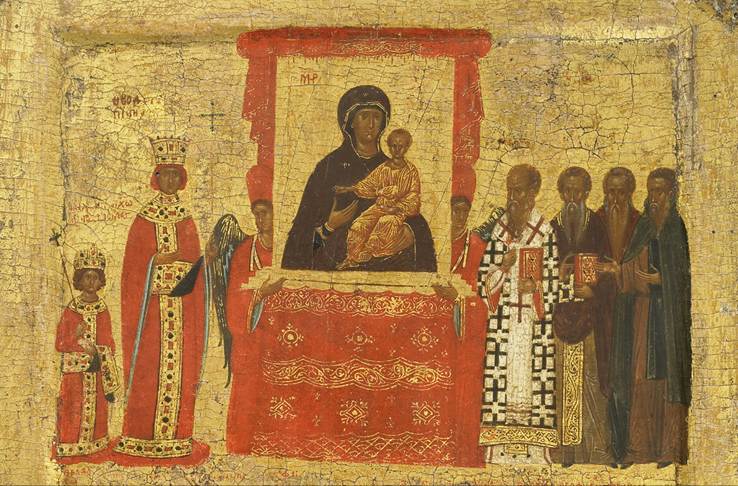
27. Late Byzantine icon (c. 1400) showing the ‘Triumph of Orthodoxy’, detail. The divine figures represented on the painted image (centre) are larger in scale than the human worshippers. Compare image 11.
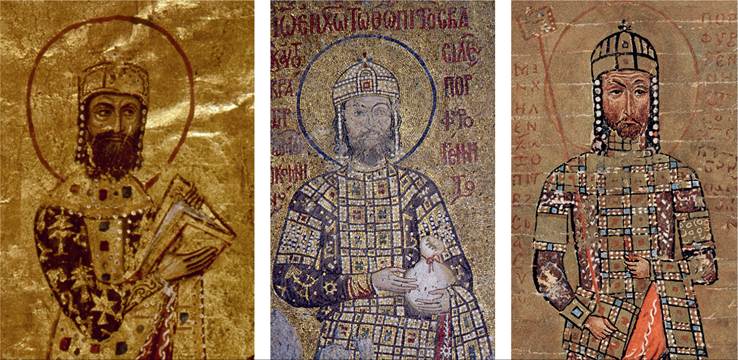
28–30. The three emperors of the Komnenian dynasty who ruled from 1081 to 1180, left to right: Alexios I, John II, Manuel I.
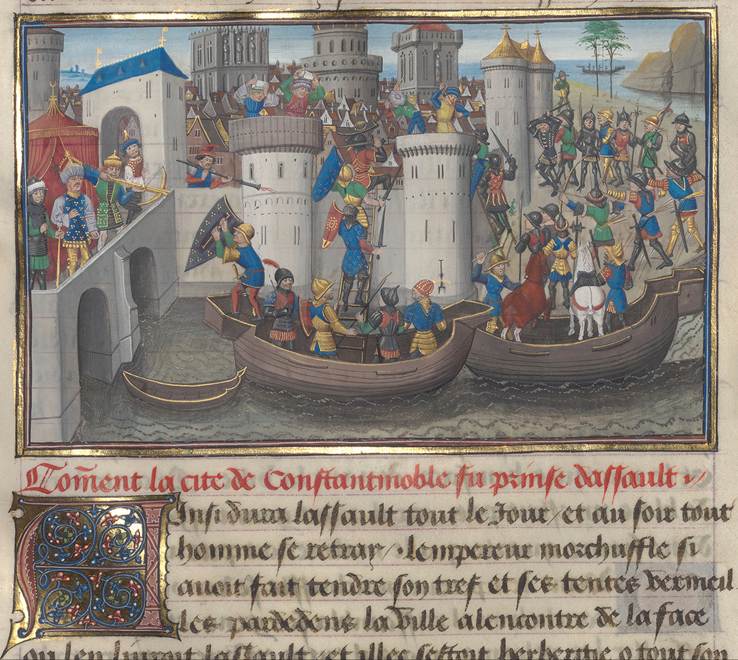
31. The sack of Constantinople by the Fourth Crusade in April 1204 (15th-century miniature, detail).
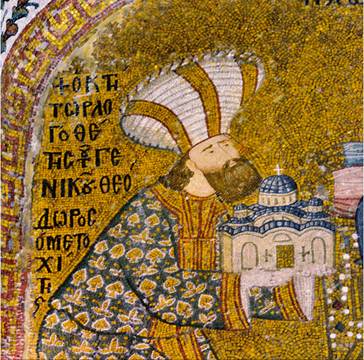
32. Theodore Metochites, mosaic donor portrait in the Kariye Camii (Church of the Chora), c. 1316–1321.
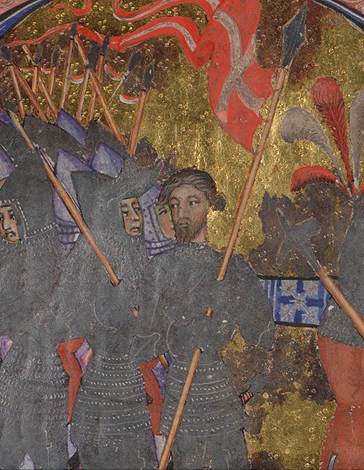
33. Frankish warriors in the Peloponnese (from an illustrated manuscript of The Chronicle of the Morea, c. 1393).
alt=image>
34. George Gemistos Plethon, detail from fresco, The Cavalcade of the Magi, by Benozzo Gozzoli, 1459.
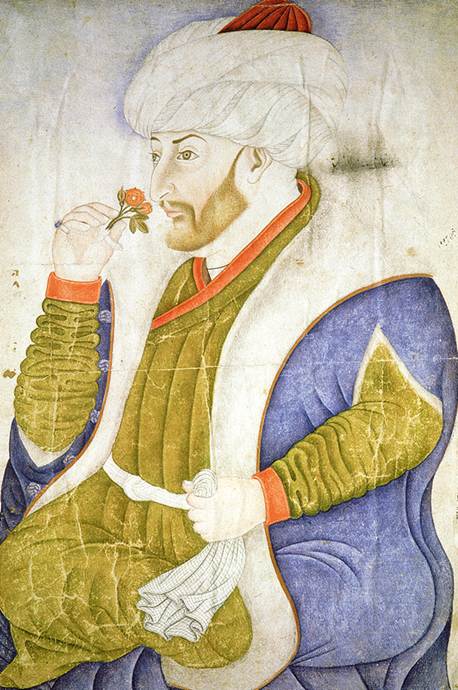
35. Sultan Mehmed II, the Conqueror (portrait attributed to Nakkas Sinan Bey), 15th–16th century.
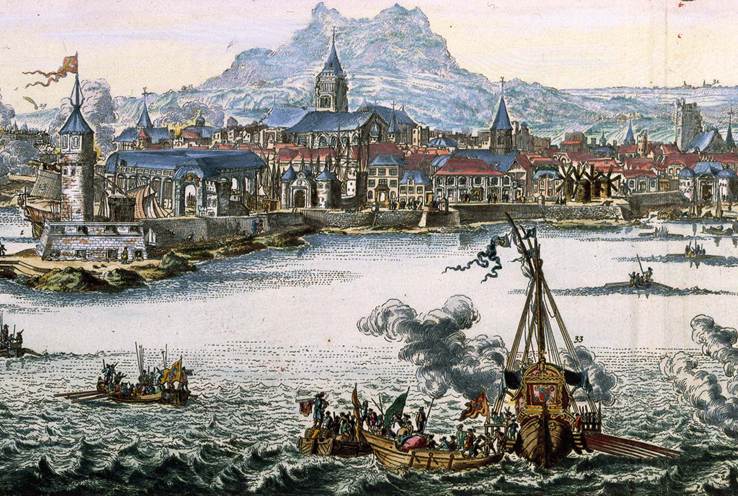
36. Candia (modern Heraklion, Crete) under siege from 1648 to 1669 (c. 1680, detail).
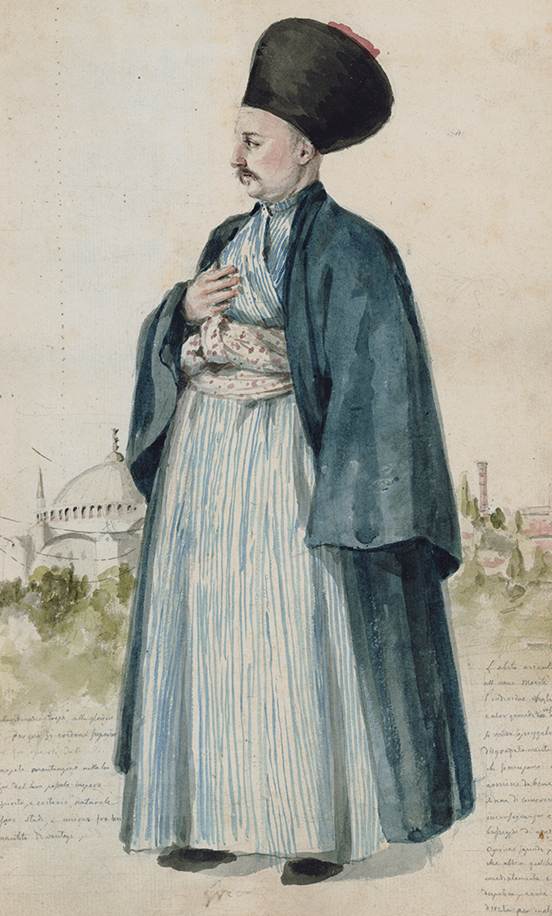
37. A Phanariot in Constantinople, 1818–1820.
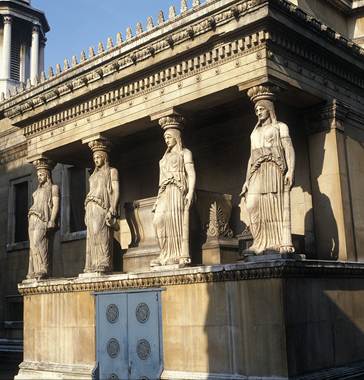
38. The ‘Caryatid’ porch of St Pancras New Church, Euston Road, London, built 1819–1822, imitating the Erechtheion on the Acropolis of Athens.
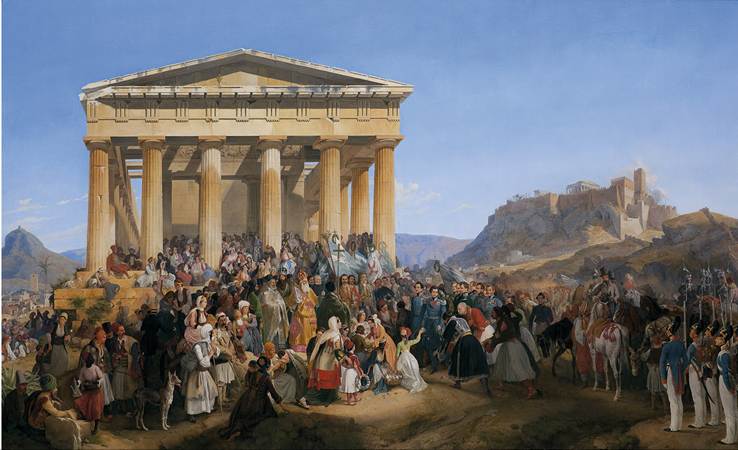
39. The Reception of King Otto in front of the Theseion, Athens, by Peter von Hess, 1839.
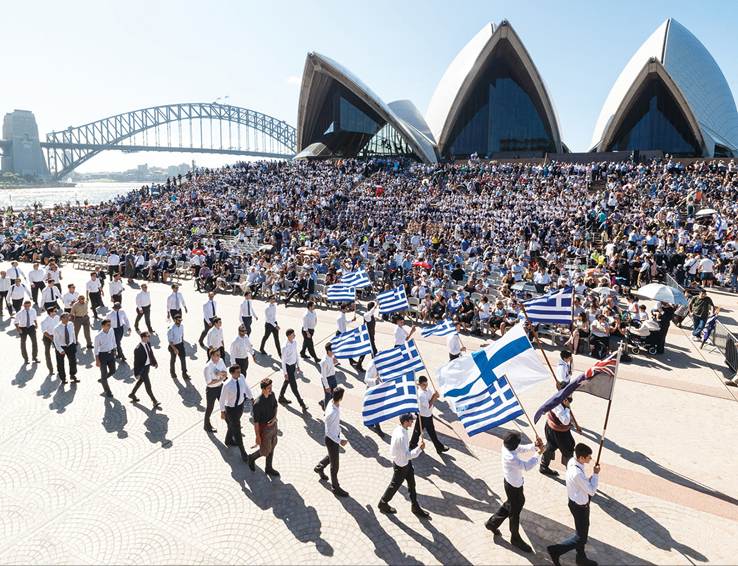
40. Greek Independence Day (25 March), Sydney Opera House, Australia.
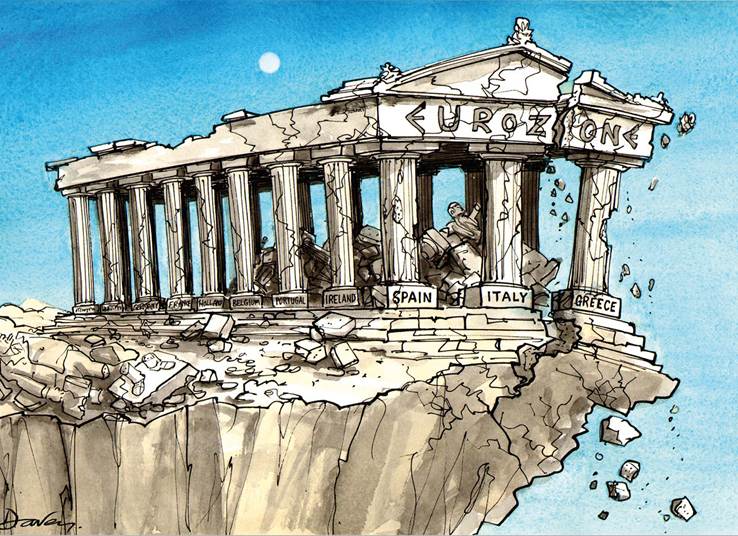
41. Cartoon by Andy Davey for The Sun, May 2012, at a time when the Greek financial crisis threatened the future of the Eurozone.
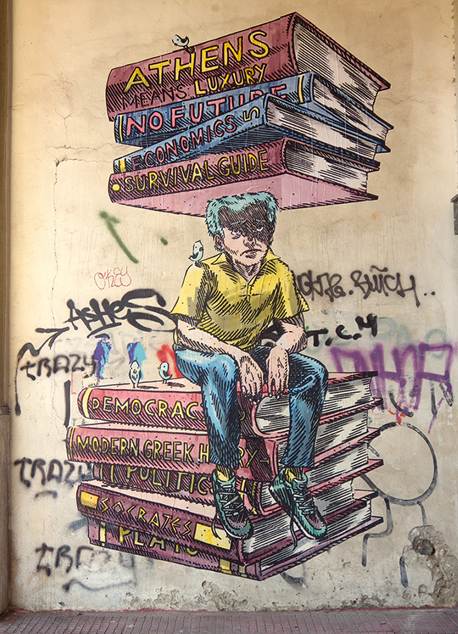
42. Street art, Athens, 2013: ‘I wish you could learn something useful from the past’. Artist: Dimitris Taxis.
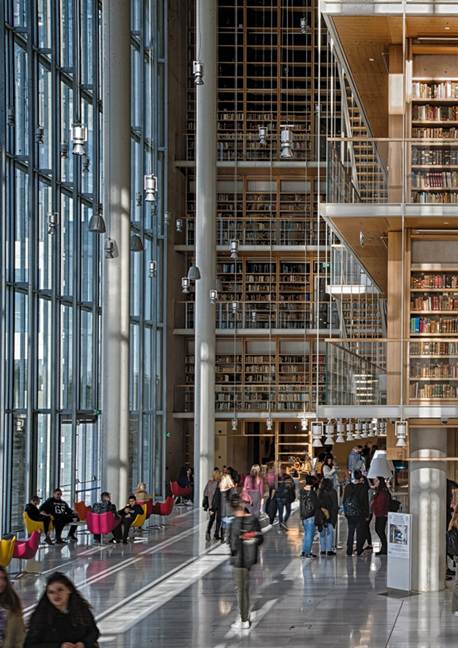
43. The new National Library of Greece, Stavros Niarchos Foundation Cultural Center, Athens, opened 2017.
ACKNOWLEDGEMENTS
This book would never have been written but for two people: my agent, the late Felicity Bryan, and Alex Bowler, who now oversees publishing at Faber. Back in 2016, Felicity was seeking a publisher for another book of mine. Among the rejection letters she passed on to me was one that said (in effect), ‘Why doesn’t he write the whole history of the Greeks?’ The challenge had been thrown down. And no sooner had my earlier book gone to press than I began to flesh out the idea for The Greeks. I hadn’t remembered where that rejection letter came from. But Felicity did. It came from Alex Bowler, who by then had recently taken up his post at Faber. The three of us met together only once, just after the contract had been signed. And this book is the result.
Felicity was the best agent any writer could wish for. Her loss to cancer at the age of seventy-four in June 2020 was felt throughout the publishing world, and there are many fitting tributes to her already in print. I had come to know Felicity relatively late in our respective careers. We met quite rarely (even before Covid-19 kept us all at home). But with her passing, I knew that I had lost a friend. Being a literary agent, for Felicity, was so much more than a business. She loved books and people; she knew what she liked, and she had the gift for making others as enthusiastic as she was.
Alex has stood by me from first to last, despite the responsibilities of a role that goes far beyond that of a commissioning editor. He was the first person to read the whole of this book in draft, and his observations and queries on the early chapters were full of insights that helped to guide me through the many thickets that lay ahead. I have also been fortunate in being able to call on friends who kindly read several chapters and generously gave me the benefit of their experience and expertise which goes far beyond my own: Professor John Bennet on the Mycenaean period and the dark age; Professor Paul Cartledge on ancient Greece; Assistant Professor Dionysios Stathakopoulos on the Byzantine millennium; and Dr John Kittmer, who served as British ambassador to Greece from 2013 to 2016, on the final chapters.
In preparing the book for press, I have benefited hugely from the encouragement and support of Brian Distelberg, editorial director at Basic Books, who commissioned the US edition. His colleague Emma Berry also contributed much thoughtful feedback. The near-final text was read, with a meticulous and sympathetic eye, by Eleo Carson on behalf of Faber, not once but twice. For whatever blemishes or omissions remain, I alone must take the blame.
For moral and practical support, I have accumulated debts too numerous to name. John Bennet not only gave expert advice, but as Director of the British School at Athens throughout the time that I was working on this project, he and his colleagues have given me their time, their friendship, and on numerous occasions, before the start of the Covid-19 pandemic, a roof over my head in the friendly and congenial atmosphere of the BSA, set in its delightful garden hidden away in the centre of dusty, noisy Athens. The School’s administrator, Dr Tania Gerousi; the archivist, Amalia Kakissis; Vicki Tzavara in the front office; and Penny Wilson, the librarian until 2019—all went out of their way to assist me while I was writing this book.
I was fortunate, too, to enjoy the hospitality of the British Embassy in Athens, where Kate Smith, in post from 2017 to 2021, has also become a good friend. I thank the Greek ambassador to London during most of this period, Mr Dimitrios Caramitsos-Tziras, for many kindnesses. Professor Maria Georgopoulou and Professor David Holton helped with specific queries during lockdown, as did the Society for the Promotion of Hellenic Studies and the librarians of the collection that the society shares with the Roman Society and the Institute for Classical Studies at the University of London.
At King’s College London, Gonda Van Steen, my successor as Koraes Professor, has been generous with institutional and moral support whenever I needed it. Many others, whose names appear among the sources in the Notes at the end of the book, have contributed, too, not only through their published work but often through discussions and interactions that have taken place over many years, and helped to shape my thinking about the Greeks and the Greek-speaking world.
The book in its finished form owes a great deal to the superb professionalism of several people: Cecilia Mackay, the able and sympathetic picture researcher with whom it has been a pleasure to work for the second time; Fred Courtwright, who secured permissions to quote from material in copyright; Patti Isaacs, who drew the maps; and Christina Palaia, my copy editor at Basic Books. Special thanks for ensuring a smooth path to publication go to Carrie Plitt at the Felicity Bryan Agency in Oxford and her counterpart Zoë Pagnamenta in New York. It has been a pleasure, and at times even an education, to work with all of them. And the biggest thank-you of all goes to my wife, Fran, for—well—everything, but not least for her patient and eagle-eyed reading of so many different versions of The Greeks.
Roderick Beaton
Whitstable, Kent
March 2021
More on the topic EPILOGUE:
- Epilogue
- Epilogue
- Epilogue
- EPILOGUE
- Epilogue
- EPILOGUE
- EPILOGUE
- Epilogue
- 45 Epilogue
- Epilogue
- Epilogue: The Night of Pseudoscience
- EPILOGUE: IMPERIAL FRICTIONS
- Epilogue The Birth of the Ukrainian State
- EPILOGUE: AMERICAN RELIGIOUS REGIONS
- Epilogue: The Puzzle of World Peace
- Epilogue: a post-colonial legacy
- Part Five Loose Ends: Reflections and Epilogue
- EPILOGUE Closing the Curtain Reflecting on things past
- EPILOGUE TO THE BRONZE AGE AND PROLOGUE TO THE RELIGIONS OF EUROPE